Introduction
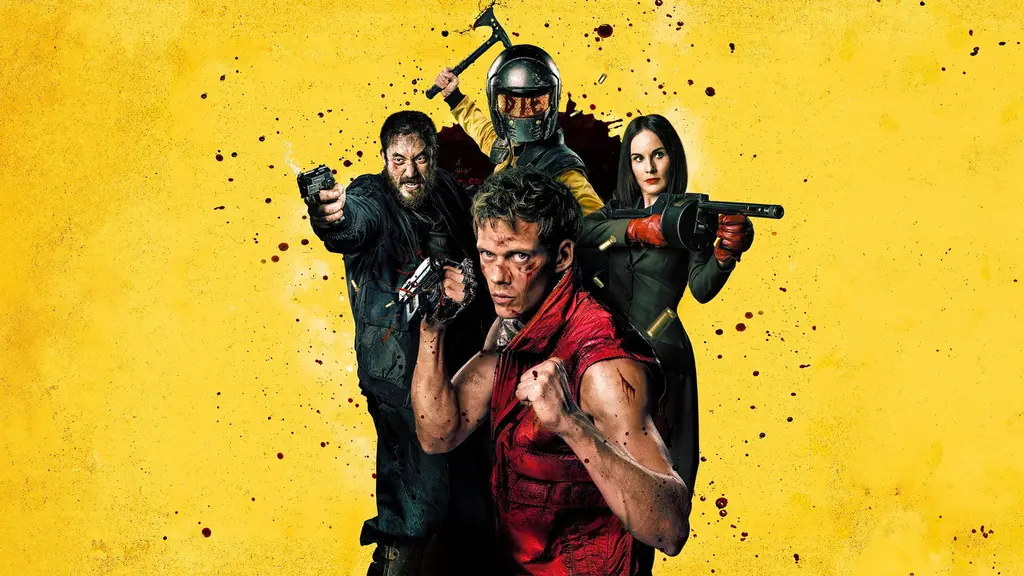
From the opening frame, Boy Kills World announces itself as an action-packed dark comedy, a crucial distinction for audiences diving into its dystopian chaos. Directed by Moritz Mohr, the film plunges viewers into a city ruled by the tyrannical Van Der Koy family, led by the formidable Michelle Dockery. Their annual televised "culling" of citizens echoes a certain popular young adult series, setting the stage for a brutal revenge saga. Enter Bill Skarsgård as "Boy," a deaf-mute warrior whose family was massacred in one such culling. Trained by the enigmatic Shaman, played by Andrew Koji, Boy is now a finely tuned instrument of vengeance, ready to unleash an action-fueled bloodbath.
The Lead Dynamic & The Action
The film's central conceit, and arguably its greatest strength, lies in Bill Skarsgård's portrayal of Boy. Deaf and unable to speak, his inner thoughts are voiced by none other than H. Jon Benjamin, the iconic voice of Archer. This ingenious device provides a constant stream of witty, often irreverent commentary, offering a unique window into the protagonist's mind that most action films rarely achieve. Skarsgård, meanwhile, delivers a masterclass in physical acting, conveying a spectrum of emotions and intentions through facial expressions and body language alone. When he's not "telling" with his face, he's "killing" with his fists, speaking the universal language of brutal, impactful action.
The action sequences themselves are a highlight. Unlike the frustrating trend of shaky cam, Boy Kills World keeps its fights well-framed and coherent, allowing every satisfying, bloody hit to land with visceral impact. The film successfully captures an intense, high-energy feel without resorting to visual chaos, ensuring that the audience can always follow the kinetic choreography. This commitment to clear, impactful violence, blended seamlessly with dark humor, keeps the energy flowing and the audience engaged.

Cameos, Nostalgia & Narrative Stakes
While the film excels in its action and unique character voice, its narrative can feel a touch familiar. The villains, while entertainingly over-the-top, lean into a "dollar store Hunger Games" cliché, making the overall plot somewhat predictable. Audiences might find themselves anticipating twists well before they arrive, though the film's sheer energy often compensates for this. A minor stumble comes with some of the side characters; just as they begin to endear themselves, they often become sidelined or, as the reviewer noted, "useless," leaving a sense of missed opportunity for deeper emotional connection.
The film consistently chooses humor over heart. While it's a dark comedy, there are moments where a touch more emotional resonance could have elevated the stakes. Instead, Boy Kills World opts for the joke every time, for better or worse. This commitment to irreverence is part of its charm, but it does mean that genuine emotional beats are few and far between, only truly landing towards the very end. The pacing also has a peculiar rhythm, with the narrative feeling as though it could have concluded earlier, only to pick up for another extended, albeit action-packed, sequence.
Tone, Direction & Creative Freedom
Moritz Mohr's direction embraces a wild, uninhibited tone. Despite a premise that, on paper, might sound clichéd, the execution injects it with a fresh, new energy. The film feels like a hyper-caffeinated, almost "coked out" version of other recent action films, constantly pushing the boundaries of its dark comedic violence. This is a movie that clearly had the freedom to go big and bold, reveling in its own absurdity and over-the-top nature. It’s a testament to a creative vision that prioritizes fun and escapism above all else, delivering a unique cinematic experience.
The Final Verdict
Boy Kills World is undeniably a film that will divide audiences, falling squarely into the "love it or hate it" camp. For those who appreciate relentless energy, brutal yet clear action, and a healthy dose of irreverent dark humor, this is an absolute must-see. It's a film that takes familiar tropes and injects them with such a unique, vibrant energy that it feels entirely new. While its plot might be predictable and some characters underdeveloped, its sheer cinematic escapism and the unforgettable performance by Bill Skarsgård make it a wild, gripping ride. This is a film worth watching, and for many, worth owning.
What Worked
- Relentless, well-framed action sequences
- Unique inner monologue concept voiced by H. Jon Benjamin
- Bill Skarsgård's expressive and physical performance
- Effective blend of dark comedy and brutal violence
- High-energy, escapist cinematic experience
What Didn't Work
- Predictable and somewhat clichéd plot
- Underdeveloped or sidelined side characters
- Villains lack depth
- Prioritizes jokes over emotional depth
- Pacing can feel uneven, with a prolonged ending