Introduction
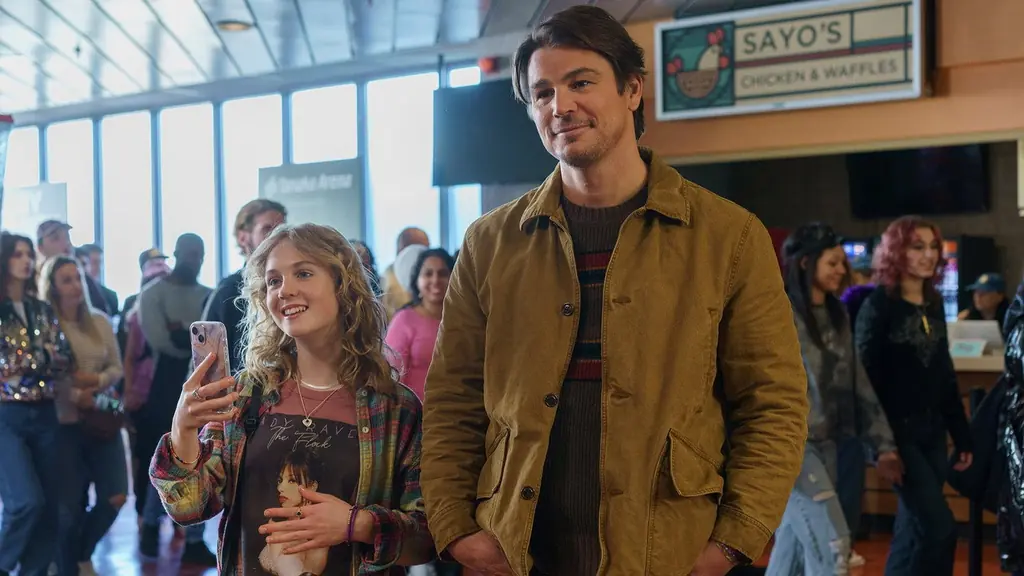
Anticipation always surrounds a new film from M. Night Shyamalan, and his latest, Trap, arrived with its own unique buzz. The premise is immediately captivating: a father, played by the resurgent Josh Hartnett, takes his daughter, portrayed by Ariel Donoghue, to a pop concert. Unbeknownst to them, the venue is a meticulously planned FBI sting operation designed to ensnare a notorious serial killer. The twist? Hartnett's character is the very killer they're hunting. This gutsy narrative choice immediately places the audience in the killer's perspective, creating an intense, high-stakes game of cat and mouse from the opening frame.
The Lead Dynamic & The Action
The initial half of Trap delivers a genuinely solid thriller experience. The film thrives on the tension of its central conceit, forcing viewers to root for the serial killer's escape, despite his heinous nature. Josh Hartnett carries the film with a compelling performance, expertly navigating the dual demands of his character: a doting father and a cold-blooded murderer. His portrayal of a psychopath attempting to emulate normal human emotion, particularly in his interactions with his daughter, is a standout. This dynamic is where the film finds its greatest strength, as Hartnett's character constantly works to maintain his "good dad" facade, adding layers of complexity to the unfolding drama. The film is at its best when it remains "smaller," focusing on this intricate relationship and the killer's desperate attempts to evade capture within the confines of the concert arena.
Shyamalan's often-criticized unnatural dialogue style, surprisingly, works to the film's advantage here. For Hartnett's character, the stilted lines and forced pleasantries perfectly underscore his psychopathy, making his attempts at normalcy feel deliberately unsettling. It's a clever meta-commentary that blurs the line between the character's performance and the director's signature writing. However, this intentional awkwardness doesn't extend as gracefully to other characters, where it simply feels like typical Shyamalan dialogue, often resembling the expository exchanges found in a video game.
Cameos, Nostalgia & Narrative Stakes
As Trap progresses into its second half, the narrative begins to unravel. The film introduces Saleka Night Shyamalan, the director's daughter, as the pop star performing at the concert. While she convincingly embodies the role of a singer on stage, her acting performance in the latter half, when her character is given more to do, proves to be a significant downgrade. This shift in focus contributes to the film's overall decline, causing the carefully built tension to dissipate and the story to "fall flat."
The initial promise of a taut thriller gives way to a series of increasingly implausible events, leading the film to "jump the shark" on several occasions. There was a clear opportunity for a more engaging third act, perhaps pitting the serial killer directly against an FBI profiler in a more traditional cat-and-mouse confrontation. Instead, the film veers off course, stretching its runtime beyond its natural limits. At an hour and forty-five minutes, Trap feels noticeably overlong, often resembling a single episode of a serial killer TV show stretched thin to feature length. The narrative stakes, which were so compelling in the first half, become diluted as the plot meanders.
Tone, Direction & Creative Freedom
M. Night Shyamalan's direction in the first half is tight and focused, effectively building suspense through the killer's perspective. The film's tone is initially consistent, maintaining a palpable sense of dread and urgency. However, as the story expands beyond the concert venue, the direction loses its precision. The pacing becomes erratic, and the creative choices feel less cohesive. While the initial use of Shyamalan's distinctive dialogue style for Hartnett's character was a stroke of genius, its application to other roles highlights its inherent artificiality, pulling viewers out of the immersive experience.
The film struggles to maintain its initial momentum, suggesting that perhaps a tighter, more contained narrative would have served it better. The freedom to explore beyond the core premise ultimately dilutes the impact, transforming what began as a unique psychological thriller into a more conventional, and less effective, genre exercise.
The Final Verdict
Trap is a film of two distinct halves. Its opening act is a genuinely gripping and innovative thriller, propelled by a strong performance from Josh Hartnett and a daring narrative perspective. However, as the story progresses, it loses its way, becoming bogged down by questionable plot developments and a noticeable dip in acting quality from supporting roles. While the premise is bulletproof for a Shyamalan script, the execution falters significantly in the latter half. For those curious, it's best to approach Trap as a streaming watch, perhaps even considering it a compelling hour-long episode that unfortunately overstays its welcome. It's a mixed bag that starts strong but ultimately falls short of its potential.
What Worked
- Gutsy serial killer POV creates immediate tension.
- [[person:2299|Josh Hartnett]] delivers a compelling and nuanced performance.
- The first half is a solid, suspenseful thriller.
- Shyamalan's signature dialogue style surprisingly works for the main character's psychopathy.
- Intriguing cat-and-mouse premise within a unique setting.
What Didn't Work
- The second half significantly weakens and "jumps the shark."
- Film feels overlong and stretched, like a TV episode.
- Acting from [[person:4340759|Saleka Night Shyamalan]] in the latter half is a "downgrade."
- Missed opportunity for a stronger, more focused third act.
- Other characters' dialogue often feels unnatural and expository.