
Introduction
Dogma, Kevin Smith's audacious 1999 entry into the View Askewniverse, holds a special place in cinematic history, not just for its unique blend of irreverence and philosophy, but as one of the earliest examples of a shared movie universe. For many, it was an introduction to a world where characters like Jay and Silent Bob could cross paths with angels and apostles. Revisiting this cult classic today, the question looms: does it still hold up, or is it merely a relic of nostalgia? The answer, unequivocally, is that it remains a truly great film, perhaps even better with age. It’s a movie that, despite its lowbrow humor, offers surprising depth and a thought-provoking take on faith, dogma, and humanity itself.
The Lead Dynamic & The Action
The film centers on Bethany, played by Linda Fiorentino, a woman grappling with a profound crisis of faith. Fiorentino delivers a performance that is both vulnerable and remarkably resilient, navigating the increasingly absurd situations around her with a grounded realism that anchors the entire narrative. Her dynamic with Jay is particularly noteworthy; she refuses to tolerate his constant stream of foul-mouthed antics, creating a compelling push-and-pull that highlights her journey of self-discovery and growth. This interplay is crucial, as it allows Bethany to evolve from a hesitant participant to a central figure in a cosmic battle.
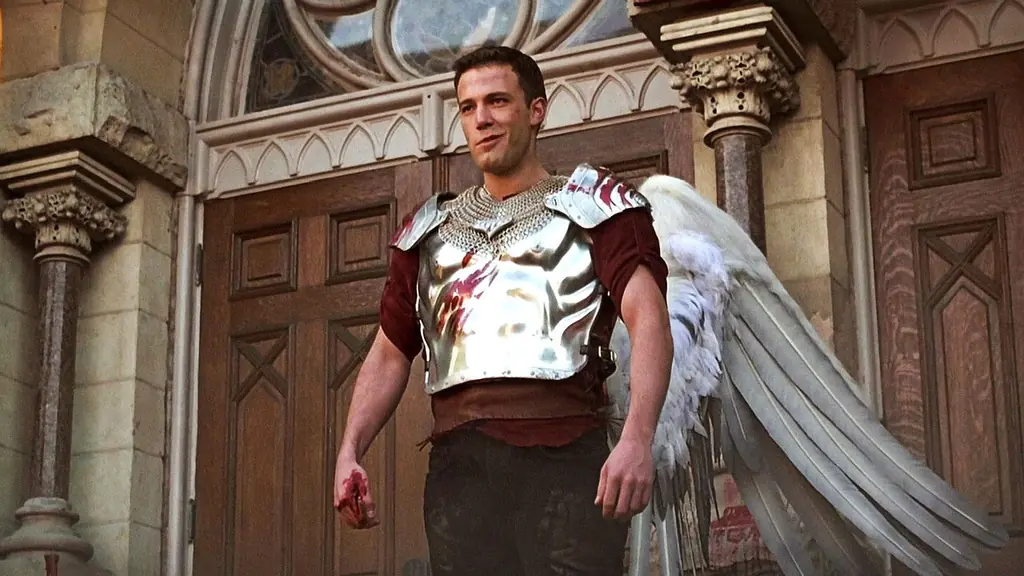
However, the true scene-stealers are the fallen angels, Loki and Bartleby, portrayed by Matt Damon and Ben Affleck. Their chemistry is palpable, portraying two beings desperate to return home, blissfully unaware of the catastrophic cosmic consequences of their actions. Ben Affleck's performance as Bartleby is a standout, particularly his impassioned rant in a parking garage. It's a moment of raw, pent-up pain and anger directed at his creator, showcasing a depth that elevates the film far beyond typical stoner comedy fare. Affleck brings an "infinite patience" to the role, conveying the profound sense of abandonment and injustice felt by his character. This emotional weight demonstrates that even in a film known for its humor and irreverence, profound emotional beats can land with significant impact, adding layers to what could have been a one-note character. The film’s action, while not its primary focus, serves the narrative well, propelling our unlikely heroes through a series of encounters that are both comedic and surprisingly tense.

Cameos, Nostalgia & Narrative Stakes
Dogma is rich with characters that contribute to its unique flavor. Jay and Silent Bob serve as prophets, bringing their signature lowbrow humor and hedonistic charm, which works perfectly within the film's context. Their presence grounds the fantastical elements in the familiar, providing consistent comedic relief. Chris Rock shines as the 13th apostle, Rufus, a character famously removed from the Bible. His role is not merely comedic; he offers a sharp, insightful critique of religious factions and their self-proclaimed exclusivity, questioning the very foundations of organized faith. This philosophical thread, challenging the dogmatic rules created by flawed people and the power structures they maintain, is a core strength of Dogma.
Unlike later attempts by Kevin Smith to blend disparate tones, he masterfully weaves together stoner humor with deeper ideological discussions here. The humor is accessible to teenage audiences, yet the underlying themes resonate more profoundly with age, making it a film that truly spans generations. The film cleverly brings religion into the narrative, not to mock belief itself, but to scrutinize the institutions and interpretations that often overshadow genuine spirituality. It challenges power structures within religion without insulting individual believers, suggesting that while belief in a higher power is fine, perhaps some of the "fat" of organized religion—its rigid rules and exclusionary practices—could be trimmed. The narrative stakes are surprisingly high, with the fate of all existence hanging in the balance, yet the film never loses its comedic touch or its human core.
Tone, Direction & Creative Freedom
Kevin Smith’s direction in Dogma is a testament to his passion and artistic vision, showcasing his best work from a period where he was telling stories directly from his heart. He successfully balances the irreverent humor of characters like Jay and Silent Bob with genuinely heartfelt and philosophical moments. The film doesn't shy away from poking at religion, but it does so with a nuanced approach, challenging the institution rather than the faithful. It raises questions about the nature of God, the flaws of humanity, and the interpretations of sacred texts, all while maintaining an engaging and often hilarious tone.
The portrayal of biblical figures, such as Alan Rickman as the Metatron (the voice of God), is imbued with an irreverence that is both hilarious and thought-provoking. Rickman's deadpan delivery, especially when his character is comically doused with a fire extinguisher, perfectly encapsulates the film's unique blend of the sacred and the profane. This creative freedom, allowing for such bold interpretations and satirical commentary, is a hallmark of Kevin Smith's early work. The film’s pacing is expertly handled, moving from comedic set-pieces to moments of profound reflection without feeling disjointed. This blend of the silly and the profound, the sacred and the satirical, is what makes Dogma a truly unique and enduring piece of art from Kevin Smith's most passionate period.
The Final Verdict
Ultimately, Dogma is a film that has not only stood the test of time but has arguably improved with age. It’s a rare cinematic experience that offers both laugh-out-loud moments and genuine intellectual stimulation. It’s a film that challenges, entertains, and encourages self-reflection, all while delivering the signature wit and charm of the View Askewniverse. For those seeking a film that dares to be different, that blends genres with audacious confidence, and that offers a surprisingly profound take on faith and humanity, Dogma is an absolute must-watch. It’s a piece of Kevin Smith art, and one that deserves to be rediscovered and cherished for its enduring relevance and unique voice.
What Worked
- Aged exceptionally well, gaining depth over time.
- Brilliant blend of lowbrow humor and philosophical themes.
- Strong performances, especially [[person:880|Ben Affleck]] and [[person:9625|Linda Fiorentino]].
- Unique and nuanced approach to religion and faith.
- Engaging character dynamics and witty dialogue.
What Didn't Work
- Lowbrow humor might not appeal to all audiences.
- Can be difficult to find on streaming or physical media.
- Pacing occasionally feels uneven due to philosophical tangents.
- Some might find its religious satire too provocative.



