Introduction
Hall Pass, directed by Bobby Farrelly, delves into the well-trodden comedic territory of marital ennui and the fantasy of a "hall pass." The film introduces audiences to two married men, Rick and Fred, who, after exhibiting signs of restlessness and wandering eyes, are granted a week of unrestricted freedom by their wives. The premise, a classic setup for a raunchy comedy, suggests a journey of self-discovery or perhaps a reaffirmation of marital vows through the lens of temporary liberation. The film attempts to explore the age-old question: what happens when the forbidden becomes permissible? Does desire intensify, or does the reality of freedom prove less appealing than the fantasy?
The Plot & Execution
The narrative of Hall Pass centers on Rick and Fred's week-long escapade, which begins with high hopes but quickly devolves into a series of awkward and often cringeworthy encounters. The initial phase of their newfound freedom is characterized by a distinct lack of success in their attempts to pick up women. Having been "out of the game" for an extended period, the protagonists find themselves ill-equipped for the modern dating scene, leading to humorous but often drawn-out sequences of social ineptitude. This struggle to adapt to single life forms a significant portion of the film's early humor, highlighting the stark contrast between their fantasies and the harsh reality.
While the film aims for broad comedic appeal, its execution is a mixed bag. Some of the more elaborate comedic set pieces, such as car chases and chaotic mayhem, largely fall flat, failing to elicit genuine laughter. These moments often feel forced and detract from the film's more effective, subtle humor. Conversely, the movie shines in its simpler, more understated moments. Small, situational gags and unexpected character interactions often land with surprising hilarity, demonstrating that the film's comedic strengths lie in its quieter observations rather than its grander, more chaotic ambitions. However, the film is also plagued by missed opportunities, with several instances where a comedic setup could have been elevated with a clever reference or a sharper punchline, such as a moment involving a crowbar and a windshield that seemingly begged for a "Terminator 2" homage.
Performances & Characters
The performances in Hall Pass are central to its comedic and dramatic (or lack thereof) impact. Owen Wilson portrays Rick, a character who, despite being the protagonist, comes across as notably "douchey" and often unlikable. His actions and attitudes throughout the film frequently make it difficult for the audience to empathize with his plight, undermining the potential for a more engaging character arc. His portrayal contributes to a sense of detachment, as the character's self-centeredness overshadows any genuine vulnerability.
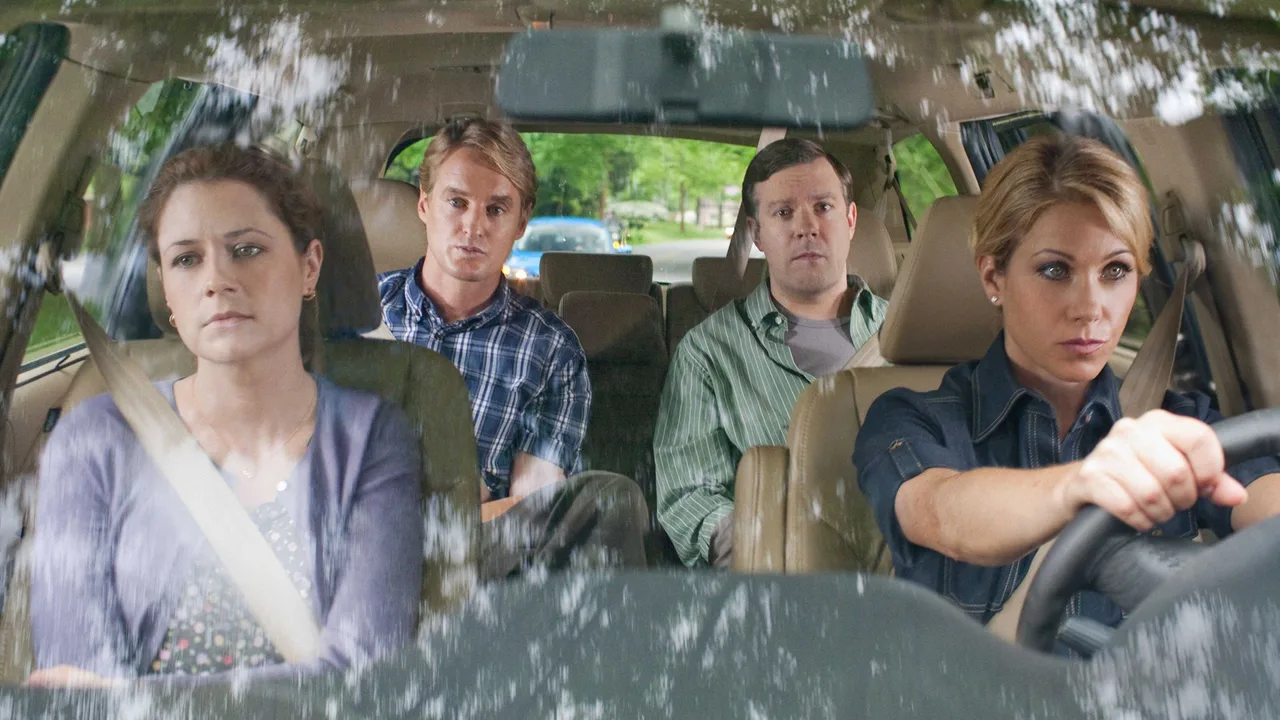
Jenna Fischer plays Maggie, Rick's wife, whose character arc presents an interesting, albeit frustrating, dynamic. Initially depicted in a rather plain and unassuming manner, Maggie undergoes a transformation in her appearance once the "hall pass" is granted, dressing in more revealing and attractive attire. This shift raises questions about the dynamics within her marriage and the perceived effort (or lack thereof) in maintaining attraction. The film also features Jason Sudeikis as Fred, Rick's equally struggling friend, and Christina Applegate as Grace, Fred's wife, who also experiences her own journey during the week of freedom. The relationships depicted in the film often feel strained and, at times, annoying, with both the male and female characters exhibiting hypocritical tendencies that further complicate audience connection. The humor derived from these characters being "out of the game" for two decades is effective, showcasing their awkward attempts to navigate a world they no longer understand.
Direction & Technical Aspects
Bobby Farrelly's direction, alongside his brother Peter, is characteristic of their previous works, blending raunchy humor with moments of unexpected sentimentality. However, in Hall Pass, the balance feels somewhat off. The pacing, particularly in the first half, is noted as being slow and occasionally boring, potentially due to the film's trailers having revealed too much of the initial setup. This can lead to a sense of déjà vu for viewers already familiar with the promotional material, diminishing the impact of early comedic beats.
The film's comedic style oscillates between broad physical comedy and more subtle, character-driven humor. While the latter often succeeds, the former frequently misses its mark, resulting in an uneven viewing experience. The technical aspects, such as cinematography and editing, serve the story adequately but do not stand out as particularly innovative or memorable. The focus remains squarely on the comedic scenarios and character interactions, for better or worse.

The Verdict
Ultimately, Hall Pass is a film that offers a few genuine laughs but struggles to leave a lasting impression. While it explores an intriguing premise about marital freedom and temptation, its execution is inconsistent. The film's humor is a mixed bag, with some genuinely funny, simple moments overshadowed by broader, less effective comedic attempts and a generally unlikable protagonist. The relationships portrayed often feel frustrating, and the characters, at times, come across as hypocritical.
For those seeking a light, undemanding comedy, there are moments of amusement to be found, particularly in the awkwardness of the main characters' attempts to relive their single lives. However, the film lacks the sharp wit and memorable moments that define truly great relationship comedies. It is an "okay" viewing experience that is unlikely to be remembered long after the credits roll, with many other funnier and more insightful films in the genre available. While it aims to be a raunchy exploration of marital boundaries, it ultimately delivers a forgettable experience that doesn't quite hit the mark.
What Worked
- Some genuinely funny, simple comedic moments.
- Effective humor derived from characters being "out of the game" for an extended period.
- Explores an interesting premise about marital freedom and temptation.
What Didn't Work
- Boring and slow pacing in the first half.
- Attempts at broad, chaotic humor often fell flat.
- The main character was perceived as "douchey" and unlikable.
- Missed opportunities for sharper comedic references and punchlines.
- Relationships and characters were often annoying and hypocritical.
- Ultimately unmemorable and overshadowed by other comedies in the genre.