
Introduction
The allure of four Hollywood legends descending upon Sin City for a bachelor party promised a good time, and Last Vegas certainly delivers on the premise of seeing old friends cut loose. Audiences anticipated a comedic romp, and while the film might not redefine the genre, it offers a pleasant diversion, largely thanks to its iconic ensemble.
The Lead Dynamic & The Action
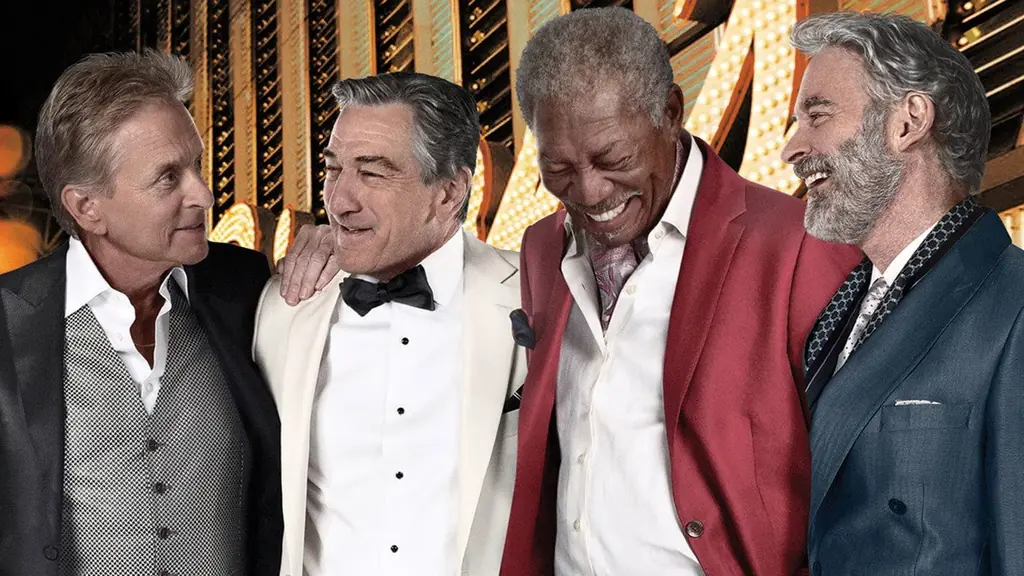
At its heart, Last Vegas thrives on the undeniable chemistry between its lead actors: Michael Douglas, Morgan Freeman, Robert De Niro, and Kevin Kline. Michael Douglas's character, a man of a certain age marrying a much younger woman, sets the stage for the Vegas escapade. The real joy comes from watching these seasoned performers simply have fun, embodying a theme that life doesn't stop being enjoyable with age. While the performances of Robert De Niro and Morgan Freeman often feel like they're playing familiar archetypes, Kevin Kline truly shines, delivering the film's best lines with impeccable timing and making his character the standout.
Cameos, Nostalgia & Narrative Stakes
Despite the star power, the narrative of Last Vegas can feel a bit disjointed. The pacing is often choppy, with scenes that seem to exist solely to deliver a single punchline before abruptly moving on. This leaves the audience questioning the purpose of certain segments. Furthermore, some plot points stretch credulity, particularly a romantic subplot involving Kevin Kline's character and a significantly younger woman. While Michael Douglas's character's situation is presented as plausible within the film's context, Kevin Kline's feels less earned. The film leans heavily on the appeal of its cast, often having them play variations of their established personas rather than fully fleshed-out characters, which can make the experience feel more like watching "old dudes playing themselves" than a cohesive story.
Tone, Direction & Creative Freedom
Under the direction of Jon Turteltaub, Last Vegas maintains a lighthearted tone, aiming for feel-good entertainment. However, for a comedy, it doesn't consistently elicit strong laughter. Instead, the enjoyment stems from the sheer pleasure of seeing these legendary actors share the screen and enjoy themselves. It's a film that doesn't push boundaries or offer profound insights, content to be a pleasant, if somewhat generic, vehicle for its stars. It feels like a movie made to fill an auditorium slot, a comfortable watch rather than a memorable cinematic event.

The Final Verdict
Last Vegas is the kind of film that serves as a pleasant distraction, particularly if you're in the mood for a low-stakes comedy featuring an all-star cast. It's a movie for those moments when you want to see some beloved actors having a good time, even if the plot itself is a bit of a "filler." Consider it a cinematic equivalent of a midlife crisis getaway – enjoyable enough while it lasts, but not something that will stick with you long after the credits roll.
What Worked
- Exceptional ensemble cast
- Strong chemistry between the leads
- Kevin Kline's standout performance
- Uplifting theme about aging gracefully
- Generally fun and lighthearted tone
What Didn't Work
- Choppy pacing and disjointed scenes
- Generic plot and predictable humor
- Some unbelievable romantic subplots
- Actors often play themselves rather than distinct characters
- Doesn't deliver consistent laughs for a comedy



