Introduction
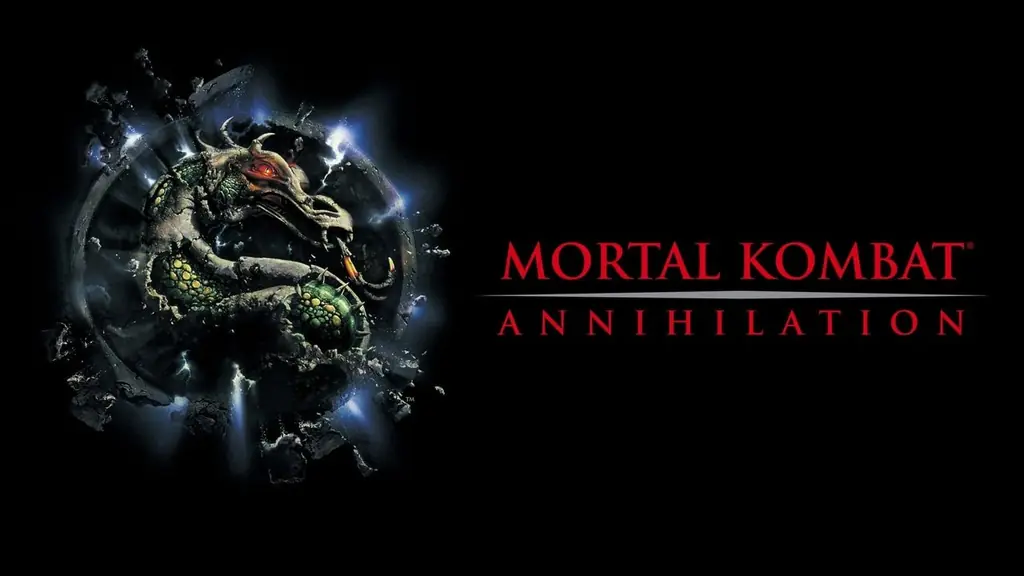
Anticipation for a sequel to the original Mortal Kombat film was palpable, but Mortal Kombat: Annihilation quickly dashed those hopes. Released in November 1997, this follow-up immediately signaled a significant drop in quality from its predecessor. The film even opens with a recap, a feature usually appreciated, but here it only serves to highlight the stark contrast between the "much more competently made" first movie and the immediate visual decline of Annihilation. From the terrible CGI to the bad green screen work, with backgrounds literally clipping through characters, the difference is jarring and instantly noticeable. The film's opening moments, including Shao Kahn's laughably restrained villainy and the unceremonious death of Johnny Cage, set a tone of bewildering creative choices that persist throughout.
The Lead Dynamic & The Action
The film struggles immensely with character relationships and fight choreography. Instead of compelling dynamics, viewers are treated to "porn quality acting without any of the fun," coupled with "sub-par cosplay costumes." The action sequences often feel like random pairings, lacking the canonical sense of the games. For instance, Mileena fighting Sonya in the mud culminates in a "lamest fatality ever," while Cyrax inexplicably targets Sonya and Lynn 'Red' Williams|Jax. The editing further compounds the chaos, making fight scenes like the one with Shiva feel abrupt and incomprehensible. The infamous Animalities, particularly Liu Kang's dragon transformation, are rendered with CGI so poor it's described as "dog shit," looking less like the iconic game design and more like a child's drawing. These visual failures detract significantly from any potential enjoyment of the action.

Cameos, Nostalgia & Narrative Stakes
Mortal Kombat: Annihilation is a masterclass in disregarding its own source material. The film's biggest tragedy is its "lack of character and lore," despite Mortal Kombat being a pioneer in rich fighting game narratives. Plot points are invented seemingly at random, such as a dragon tattoo being an heirloom of Raiden and Shao Kahn (who are now brothers, apparently) and serving as a "fast pass in between realms." Characters are mischaracterized; Stryker, for example, is inexplicably called "one of Earthrealm's greatest warriors." Key relationships, like the compelling story of Sub-Zero and Smoke, are completely butchered, reducing a nuanced narrative to a simple, nonsensical fight. The film feels like it was made by someone who "never played Mortal Kombat and thought they could just make [stuff] up," resulting in a narrative that is less a cohesive story and more "just a series of fights that were just lined up to make a movie."
Tone, Direction & Creative Freedom
Directed by John R. Leonetti, the film's direction contributes heavily to its disjointed nature. The editing is so poor that characters appear to "fast travel" from one location to another without explanation, creating a sense of constant confusion. The dialogue is often unintentionally hilarious, with villains delivering lines that lack any genuine menace. The film's approach to its characters and lore suggests a fundamental misunderstanding of the franchise, treating it as a mere vehicle for random fights rather than a story-driven universe. This lack of creative fidelity and coherent direction results in a movie that feels less like a genuine attempt to adapt the game and more like a hastily assembled collection of scenes.
The Final Verdict
Mortal Kombat: Annihilation stands as a notorious entry in the video game adaptation canon, often cited among the worst. It's a film that fails on nearly every conventional cinematic level, from its abysmal CGI and "porn quality acting" to its incomprehensible plot and blatant disregard for established lore. However, its sheer incompetence can, under the right circumstances, transform it into a uniquely entertaining experience. It's not a movie to be watched in silence and reverence, but rather a "shit-talk fest" best enjoyed with friends, where its numerous flaws become fodder for collective amusement. While it utterly annihilates any hope for a faithful sequel, it inadvertently carves out a niche as a cult classic for those who appreciate the "so bad it's good" genre.
What Worked
- Provides ample material for a "so bad it's good" group viewing experience.
- Features a wide array of characters, even if poorly utilized.
- Unintentional humor from bad dialogue and acting.
- The sheer audacity of some creative choices is memorable.
What Didn't Work
- Abysmal CGI and green screen effects.
- Incomprehensible plot and blatant disregard for established lore.
- Poor acting and unconvincing character dynamics.
- Nonsensical fight matchups and abrupt editing.