
Introduction
Project Almanac arrives as another entry in the often-maligned found-footage genre, immediately raising questions about its premise. Audiences are asked to believe in a world where every significant moment is captured on camera, often unrealistically. Yet, this 2015 sci-fi thriller attempts to inject new life into the format by blending it with the ever-popular concept of time travel. The story centers on a brilliant high school student, aspiring for MIT, who, along with his friends, stumbles upon DARPA schematics for a time machine. What begins as a thrilling scientific endeavor quickly spirals into a suspenseful journey through altered timelines, proving that even the smallest change can have monumental consequences.
The Lead Dynamic & The Action
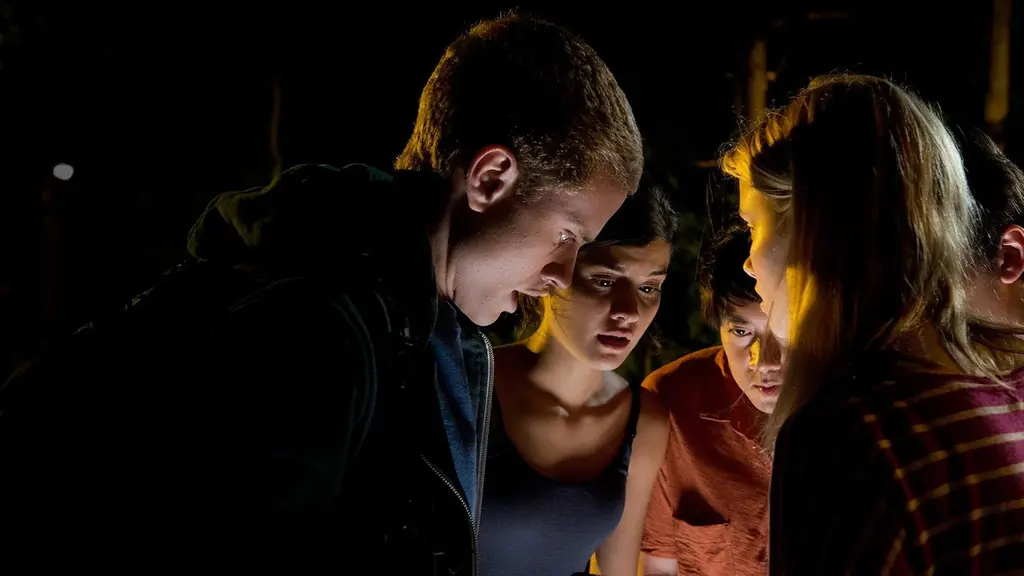
At its core, Project Almanac taps into the innate human fascination with time travel, a concept that inherently gives any film a head start. The initial joy comes from witnessing the painstaking, trial-and-error process of building and testing the time machine. Viewers are invited to vicariously experience the excitement as these teenagers navigate their high school lives while secretly mastering temporal mechanics. While the film occasionally drags its feet, particularly during early setup, it truly shines when the time-traveling begins in earnest. The narrative picks up significantly as the characters start to manipulate their past, leading to a series of "bad things" and unforeseen complications that inject much-needed entertainment and suspense. However, a romantic subplot between the main characters often feels forced and detracts from the core sci-fi premise, leaving audiences wishing for more temporal shenanigans and less teenage drama.
Cameos, Nostalgia & Narrative Stakes
The film's journey is undeniably uneven, oscillating between genuinely engaging moments and stretches that test patience. While some of the acting is serviceable, and a few supporting cast members, including Jonny Weston, Sofia Black-D'Elia, Sam Lerner, Allen Evangelista, and Virginia Gardner, genuinely elevate the experience, others feel entirely superfluous. The found-footage format, though often overused, finds a surprisingly entertaining application here. However, the film's biggest narrative stumble lies in its handling of time travel logic. It establishes a rule that going back a day or two means encountering your past self. Yet, a crucial plot point sees the protagonist returning alone to an earlier Spring Break to pursue a romantic interest, despite his entire group (including his past self) having been there previously. This glaring inconsistency, where the "alternate him" is inexplicably absent, creates a significant plot hole that's hard to overlook. It echoes similar temporal paradoxes seen in films like "Back to the Future Part II," where altering the past should logically lead to an immediate, altered future, rather than a return to the original timeline.
Tone, Direction & Creative Freedom
Director Dean Israelite attempts to maintain a light, fun tone throughout, despite the escalating stakes. The film embraces its found-footage aesthetic, making it one of the more watchable entries in the genre, even if the premise of constant filming stretches credulity. While the narrative is inconsistent and the time travel rules are occasionally bent to breaking point, the film largely succeeds in delivering a "pretty good time." It's a movie that doesn't take itself too seriously, offering a romp through time that, despite its flaws, manages to be enjoyable without requiring deep critical analysis or, as the reviewer humorously notes, "no alcohol required." The creative freedom seems to have been used to prioritize fun and spectacle over airtight temporal mechanics.

The Final Verdict
Project Almanac is an inconsistent yet ultimately fun ride. It's a found-footage movie that, despite the genre's overuse, manages to be entertaining. While it suffers from pacing issues, some weak performances, and a particularly frustrating time-travel paradox, its strengths lie in the inherent excitement of its premise and the vicarious thrill of watching teenagers experiment with altering history. It's a film that will likely entertain those looking for a casual, high-concept sci-fi flick, provided they can forgive its narrative shortcuts and embrace its uneven charm.
What Worked
- Engaging time travel concept
- Fun to watch the time machine development
- Strong supporting character performances
- Entertaining found-footage execution
- Picks up pace with exciting consequences
What Didn't Work
- Inconsistent pacing, with slow stretches
- Unrealistic found-footage premise
- Major plot hole regarding past selves
- Some acting performances are weak
- Unnecessary focus on a romance subplot



