Introduction
Sucker Punch, directed by Zack Snyder, plunges viewers into a fantastical, hyper-stylized world born from the mind of a young woman named Baby Doll, portrayed by Emily Browning. Following a series of tragic events, Baby Doll finds herself institutionalized and, as a coping mechanism, retreats into an elaborate inner world. This alternate reality transforms the asylum into a burlesque house and the path to freedom into a series of high-stakes, action-packed missions. The film promises an exhilarating escape, blending elements of action, fantasy, and thriller genres into a unique cinematic experience.
The Plot & Execution
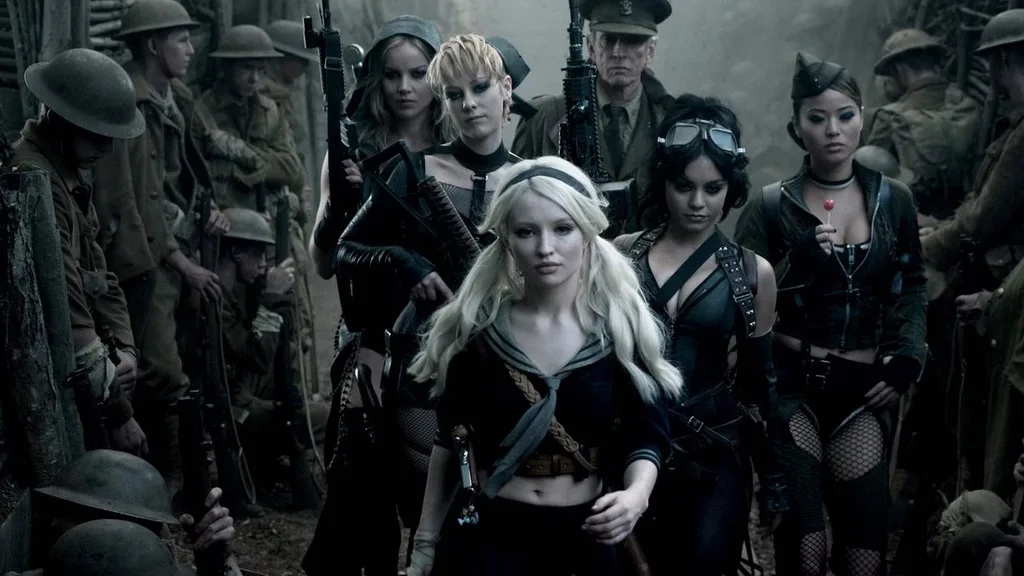
The narrative of Sucker Punch unfolds as Baby Doll and her fellow inmates embark on a quest to acquire several objects necessary for their escape from the oppressive institution. Each object corresponds to a fantastical scenario within Baby Doll's mind, ranging from battling giant samurai in feudal Japan to confronting zombie Nazi soldiers in a World War I-era trench. While these sequences are undeniably visually arresting, a significant criticism leveled against the film is the perceived disconnect between these elaborate fantasy battles and their "real-world" counterparts.
The film attempts to establish a metaphorical link between the fantastical missions and the mundane tasks required for escape. For instance, a character might need to copy a map in the asylum, which is then paralleled by a sprawling battle against monstrous foes in the fantasy realm. However, the execution of these parallels often feels tenuous, leading to a sense that the elaborate action sequences exist primarily for their own spectacle rather than serving a cohesive narrative purpose. The film struggles to justify the thematic relevance of a World War II zombie battle as a metaphor for copying a map, leaving audiences questioning the underlying logic. This structural approach, while offering a feast for the eyes, ultimately undermines the film's ability to craft a compelling and emotionally resonant story. It suggests a scenario where impressive visual concepts were conceived first, with the plot then retrofitted to accommodate them, rather than the other way around.
Performances & Characters
The ensemble cast of Sucker Punch features Emily Browning as Baby Doll, alongside Abbie Cornish, Jena Malone, Vanessa Hudgens, and Jamie Chung as her fellow inmates and allies. While the actors commit to their roles within the film's stylized framework, the characters themselves often feel underdeveloped and lacking in depth. Their motivations are largely confined to the immediate goal of escape, and their individual personalities struggle to emerge beyond archetypal representations. The dialogue, too, frequently falls into generic declarations of defiance and determination, failing to provide the emotional weight necessary to connect audiences with their plight.
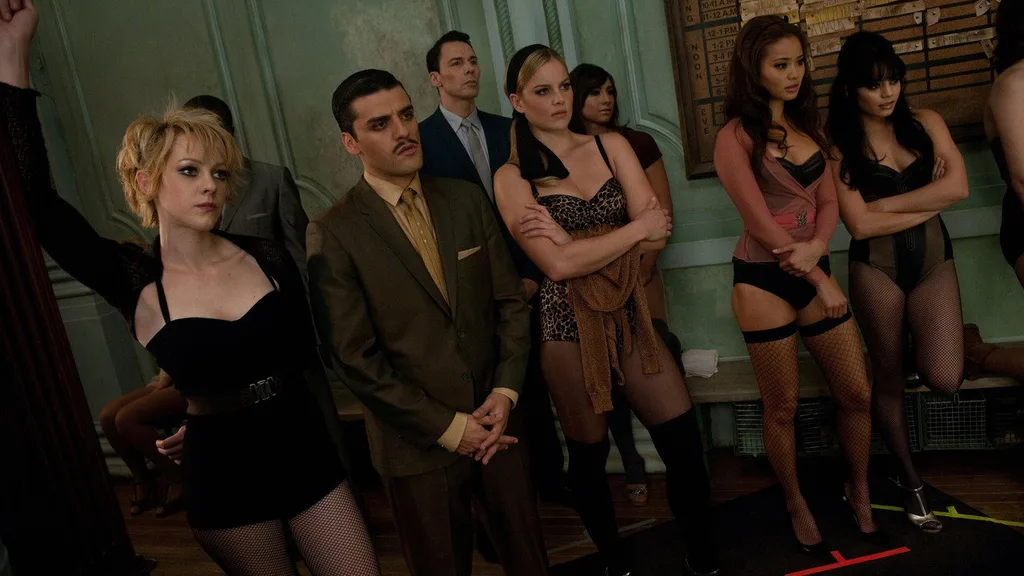
An exception to this general observation is the portrayal of the antagonist, Blue Jones, by Jon Hamm. His performance as the manipulative and menacing orderly is noted for its effectiveness, successfully conveying the character's villainous nature. Similarly, Carla Gugino as Dr. Vera Gorski and Oscar Isaac as Sweet Pea's pimp, Blue, contribute solid performances within their respective roles, adding layers to the asylum's oppressive atmosphere. However, the core group of protagonists, despite their visually striking appearances and participation in thrilling action, remain largely one-dimensional, making it challenging for viewers to invest deeply in their journey.
Direction & Technical Aspects
Zack Snyder's directorial signature is unmistakably present throughout Sucker Punch. The film is a masterclass in visual design, boasting "insane cinematography" and "badass" aesthetics that are a hallmark of Snyder's work. The action sequences are meticulously choreographed and executed with a kinetic energy that is both exhilarating and immersive. From the intricate details of the steampunk-inspired mechs to the fantastical creatures and environments, every frame is crafted with a keen eye for spectacle. The visual effects are top-tier, creating a believable yet fantastical world that is a feast for the senses.
Complementing the stunning visuals is a "really good" and "badass" soundtrack. The music plays a crucial role in setting the tone and enhancing the emotional impact of the various sequences, particularly during the intense action set pieces. The pacing of the film, while visually dynamic, can feel uneven due to the disjointed nature of the fantasy scenarios. While Snyder excels at creating memorable individual moments of visual grandeur, the overall coherence and narrative flow suffer as a result. The film prioritizes style over substance, delivering a visually rich experience that, for some, may not be enough to compensate for its narrative shortcomings.
The Verdict
Sucker Punch stands as a testament to Zack Snyder's unparalleled visual flair and ability to craft breathtaking action sequences. The film offers an undeniable spectacle, with its "insane cinematography" and "awesome soundtrack" providing a potent sensory experience. However, its ambitious narrative structure, which attempts to weave together disparate fantasy scenarios with a grounded escape plot, ultimately falters. The lack of strong thematic parallels and the underdeveloped characters prevent the film from achieving the emotional depth and narrative cohesion it strives for.
For viewers who can "turn their brain off" and simply appreciate the sheer visual artistry and high-octane action, Sucker Punch may prove to be an entertaining diversion. It functions more effectively as a collection of visually stunning music videos than a fully realized cinematic narrative. While it delivers on its promise of "hot crazy chicks, insane cinematography, samurai swords, and Gatling guns," it struggles to provide a compelling reason for these elements to exist within a single story. Ultimately, it is a film that is visually impressive but narratively frustrating, leaving a lasting impression for its style rather than its substance.
What Worked
- Stunning and imaginative visual effects
- Exceptional cinematography and art direction
- Powerful and "badass" musical score
- Visually dynamic and well-choreographed action sequences
- Effective portrayal of the antagonist by Jon Hamm
What Didn't Work
- Disjointed and often nonsensical plot structure
- Characters are largely underdeveloped and lack depth
- Weak thematic parallels between fantasy and reality
- Narrative feels like an excuse for cool visuals
- Pacing can feel uneven due to episodic nature