Introduction
"Olivia Wilde goes to hell." That's the visceral, immediate takeaway from The Lazarus Effect, a low-budget horror flick that promised to resurrect the dead and, perhaps, the genre itself. With a reported budget that barely registers, expectations were tempered, yet the premise—a team of scientists bringing the deceased back to life—held a dark, tantalizing allure. What happens when you cheat death? And more importantly, what comes back with you?
The Lead Dynamic & The Action
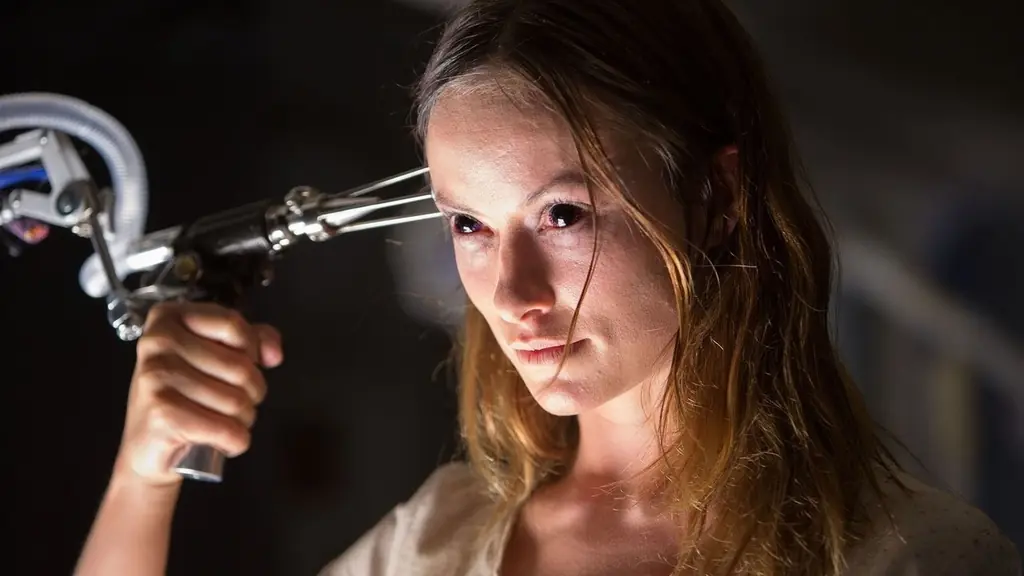
The film assembles a recognizable cast, including Mark Duplass, Olivia Wilde, Donald Glover, and Evan Peters, alongside Sarah Bolger. Evan Peters often serves as the comic relief, delivering a few memorable lines amidst the escalating terror. When Olivia Wilde's character tragically dies during an experiment, the team's desperate attempt to revive her unleashes a new, terrifying entity. The film does manage to conjure some genuinely creepy imagery and a handful of effective jump scares. Certain camera angles, particularly those mimicking a flashlight's beam, evoke a chilling "HD Resident Evil" vibe, proving that David Gelb's direction has moments of genuine visual flair.
Cameos, Nostalgia & Narrative Stakes
At its core, The Lazarus Effect grapples with a fascinating philosophical debate: is death merely a chemical process, or does the soul journey to an afterlife? The film toys with this question, leaving audiences to wonder if Olivia Wilde's reanimated character is possessed by a demon, or if she's simply unlocked a terrifying new potential within her own brain, akin to a horror-infused version of "Lucy." However, this intriguing premise quickly becomes muddled. The narrative struggles to commit, offering conflicting information that leaves the audience, and seemingly the film itself, unsure of its direction. Plot holes abound, with the team conducting highly illegal experiments in a lab they shouldn't even be in, leading to moments that strain credulity and unravel the story's fabric.
Tone, Direction & Creative Freedom
David Gelb clearly aimed to create a legitimately scary experience, and there are moments where his intent shines through. The film delivers a few hair-raising sequences that hint at a more cohesive, terrifying vision. Yet, the overall execution feels messy. What could have been a truly impactful horror film, one that leaves audiences genuinely shaken, ultimately succumbs to its own narrative confusion. It's a film that had the potential to be "way better than you think it's going to be," but instead, it settles for being merely functional.
The Final Verdict
Ultimately, The Lazarus Effect is largely what you expect: a horror movie with some effective jump scares and unsettling visuals. While it boasts a compelling central mystery and moments of genuine creepiness, its muddled plot, pseudo-intellectual aspirations, and a rushed ending—reminiscent of "The Call"—prevent it from achieving true greatness. It's a film that might be a "good time if you're drunk," but for discerning horror fans, it's a chaotic, uneven ride that leaves more questions than answers.
What Worked
- Genuinely creepy imagery and unsettling atmosphere
- Effective jump scares
- Intriguing debate on life after death
- Stylized camera work, reminiscent of "HD Resident Evil"
- Director's clear intent to create scares
What Didn't Work
- Muddled and inconsistent plot
- Attempts at pseudo-intellectualism fall flat
- Significant plot holes that unravel the narrative
- A rushed and unsatisfying ending
- Functional, rather than compelling, acting