
Introduction
For many, the prospect of revisiting a beloved classic like The Lion King through a new lens is met with a mix of excitement and trepidation. This particular iteration, a CGI-driven spectacle aiming for live-action realism, arrives with a complicated legacy. While it promises breathtaking visuals, the journey often feels like a technical marvel that, at times, loses its emotional footing.
From the opening frame, the film's ambition is clear: to recreate the iconic world of the Pride Lands with unparalleled photorealism. The initial impression is undeniably striking, showcasing a world rendered with meticulous detail. Yet, as the narrative unfolds, a peculiar disconnect emerges. The stunning visual fidelity, while impressive, inadvertently highlights a fundamental challenge: how to imbue realistic animal faces with the rich, human-like emotion that made the original so resonant.
The Lead Dynamic & The Action
The core of the film's emotional struggle lies in its portrayal of the main characters. While the visual effects team has achieved remarkable realism in the animals, this commitment to authenticity inadvertently strips the lions of their expressive capacity. The lack of discernible facial emotion in characters like Simba, Nala, and even Mufasa, voiced by the legendary James Earl Jones, creates a palpable distance. It's a challenge that even the most seasoned voice actors struggle to overcome when their vocal performances aren't mirrored by visual cues.
This emotional flatness extends to the dialogue delivery, which often feels stiff and devoid of the natural beats and pauses that allow characters to process information and convey genuine feeling. Moments that were once poignant or impactful now rush by, leaving little room for the audience to connect. It's as if the characters are merely "going through the motions," delivering lines rather than embodying them.
However, not all characters suffer this fate. The film truly comes alive whenever Nathan Lane's Timon and Ernie Sabella's Pumbaa grace the screen. Their performances are a vibrant highlight, injecting much-needed humor and personality. Their dialogue feels fresh, often improvised, and perfectly suited to their animated counterparts, allowing them the freedom to truly make the roles their own. Similarly, Rowan Atkinson's Zazu provides a welcome dose of wit and charm. A notable elevation is also seen in the character of Shenzi, who is brought to the forefront as a more formidable and tangible antagonist, adding a layer of menace that feels genuinely impactful.

Cameos, Nostalgia & Narrative Stakes
One of the film's most significant hurdles is its reliance on the original's script, often to its detriment. Actors are tasked with delivering lines made famous by their predecessors, a challenge that proves difficult when the new performances aim for a different tone. The portrayal of Scar, a role famously embodied by Jeremy Irons, exemplifies this conflict. While the new actor attempts a darker, more brooding interpretation, the dialogue often clashes with this approach, feeling like a mismatch. Yet, when given new material, such as a fresh scene between Scar and Sarabi, the performance truly shines, demonstrating what could have been if more creative freedom had been embraced.
Nostalgia, while a powerful draw, also becomes a double-edged sword. The film struggles to balance faithful recreation with meaningful innovation. Iconic musical numbers, like "Be Prepared," are either significantly altered or reduced to mere fragments, leaving fans feeling shortchanged. Similarly, several visually memorable shots from the original, such as the grand reveal of Pride Rock or Simba's harrowing realization during the stampede, are either absent or replaced by less impactful alternatives. The film often takes out more than it puts back, resulting in an experience that feels lighter and less substantial than its animated predecessor.
Tone, Direction & Creative Freedom
The directorial vision, under Roger Allers (as per the original film's data, though the transcript discusses the remake's direction), prioritizes visual realism above all else. This choice, while technically astounding, dictates the film's overall tone. The commitment to photorealistic animals means sacrificing the exaggerated expressions and fluid movements that conveyed so much emotion in traditional animation. This trade-off results in a film that, despite its stunning appearance, often feels emotionally flat and detached.
It functions remarkably well as a "tech demo," showcasing the cutting edge of CGI capabilities. The intricate details of the animal fur, the sweeping landscapes, and the dynamic action sequences are undeniably impressive. However, this technical prowess comes at the cost of genuine character connection. The film struggles to find its own voice when it adheres too closely to the original's script while simultaneously limiting the emotional range of its characters. The moments where it does deviate, such as an elevated and creatively re-imagined "Lion Sleeps Tonight" sequence, stand out as genuine highlights, demonstrating the potential for innovation that is too often sidelined.
Hans Zimmer's score, a cornerstone of the original's emotional power, remains a strong element here. While the arrangements offer subtle differences, the core impact is still present, providing a familiar and welcome auditory experience that occasionally bridges the emotional gap left by the visuals.
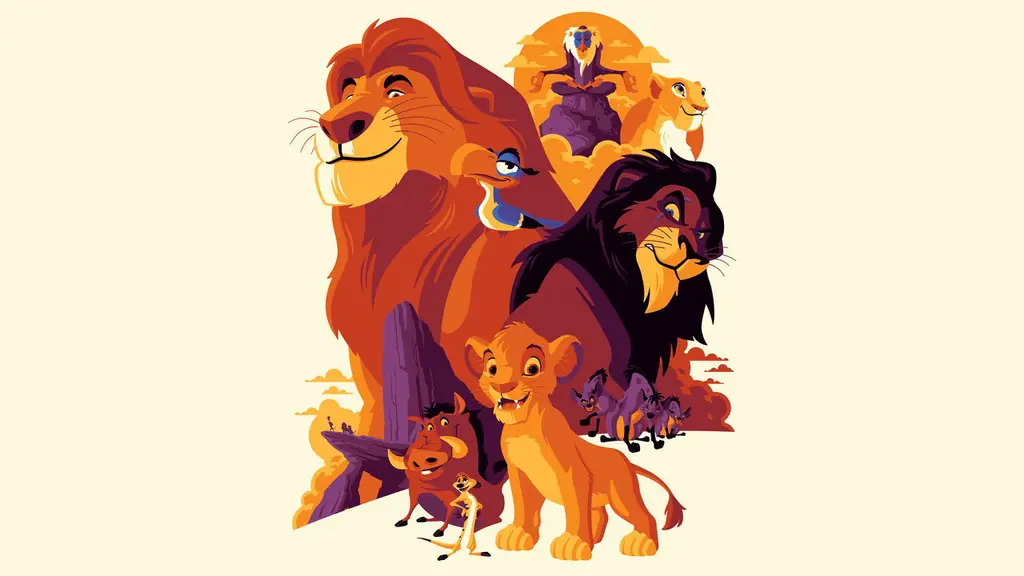
The Final Verdict
Ultimately, this iteration of The Lion King is a visually magnificent achievement, a testament to the incredible advancements in computer-generated imagery. It offers a breathtakingly realistic journey through the Pride Lands, making it a compelling watch for those fascinated by technical innovation. However, its unwavering commitment to realism inadvertently stifles the emotional depth and character expressiveness that defined the original. The film often feels like a beautiful, yet hollow, recreation, struggling to recapture the magic and heart that made its predecessor an enduring classic.
While Timon and Pumbaa deliver standout performances, and certain new scenes hint at untapped potential, the overall experience is one of disconnect. It's a film that might be best enjoyed as a spectacle, perhaps even with a relaxed mindset, rather than as a profound emotional narrative. For those seeking the heartfelt, iconic moments and deep character connections of the original, this version may leave something to be desired, feeling more like a meticulously crafted mod than a truly re-imagined classic.
What Worked
- Visually stunning CGI and photorealistic animal animation.
- Timon and Pumbaa steal the show with their humor and vibrant performances.
- Hans Zimmer's iconic score remains impactful and well-arranged.
- The "Lion Sleeps Tonight" sequence is creatively elevated and reimagined.
- Shenzi's character is given a more prominent and menacing role.
What Didn't Work
- Lack of facial emotion in the main lion characters creates a disconnect.
- Stiff dialogue delivery and missing emotional beats hinder character connection.
- Iconic songs and visual moments from the original are either diluted or absent.
- Pacing issues make the narrative feel rushed in key emotional scenes.
- Prioritizes technical realism over emotional depth, feeling like a "tech demo."



