Introduction
From the visionary mind of Edgar Wright, the director who brought us genre-bending hits like Shaun of the Dead and Hot Fuzz, comes The World's End. This film arrived with the promise of more of Wright's signature blend of quirky British humor and unexpected thrills, and it absolutely delivers. Audiences were eager to see the reunion of the beloved duo, Simon Pegg and Nick Frost, in another adventure that starts grounded and spirals into glorious chaos.
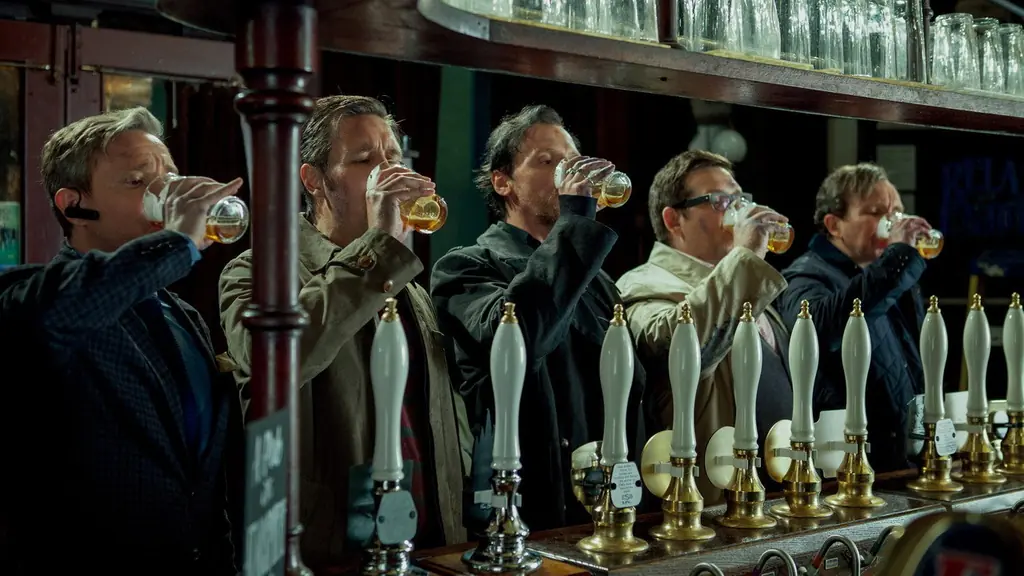
The premise is deceptively simple: a group of childhood friends, led by the perpetually immature Gary King (Simon Pegg), reunites to complete an epic 12-pub crawl in their old hometown, culminating at the fabled pub, "The World's End." What begins as a nostalgic, if somewhat forced, trip down memory lane quickly veers into uncharted territory, proving that some challenges are best left unconquered.
The Lead Dynamic & The Action
The World's End showcases what is arguably Simon Pegg's finest performance to date. Stepping into a role unlike any seen before, Pegg embodies Gary King as a fast-talking, narcissistic, and utterly stubborn man-child. He's the kind of character who, despite his infuriating self-absorption, somehow remains endearingly watchable. It's a testament to Pegg's range that he can make such an egotistical maniac both annoying and hilariously compelling, a character type cinema often lacks.
His dynamic with Nick Frost is, as expected, the heart of the film. While their previous collaborations often saw Frost as the more boisterous of the two, here, Frost plays the more grounded, exasperated friend, providing the perfect contrast to Pegg's manic energy. The supporting cast, including Martin Freeman, also shines, but it's the central duo that anchors the narrative.
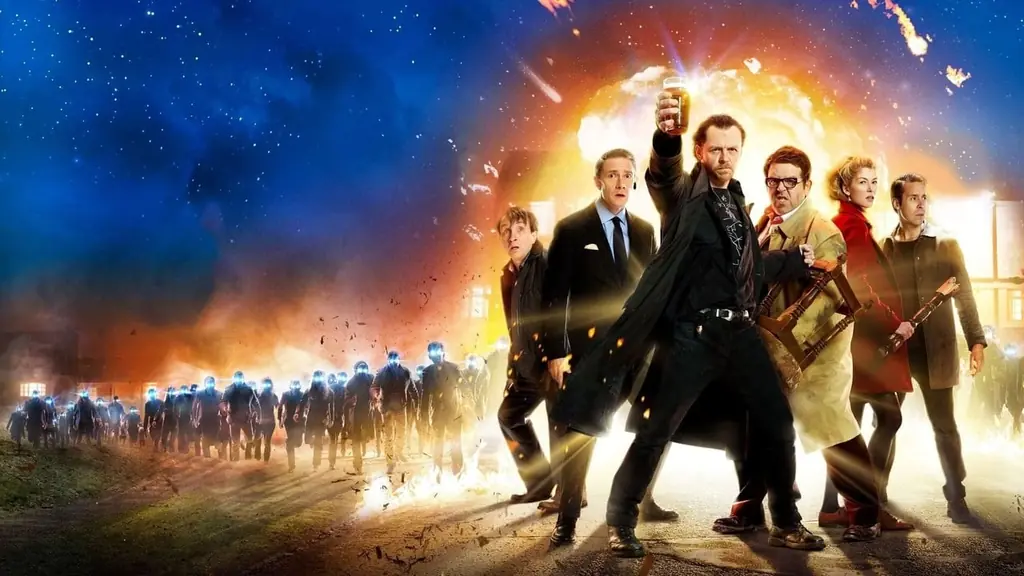
Just when the audience settles into what feels like a classic British comedy, the film takes a dramatic, unexpected turn, much like From Dusk Till Dawn. Suddenly, the pub crawl transforms into a series of exhilarating and genuinely exciting fight sequences against adversaries that are "robots that aren't actually robots." The initial perplexity over their unique fighting style—often involving face-grabbing—eventually gives way to an understanding that perfectly fits the film's off-kilter logic. These brawls are inventive, well-choreographed, and inject a thrilling dose of action into the comedic framework.
Cameos, Nostalgia & Narrative Stakes
The film expertly balances its nostalgic elements with a compelling, escalating plot. The friends' journey through their old haunts is steeped in a sense of longing for a simpler past, but this sentiment is quickly upended by the unfolding sci-fi mystery. The narrative stakes are surprisingly high, moving beyond mere pub-crawl antics to something far more apocalyptic.
While the film features a strong ensemble, it avoids relying on excessive cameos, instead focusing on developing its core group of characters. The humor is sharp, drawing from years of British comedic tradition, yet it feels fresh and relevant. The pacing, while distinctly British, never feels slow; instead, it allows the character dynamics and the unfolding mystery to breathe, making the eventual genre shift all the more impactful.
Tone, Direction & Creative Freedom
Edgar Wright's direction is, as always, impeccable. He masterfully juggles the film's wildly disparate tones, seamlessly transitioning from laugh-out-loud comedy to intense action and even moments of genuine pathos. The visual storytelling is precise, with every shot contributing to the overall narrative and comedic timing. Wright's ability to blend these elements into a cohesive and entertaining whole is a hallmark of his work, and The World's End is no exception.
The film feels like a product of pure creative freedom, allowing Wright to indulge in his unique vision without compromise. It's a smart movie that never takes itself too seriously, yet it manages to explore themes of arrested development, friendship, and the fear of change with surprising depth. This blend of fun and intelligence is a difficult mix to achieve, but The World's End pulls it off with aplomb.
The Final Verdict
The World's End is a thoroughly enjoyable and smart film that stands proudly alongside Edgar Wright's best work. It's a movie designed to be fun, and it succeeds spectacularly, offering great characters, memorable moments, and genuinely hilarious humor. Simon Pegg delivers a career-defining performance, anchoring a story that is both a nostalgic trip and an unexpected sci-fi thrill ride. This is a film that demands repeat viewings, a testament to its clever writing and exhilarating execution. It's a definite must-watch for anyone seeking a unique, intelligent, and wildly entertaining cinematic experience.
What Worked
- [[person:11108|Simon Pegg]]'s career-best, transformative performance as Gary King.
- Brilliant blend of quirky British comedy and unexpected sci-fi action.
- Engaging and hilarious dynamic between [[person:11108|Simon Pegg]] and [[person:11109|Nick Frost]].
- Smart writing with genuinely funny moments and well-developed characters.
- Exciting, inventive, and unique fight sequences.
What Didn't Work
- The distinct "British pacing" might not appeal to all viewers.
- Initial confusion regarding the unique fighting style of the adversaries.