
Introduction
The promise of 47 Meters Down was simple yet terrifying: two sisters, vacationing in the vibrant climes of Mexico, decide to embark on a thrilling, albeit risky, shark cage dive. What begins as an adventurous escapade quickly spirals into a nightmare when their protective cage, operated by what appears to be the "shadiest people you could ever find," plummets a staggering 47 meters to the dark, unforgiving ocean floor. Trapped with a rapidly dwindling air supply and the ominous presence of great white sharks circling, the stage is set for a survival thriller that initially held immense potential to grip audiences. The setup alone conjures images of claustrophobic terror and a desperate fight for life, hinting at a cinematic experience designed to keep viewers breathless.
The Lead Dynamic & The Action
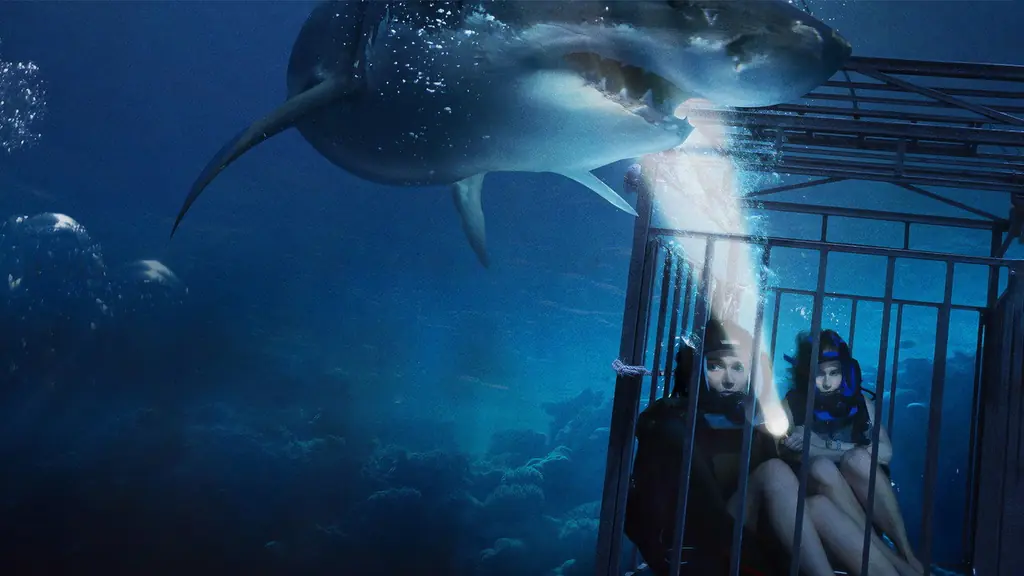
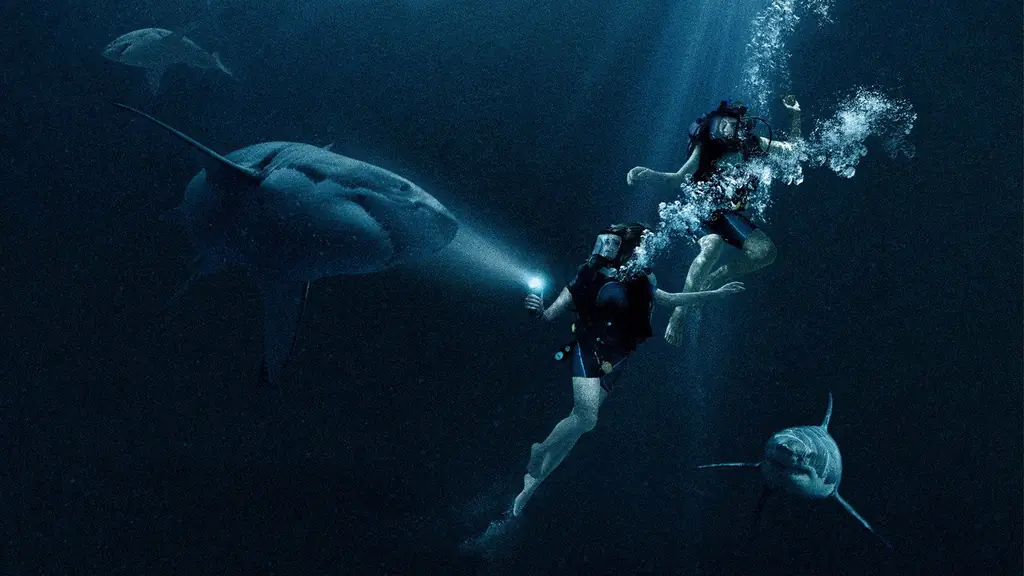
From the outset, 47 Meters Down attempts to build tension around the dire predicament of its protagonists. The initial moments of the cage's descent and subsequent crash are genuinely unsettling, creating a palpable sense of dread. The sheer claustrophobia of being confined in a metal box at such depths, coupled with the ticking clock of their oxygen tanks and the unseen dangers lurking in the abyss, does provide some "good moments of tension." However, this initial surge of adrenaline proves fleeting. The reviewer points out that the film "gets really old really fast," largely because the core visual remains static: two people trapped in a cage. While other survival films, like "The Shallows," managed to sustain engagement with a single character on a rock, offering varied scenery and a more dynamic threat, 47 Meters Down struggles. The underwater environment is predominantly depicted in "Pitch Blackness," punctuated only by the limited beams of their flashlights. This disorienting darkness, while contributing to the feeling of being lost, ultimately makes for a monotonous visual experience. The sharks, surprisingly, are not the relentless, terrifying force one might expect. They are often described as an "inconvenience," a "concept" rather than a tangible, ever-present threat that actively hunts the sisters. This choice, perhaps intended to highlight the suffocation aspect, inadvertently diminishes the horror element. Furthermore, the performances, particularly from Mandy Moore, fail to fully immerse the audience in the characters' terror. Her portrayal is noted for "a lot of hyperventilating" and a general sense of panic that doesn't quite resonate, leaving the reviewer feeling that the acting "didn't floor me."
Cameos, Nostalgia & Narrative Stakes
The narrative of 47 Meters Down is a straightforward race against time: escape the cage, avoid the sharks, and reach the surface before the air runs out. The primary antagonist isn't solely the sharks, but the crushing pressure, the limited oxygen, and the vast, disorienting darkness of the deep. This focus on environmental threats over creature horror is a distinct choice, but one that ultimately dilutes the film's impact. The stakes are undeniably high, with every breath a precious commodity, yet the execution often feels drawn out and repetitive. The film's pacing struggles to maintain momentum, leading to stretches where the audience is simply watching the characters react to their dire circumstances without much progression. The ending, in particular, becomes a significant point of contention. After enduring an agonizing ordeal, Mandy Moore's character experiences a prolonged and vivid hallucination of being rescued alongside her sister, Claire Holt's character. This false sense of relief is then shattered when she awakens to the grim reality that her sister has perished, and she is rescued alone. The reviewer found this twist to be "kind of dumb," arguing that while it aimed for a shocking reveal, it ultimately felt like a narrative misstep. A more impactful, darker conclusion, such as the protagonist suffocating while still believing she was saved, was suggested as a missed opportunity for a truly memorable and unsettling ending. The film's inability to deliver a satisfying or truly shocking conclusion further contributes to its overall forgettability.
Tone, Direction & Creative Freedom
Under the direction of Johannes Roberts, 47 Meters Down had a "neat concept" that, regrettably, wasn't fully realized. The directorial choices, particularly in depicting the underwater environment, leaned heavily into the disorienting darkness. While this could have amplified the psychological terror, it often resulted in a visually unengaging experience. The decision to keep the sharks largely out of sight, making them more of a conceptual threat than a tangible one, was a double-edged sword; it emphasized the isolation and suffocation but simultaneously deprived the film of a more visceral horror element. The pacing frequently falters, making the film's relatively short runtime feel considerably longer. The creative freedom afforded to the filmmakers, or perhaps the choices they made, ultimately led to an execution that felt less impactful than the premise suggested. The film struggles to balance its survival thriller elements with its horror aspirations, resulting in a tone that oscillates between tense and tedious.
The Final Verdict
In the final analysis, 47 Meters Down emerges as a film that, despite its genuinely promising and terrifying premise, largely fails to deliver a consistently engaging experience. It offers fleeting moments of claustrophobic tension and a compelling setup, but these are ultimately overshadowed by a pervasive sense of boredom and a narrative that struggles to maintain its grip. The underdeveloped shark threat, the uninspired lead performance, and a particularly disappointing ending all contribute to a film that, as the reviewer succinctly puts it, is "pretty forgettable." It's a movie that, for many, will likely fade from memory almost as quickly as the credits roll, leaving little lasting impression beyond the initial concept. For those seeking a truly harrowing and memorable underwater horror experience, this deep dive might leave you feeling more deflated than thrilled.
What Worked
- Initial neat concept and compelling setup
- Some good moments of claustrophobic tension
- Disorienting darkness creates a sense of vulnerability
What Didn't Work
- Largely boring and gets old fast
- Sharks are an underdeveloped, inconvenient threat
- Unimpressive acting from Mandy Moore
- Disappointing and "dumb" ending
- Ultimately a forgettable experience



