Introduction
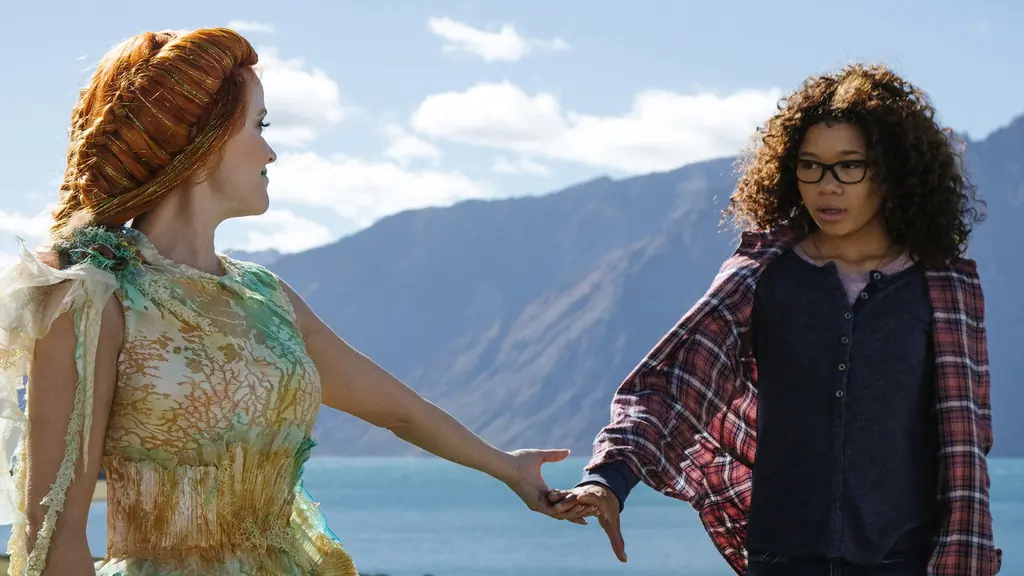
Anticipation swirled around A Wrinkle in Time, a Disney adaptation promising a grand, universe-spanning adventure. The premise itself is compelling: a young girl, Meg Murry, whose scientist father, played by Chris Pine, vanished four years prior while theorizing about instantaneous travel across the cosmos. Suddenly, three enigmatic, deity-like figures—Mrs. Whatsit (played by Reese Witherspoon), Mrs. Who (played by Mindy Kaling), and Mrs. Which (played by Oprah Winfrey)—arrive to guide Meg and her younger brother, Charles Wallace, on a quest to find him. It's a setup ripe for wonder, yet from its opening moments, the film struggles to grab hold.
The Lead Dynamic & The Action
The adventure in A Wrinkle in Time feels curiously disconnected. While the concept of a missing father and a rebellious daughter is clear, the emotional resonance simply isn't there. The film introduces wondrous, visually stunning lands, but the characters merely "hop, skip, and a jump" through them without truly engaging. These fantastical worlds often feel less like integral parts of a narrative and more like potential blueprints for future Disneyland attractions, a cynical undercurrent that detracts from any genuine immersion. The dialogue, particularly between the children, often rings false, sounding like adults writing for kids rather than authentic youthful exchanges. Even a poignant moment where an older boy tells Meg, "I don't think you know how wonderful you are," feels manufactured, failing to land with the intended emotional weight.

Cameos, Nostalgia & Narrative Stakes
The narrative of A Wrinkle in Time is unfortunately aimless and messy. Despite its intriguing concepts about space-time, the film uses these ideas merely as a platform for adventure, much like saying a hurricane movie is about meteorology—it's technically true but misses the point. The characters fail to resonate, making it difficult to invest in their journey or the stakes at hand. A critical plot point involving Charles Wallace occurs with little emotional build-up, leaving audiences feeling detached rather than invested. The film demands a significant performance from this young actor, but he appears unprepared for the task, compromising the entire emotional core of the story. This misstep, whether due to casting or direction, severely undermines the film's ability to deliver on its promise of a heartfelt adventure.
Tone, Direction & Creative Freedom
Director Ava DuVernay, known for her impactful character pieces like Selma, seems to have struggled with the transition to a big-budget Disney production. The film suggests she might be better suited to her established "wheelhouse" of lower-budget, character-driven narratives. The immense pressure and scale of a project like A Wrinkle in Time appear to have overwhelmed the creative vision, resulting in an unfocused and disjointed experience. The inability of a key child actor to deliver the required emotional depth for a pivotal role further highlights a directorial or production oversight, essentially throwing a "level six rogue against a level 60 dragon" and expecting a miracle. This failure to properly support or cast such a crucial role ultimately compromises the film's emotional integrity.
The Final Verdict
A Wrinkle in Time is a visually ambitious but ultimately forgettable journey. While it carries a sweet, albeit cheesy, message about love and connection, its execution is marred by an aimless plot, underdeveloped characters, and a significant misstep in a crucial performance. The film feels drawn out, struggling to fill its runtime, and leaves little lasting impression. Despite its grand scope and the talent involved, it's a cosmic misfire that quickly fades from memory, leaving audiences wishing for a more focused and emotionally resonant adventure.
What Worked
- Sweet message about love and connection
- Visually wondrous and imaginative lands
- Interesting underlying concepts of space-time
- Strong female lead character
What Didn't Work
- Aimless and unfocused plot
- Characters fail to resonate emotionally
- Unnatural dialogue for child actors
- Critical miscasting/underperformance in a key child role
- Feels drawn out and struggles to fill runtime