Introduction
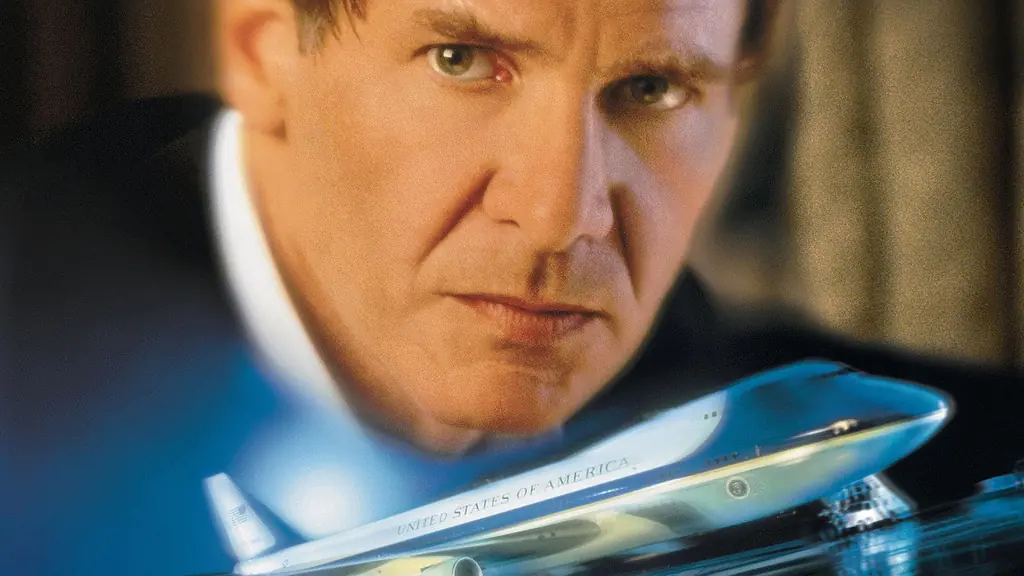
The year is 1997. The action genre is king, and audiences are hungry for high-octane thrills. Enter Air Force One, a film that dared to ask: what if the President of the United States wasn't just a figurehead, but the last line of defense against a sky-high terrorist takeover? This isn't a story about someone saving the President; it's about the President being the hero. From its audacious premise, the film immediately grabs attention, promising a "John McClane in the Oval Office" scenario that's nothing short of amazing.
The Lead Dynamic & The Action
At the heart of Air Force One lies the electrifying clash between two titans: Harrison Ford as President James Marshall and Gary Oldman as the ruthless terrorist Ivan Korshunov. Ford, in an era before his recent franchise returns, delivers a performance that reminds everyone why he's a legend. He's not just playing a president; he's playing a husband and a father fighting for his family, adding a deeply personal stake to the global crisis. He "brings it second to none," effortlessly shifting from diplomatic leader to a man willing to do whatever it takes.
Opposite him, Oldman is, as always, a masterclass in villainy. Whether calm or screaming, he's "always scary," a perfect casting choice for a bad guy who instills genuine fear. His chilling ultimatum—executing a hostage every half hour—creates an immediate, palpable "time crunch" that drives the film's tension.
While some might expect non-stop explosions, Air Force One cleverly builds its suspense through "talking tension" in the initial acts, focusing on the high-stakes negotiations between Korshunov and the war room in Washington D.C., led by Vice President Glenn Close. This allows the narrative to explore the complex dynamics of power and succession. But fear not, action aficionados: the film is acutely aware of its 90s action roots, unleashing a barrage of "plane explosions and more action-esque sequences" in its thrilling final act, ensuring a satisfying payoff.
Cameos, Nostalgia & Narrative Stakes
Beyond the central conflict, the film weaves in compelling subplots. The presence of President Marshall's family on board elevates the stakes, transforming a national crisis into a deeply personal battle for Ford's character. The war room scenes, featuring Glenn Close as the Vice President, delve into the constitutional questions of presidential authority during a crisis, adding an unexpected layer of depth.
However, not every narrative choice lands perfectly. The introduction of a turncoat Secret Service agent, whose villainy is revealed from the outset with "no reveal," leaves a lingering question mark. The reviewer notes, "what was he offered, what did they promise him?" This unexplained motivation for his betrayal feels like a missed opportunity, a plot device that serves to get the terrorists on board rather than a fully fleshed-out character arc. Despite this minor stumble, the film maintains its grip, largely due to the sheer force of its lead performances and the inherent tension of its premise.
Tone, Direction & Creative Freedom
Under the direction of Wolfgang Petersen, Air Force One strikes a heroic and engaging tone. The film's atmosphere is significantly amplified by Wolfgang Petersen's direction and Jerry Goldsmith's "amazing" score. The music isn't just background; it's "heroic," sounding "like it was taken from the DNA of America itself," perfectly underscoring the President's defiant stand. The film feels like a quintessential 90s action movie, delivering exactly what audiences expected from the era: a thrilling, no-holds-barred ride. It's a testament to the era's creative freedom, allowing for a concept as bold as the President becoming the ultimate action hero.

The Final Verdict
Air Force One is an "enjoyable watch" that consistently delivers a "good time." While it might not reach the "iconic" status of some of its 90s contemporaries like Face/Off or Con Air, it stands tall as a thoroughly entertaining thriller. The film's unique premise, coupled with powerhouse performances from Harrison Ford and Gary Oldman, ensures that the tension is always palpable. It's a film that proves the President can be "the man's man, the president's president," and a hero in his own right. No alcohol required to enjoy this one—just sit back and prepare for a high-flying, adrenaline-fueled adventure.
What Worked
- [[person:3|Harrison Ford]]'s commanding performance as an action-hero President.
- [[person:64|Gary Oldman]] delivers a chillingly effective villain.
- The unique and thrilling "President as John McClane" premise.
- Jerry Goldsmith's incredibly heroic and memorable musical score.
- Engaging blend of "talking tension" and explosive action sequences.
What Didn't Work
- The unexplained motivations of the turncoat Secret Service agent.
- Pacing occasionally leans heavily on dialogue-driven tension before the action ramps up.
- Doesn't quite reach the "iconic" status of some other 90s action films.