Introduction
From the moment the premise of BlacKkKlansman hit the airwaves, audiences knew they were in for something unique. The true story of a black police officer infiltrating the Ku Klux Klan in 1979 sounded like a setup for a dark comedy, perhaps a spiritual successor to Chappelle's Show's Clayton Bigsby sketch. Yet, under the masterful direction of Spike Lee, this film quickly reveals itself to be a heavy drama, albeit one punctuated by welcome bursts of humor. It's a narrative that doesn't shy away from its weighty subject matter, serving as a stark, undeniable message for today's world. Those who ignore history's lessons are indeed doomed to repeat them, and BlacKkKlansman makes it clear that the "hate circle" continues to spin.
This isn't an escape movie; it's a mirror reflecting uncomfortable truths. If you're walking into this film expecting anything less than a deeply relevant and thought-provoking experience, you're simply fooling yourself. In fact, its contemporary resonance is precisely why it demands to be seen.
The Lead Dynamic & The Action
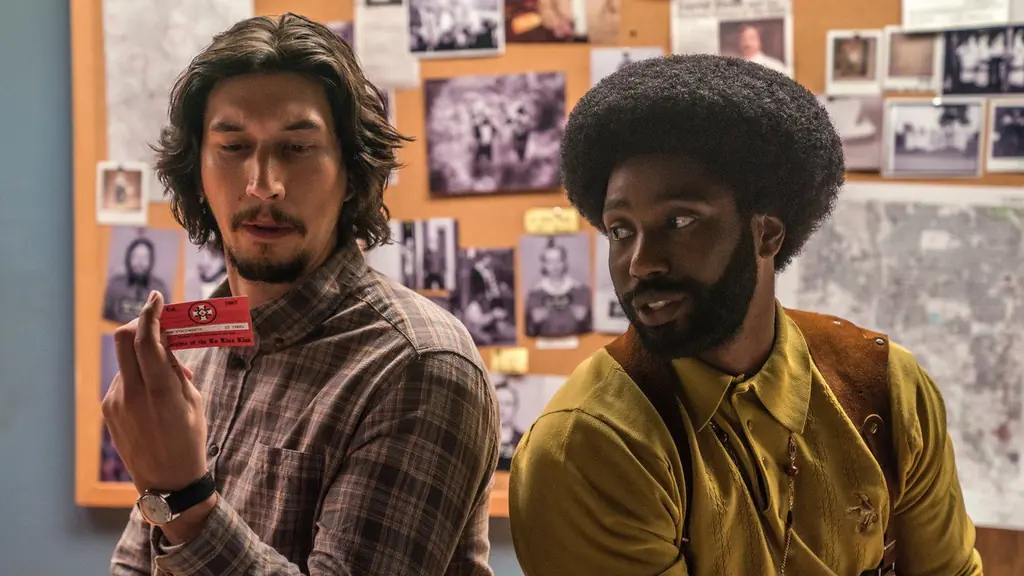
At the heart of BlacKkKlansman is the compelling dual performance from John David Washington as Ron Stallworth and Adam Driver as Flip Zimmerman. Washington, son of Denzel, delivers a standout performance as the black officer who answers a KKK recruitment ad. Since he can't physically meet the Klan, Driver's character steps in, effectively playing the same person in person. The chemistry between the two is palpable, driving much of the narrative's tension and its unexpected humor. While the film is undeniably heavy, these moments of levity are crucial, providing necessary breathing room. Life, after all, is a blend of drama and chuckles, and BlacKkKlansman captures that blend with remarkable authenticity.
Cameos, Nostalgia & Narrative Stakes
BlacKkKlansman doesn't paint the Ku Klux Klan as cartoonish villains; instead, it portrays them as disturbingly ordinary individuals, gathering for barbecues and casual conversation. This nuanced approach highlights the insidious nature of bigotry – you can't simply "pick out a bigot" in a crowd. The film also delves into the Black Panther movement, featuring fascinating conversations between Ron Stallworth and a Black Panther leader. These exchanges powerfully illustrate how people fighting for similar goals can still perceive each other as adversaries.
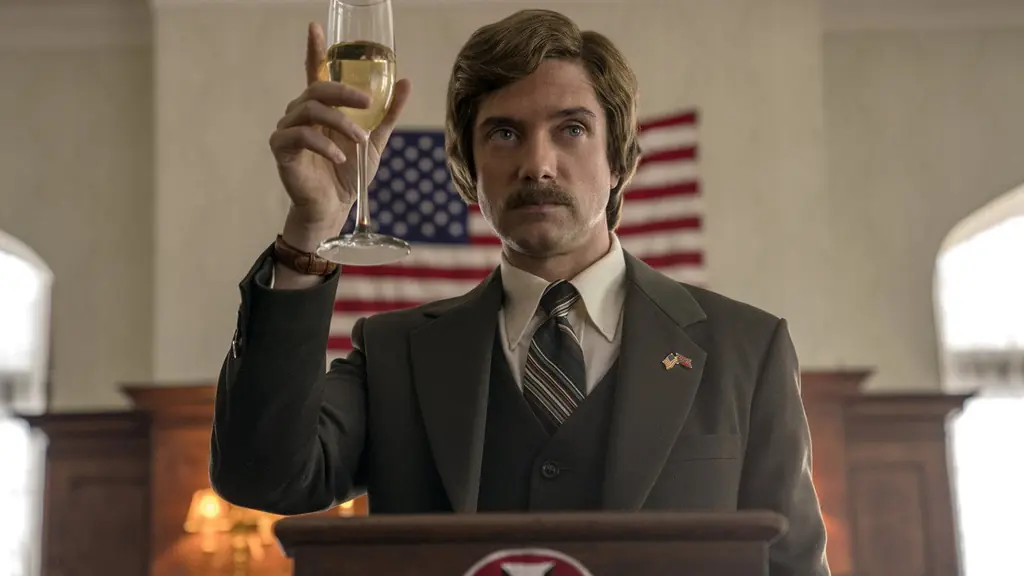
The film also includes pointed references to modern politics, particularly through Topher Grace's chilling portrayal of David Duke, the former Grand Wizard of the KKK. When Duke speaks of a future leader who will "make America great again," it feels less like a forced anachronism and more like a chillingly prescient observation, given Duke's real-life support for Donald Trump. The narrative stakes escalate dramatically, culminating in end credits that feature real-world footage of recent events, forcing a profound pause and reflection on the audience. It's a powerful, gut-punching reminder that the film's historical context remains terrifyingly relevant.
Tone, Direction & Creative Freedom
Spike Lee navigates the film's complex tone with a bold hand, blending its serious message with moments of genuine humor. However, the film isn't without its minor stumbles. The pacing, particularly in the final third of its 2-hour-20-minute runtime, occasionally drags. There are also some questionable stylistic choices; for instance, 70s music playing during intense, high-stakes scenes, which, while period-appropriate, doesn't always heighten the tension as one might expect. Similarly, a scene featuring a Black Panther leader's engaging speech is undercut by a strange visual effect of fading heads in the audience. While Laura Harrier delivers a strong performance as Ron Stallworth's girlfriend and a member of the Black Panthers, her character sometimes feels disconnected from the main plot, making her reappearances feel a little uneven.
The Final Verdict
Despite its minor imperfections, BlacKkKlansman is an engaging, thrilling, and ultimately essential cinematic experience. It's an insane true story brought to life by a stellar cast, with Adam Driver delivering a particularly fantastic performance. The film may not be flawless, but it absolutely sticks the landing with its powerful, resonant message. It's a thought-provoking journey that explores the cyclical nature of hate and the enduring fight for equality, leaving audiences with much to ponder. This is a film that sparks conversation, challenges perspectives, and entertains all at once. A great time, no alcohol required.
What Worked
- Compelling dual performance from John David Washington and Adam Driver.
- Masterful blend of heavy drama with well-placed, authentic humor.
- Powerful and incredibly timely social commentary.
- Unflinching and nuanced portrayal of bigotry and its insidious nature.
- Impactful and thought-provoking ending with real-world footage.
What Didn't Work
- Pacing issues, particularly in the final act, causing some scenes to drag.
- Some questionable stylistic choices, like music during intense moments or audience visuals.
- Supporting character development, such as Ron Stallworth's girlfriend, feels uneven at times.