Introduction
The return of everyone's favorite "narcissistic pathological lying nanny" in Mary Poppins Returns arrived with a mix of anticipation and nostalgia. This sequel to the beloved classic picks up decades later, finding the Banks children, Michael Banks and Jane Banks, now grown. Michael, portrayed by Ben Whishaw, is struggling to keep his family home amidst financial hardship, setting the stage for the magical intervention of Mary Poppins.
Emily Blunt steps into the iconic role, a casting choice that immediately sparked conversation. The film aims to be a "Mary Poppins for a new generation," a phrase that, upon reflection, feels a bit perplexing. After all, the original film remains readily available and timeless. Yet, the stage is set for a new adventure, one that promises to rekindle the wonder for both long-time fans and newcomers.
The Lead Dynamic & The Action
From the moment Emily Blunt appears as Mary Poppins, she commands the screen. Her performance is nothing short of exceptional; many critics argue that no one living today could have delivered a better, more modern Mary Poppins. She embodies the character with a perfect blend of sternness, charm, and subtle magic, much like how Harrison Ford redefined Indiana Jones for a new era.
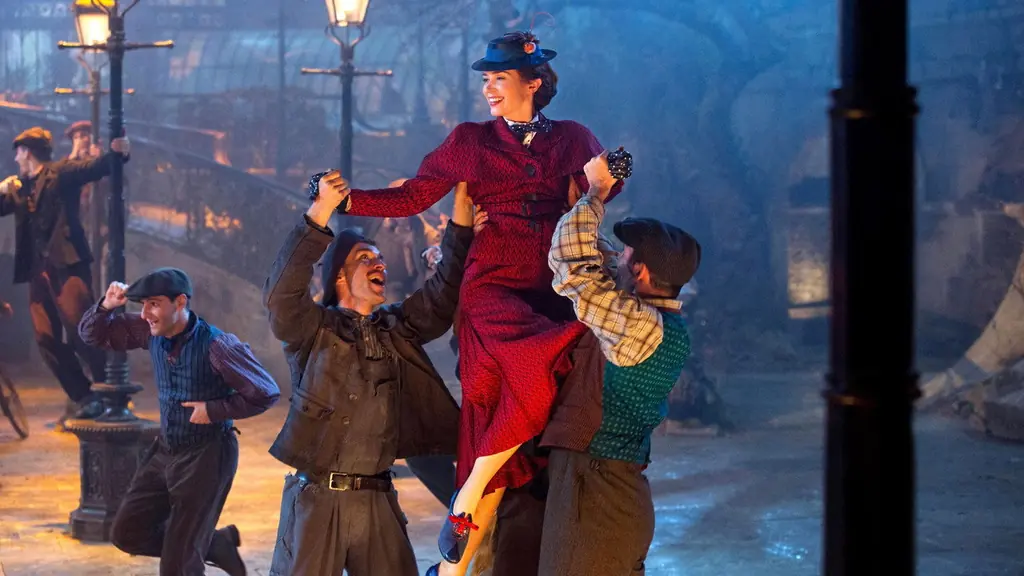
Accompanying her is Lin-Manuel Miranda as Jack, a lamplighter who was once an apprentice to Bert. While he's "totally Bert but not Bert," Miranda brings a vibrant energy to the role, particularly in the film's impressive dance sequences. The torch-lit street dances are a visual treat, showcasing his talent. However, despite his efforts, the character doesn't quite achieve the same memorable status as Dick Van Dyke's original Bert, whose animated quality and iconic stick-dragging antics are still vivid in memory.
One of the film's biggest letdowns, however, is its music. While there are a few catchy tunes, none possess the enduring, hummable quality of the original's iconic soundtrack. There's no "Let's Go Fly a Kite" equivalent here, leaving a noticeable void. Despite this, the film delivers some neat sequences, including a familiar yet entertaining animated segment that blends live-action and traditional animation seamlessly. This blend of "familiar, yeah, but entertaining" defines much of the film's visual and narrative approach.

Cameos, Nostalgia & Narrative Stakes
Mary Poppins Returns leans heavily into nostalgia, perhaps a little too much. The narrative follows many of the same beats as its predecessor, to the point where it feels more like a direct structural echo than a fresh continuation. Some might even argue it adheres more closely to the original's formula than Star Wars: The Force Awakens did to its own source material.
This approach suggests a studio strategy that prioritizes familiarity over bold innovation. One could imagine a boardroom scenario, playfully dubbed "Milking Mr. Banks" rather than "Saving Mr. Banks," where executives greenlight a sequel with the explicit instruction to replicate the original's success by mirroring its structure. While this ensures a certain level of comfort for the audience, it also means the film rarely ventures into truly new territory, playing it safe with its narrative stakes.
Tone, Direction & Creative Freedom
Under the direction of Rob Marshall, the film maintains a consistently enjoyable and family-friendly tone. It's a "safe sequel," designed to be "safely enjoyable" for all ages. This careful approach ensures a pleasant viewing experience, though it might leave some wishing for a bit more creative daring.
Despite its overall safe demeanor, the film does deliver genuine emotional moments. A standout scene features Michael Banks at his wits' end, overwhelmed by stress. This particular moment, devoid of grand posturing or overt visual magic, feels deeply personal and authentic, resonating as one of the film's strongest emotional beats. It's a reminder that even within a magical framework, human struggles can provide the most impactful storytelling.
The film successfully evokes "the family feels," leaving audiences with a sense of warmth and well-being. It achieves its goal of making viewers "feel good," even if some of Mary Poppins' more fantastical tricks, like floating away on balloons, leave one pondering the practicalities of magical physics.
The Final Verdict
Mary Poppins Returns offers a fine time at the cinema, a delightful matinee experience that doesn't require any adult beverages to enjoy. While the music may not be as instantly memorable as its predecessor's, the film largely succeeds in its mission to deliver a charming, heartfelt, and safely enjoyable family musical. It's a testament to the enduring appeal of Mary Poppins and the captivating performance of its new lead.
What Worked
- Emily Blunt's pitch-perfect and modern portrayal of Mary Poppins.
- An enjoyable and safely entertaining experience for families.
- Features a genuinely heartfelt and personal moment with Michael Banks.
- Visually cool and entertaining animated sequence.
- Good dance sequences, particularly those involving Lin-Manuel Miranda.
What Didn't Work
- The new musical numbers are largely unmemorable compared to the iconic original soundtrack.
- The plot closely mirrors the original film, leading to an overly familiar narrative.
- Lin-Manuel Miranda's character, while energetic, lacks the distinct memorability of Bert.
- The film plays it safe, avoiding significant creative risks or narrative innovation.