
Introduction
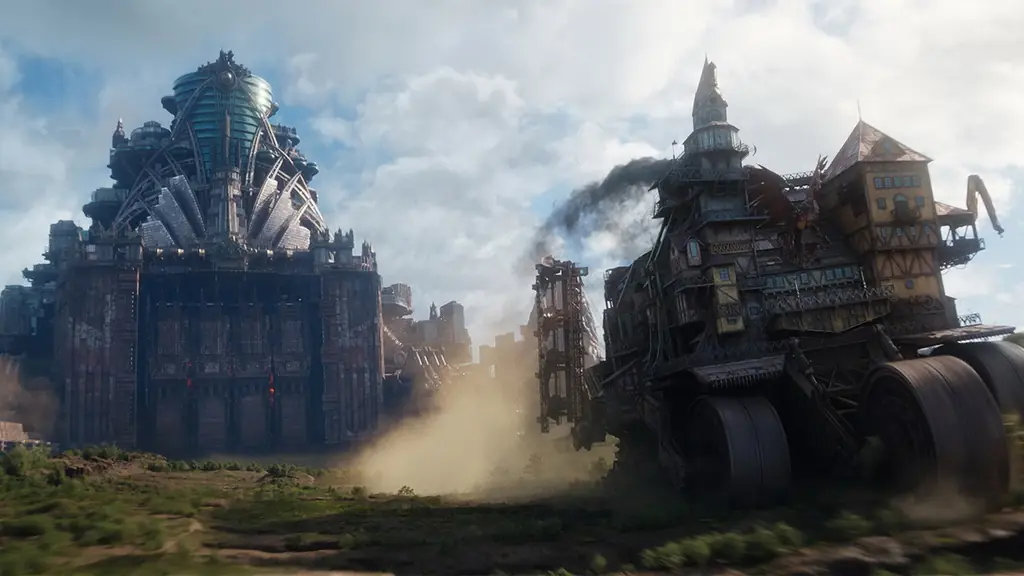
The buzz around Mortal Engines was palpable, especially with Christian Rivers at the helm and Peter Jackson's name prominently featured in marketing – though he served as a writer, not director. Audiences anticipated a grand, post-apocalyptic spectacle set a thousand years in the future, where humanity survives in cities on wheels. This concept, reminiscent of mobile schools in classic RPGs like Final Fantasy, promised a fresh cinematic experience. The initial promise of this imaginative world, where entire metropolises roam the desolate landscape, certainly captured attention.
The Lead Dynamic & The Action
From the opening frame, the visuals are undeniably cool, painting a picture of a world both illogical and utterly fascinating. The first act, particularly its initial half, delivers genuine excitement. A thrilling chase sequence involving two colossal cities and a frantic pursuit within a moving metropolis showcases the film's unique operational mechanics. It's a spectacle that initially suspends disbelief, drawing viewers into its inventive premise. However, the moment the narrative leaves the confines of the main city, the film begins to lose its footing, grinding to a halt rather than accelerating into its potential.
Cameos, Nostalgia & Narrative Stakes
The transition from book to screen often presents challenges, and Mortal Engines struggles with an overload of plot lines. The central quest of Hera Hilmar's character, Hester Shaw, to avenge her mother's death at the hands of Hugo Weaving's Thaddeus Valentine, frequently gets lost in the shuffle. The supposed romance between Hester and Robert Sheehan's Tom Natsworthy feels uninspired, a tired young adult novel trope that fails to engage. The narrative often bounces between disparate groups and locations, making it difficult to invest in any single storyline. Ironically, the most compelling element is a side plot involving a "robot zombie" – a character so unique, described as a blend of Tin Man and The Terminator, that it overshadows the main narrative. This character, Shrike, played by Stephen Lang, is easily the film's most memorable aspect, leaving one to wonder if the story should have centered on him instead.
Tone, Direction & Creative Freedom
The film's imaginative world is its greatest asset, yet the execution often falls short. The narrative is riddled with illogic, not in the fantastical premise of mobile cities, but in the characters' decisions. For instance, a crucial moment calls for a tech expert to disable a super weapon, yet a non-tech-savvy character is sent instead. This highlights a fundamental disconnect between the film's intriguing concept and its narrative flow. While the budget required for such a grand vision is immense, the film feels like it should have been a series to properly explore its intricate world and numerous subplots, rather than a condensed, often messy, feature film. The potential for a truly immersive experience is present, but the film struggles to harness it effectively.

The Final Verdict
Ultimately, Mortal Engines isn't a disaster, but it's far from a triumph. It’s a forgettable experience that leaves little desire for a rewatch. The film could have benefited from being significantly shorter, tightening its focus and eliminating extraneous plot points. While the initial concept and visual flair are commendable, a compelling concept alone isn't enough to carry a film. It needed a story that flowed as smoothly as its mobile cities were meant to glide. For those seeking a visually distinct, if narratively flawed, adventure, it might offer some fleeting entertainment, perhaps best enjoyed with a relaxed, undemanding mindset.
What Worked
- Visually stunning and imaginative world-building
- Exciting and dynamic chase sequences in the first act
- The "robot zombie" character, Shrike, is a standout
- Unique and intriguing core concept of mobile cities
What Didn't Work
- Narrative quickly "falls off the rails" after the initial excitement
- Overloaded with too many plot lines that fail to connect
- Forgettable and unengaging character arcs and romance
- Illogical character decisions undermine the story
- Lacks rewatchability and feels too long



