Introduction
The cinematic landscape is littered with the husks of failed video game adaptations, a curse that has long plagued Hollywood. Enter Rampage, a film that arrived with the promise of breaking the mold, spearheaded by the charismatic Dwayne Johnson and a trio of colossal, rampaging creatures. Audiences anticipated a spectacle of destruction, a no-holds-barred monster mash, and a chance for a video game movie to finally deliver on its explosive potential. The question on everyone's mind: could this be the one to finally get it right, or would it simply add another casualty to the genre's long list of disappointments?
The Lead Dynamic & The Action
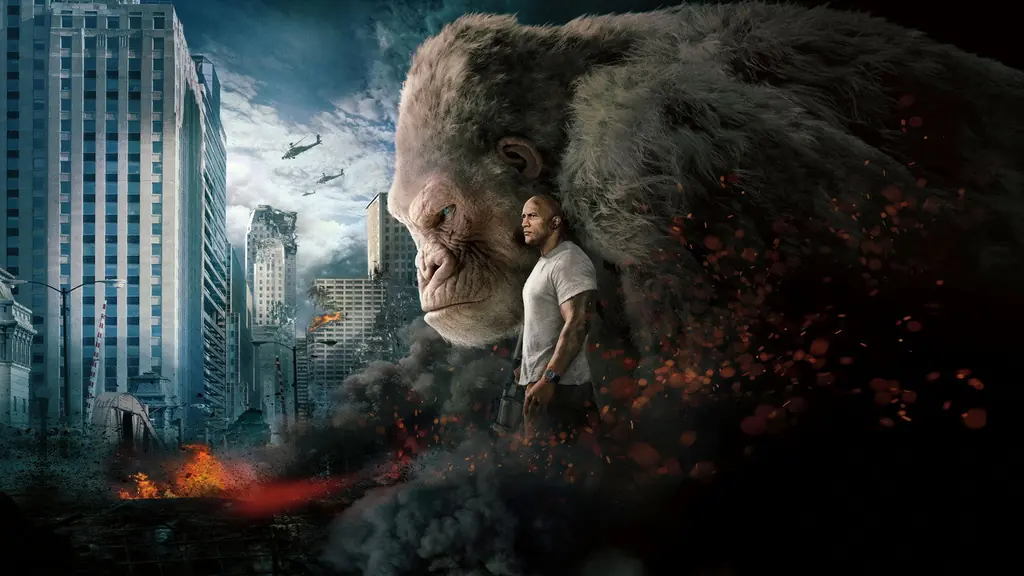
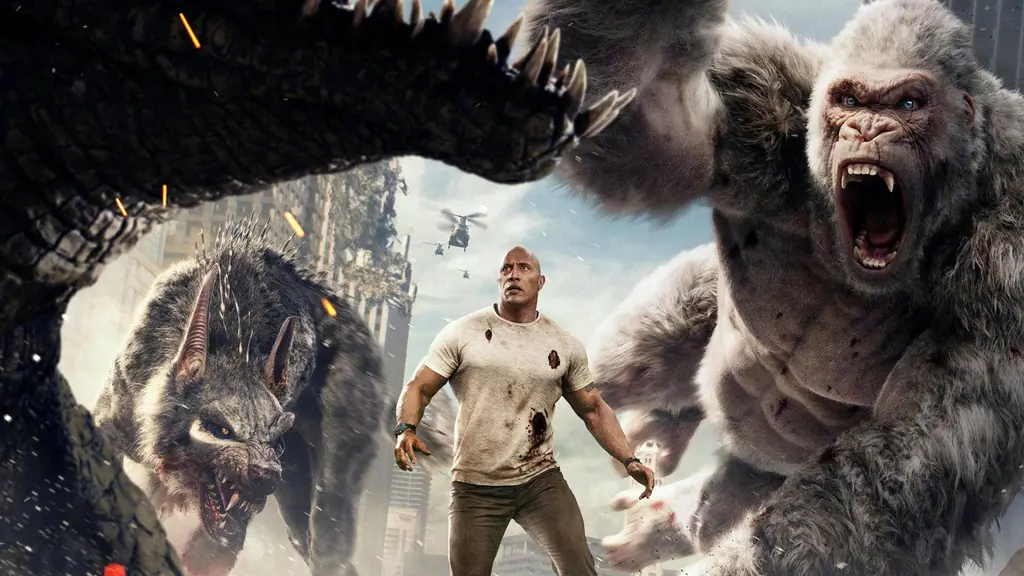
At its core, Rampage centers on the bond between Dwayne Johnson's primatologist, Davis Okoye, and his albino gorilla companion, George. This friendship is quickly tested when a rogue pathogen transforms George, along with a wolf and a crocodile, into gargantuan, rage-fueled beasts. While the journey to this point has its narrative stumbles, the film truly ignites in its final act. The last 15 to 20 minutes are where Brad Peyton's direction fully commits to the sheer absurdity and delivers the monster-on-monster action everyone came to see. Witnessing these titans tear through Chicago, battling each other with gleeful abandon, elicits an undeniable grin. It's a spectacle of pure, unadulterated "dumb fun" that finally allows the movie to settle into its chaotic, destructive groove.
Cameos, Nostalgia & Narrative Stakes
For fans of the original arcade game, Rampage offers a few delightful nods, including a blink-and-you'll-miss-it coin-op machine in the background. However, the narrative itself often struggles to maintain a consistent tone, frequently veering into what feels like a "cheesy Sharknado movie" with a blockbuster budget. The corporate villains, while attempting to be menacing, never quite land as truly formidable antagonists. Instead, they contribute to the film's overall sense of contrived plotting. Solutions to seemingly insurmountable problems are often presented as improbable long shots that, against all odds, work perfectly every single time. This constant reliance on convenient plot devices, coupled with some truly baffling logical leaps—like military officers debating submarines in the Chicago canal—underscores a script that prioritizes spectacle over substance. One can't help but wonder about the missed opportunity to explore the original game's premise, where the monsters were transformed humans, adding a layer of tragic conflict.
Tone, Direction & Creative Freedom
Despite its narrative shortcomings, Rampage finds its footing in its unapologetic embrace of its own ridiculousness. The film's tone, particularly in its latter half, leans heavily into the over-the-top action, allowing the audience to simply enjoy the ride without overthinking. A significant highlight comes in the form of Jeffrey Dean Morgan as government agent Harvey Russell. His performance, a delightful variant of his iconic Negan character, injects much-needed charisma and humor into the proceedings. Delivering what could easily be groan-inducing lines, Jeffrey Dean Morgan makes them work, turning every appearance into a "solid block of cheese" that's surprisingly palatable. This commitment to fun, even when the plot is at its most outlandish, suggests a creative freedom that allows the film to be exactly what it wants to be: a loud, ludicrous, and ultimately entertaining diversion.
The Final Verdict
Rampage is not a film that demands deep thought or intellectual engagement. It's a movie designed for pure, unadulterated escapism, best enjoyed with a relaxed mindset and a willingness to suspend disbelief. While the journey to its explosive climax can be a bit of a bumpy, cheesy ride, the payoff of giant monsters tearing down a city is undeniably satisfying. It's a film that knows exactly what it is in its best moments: a gloriously silly, action-packed romp that delivers on its promise of large-scale destruction. For those seeking a brain-off spectacle and a good dose of "dumb fun," especially with a few drinks, Rampage offers a surprisingly good time.
What Worked
- Explosive monster-on-monster action in the final act
- Jeffrey Dean Morgan's scene-stealing, charismatic performance
- Embraces its own absurdity for pure "dumb fun"
- Delightful nods to the original arcade game
- A satisfying spectacle of large-scale destruction
What Didn't Work
- Overly cheesy and illogical plot points throughout
- Unconvincing corporate villains with contrived motivations
- Reliance on convenient, unrealistic solutions to problems
- The majority of the film before the climax often drags