Introduction
The horror landscape is no stranger to legacy sequels, and the 2022 Texas Chainsaw Massacre arrived with the familiar promise of retconning everything but the original. Much like its 2018 Halloween counterpart, this film aimed to wipe the slate clean, offering a direct continuation to the terrifying 1974 classic. However, what audiences received was less a fresh cut and more a dull, rusty blade, leaving a trail of disappointment rather than dread. This latest attempt to revive Leatherface's legacy feels like a cinematic mulligan that somehow managed to get worse, proving that sometimes, it's best to let sleeping chainsaws lie.
The Lead Dynamic & The Action
The narrative thrusts a group of young, entrepreneurial Gen Zers into a desolate ghost town, a setting ripe for horror. Their grand plans are, predictably, interrupted by the iconic Leatherface, who quickly embarks on a killing spree. The film struggles to make its new victims compelling, leaving audiences largely indifferent to their fates. In fact, the lack of character investment often leads to a perverse rooting for Leatherface, simply to see some action. There are indeed a "couple scenes where I was like oh that's a nice bloodbath," particularly a chaotic bus massacre that delivers a visceral, albeit fleeting, dose of carnage. Yet, even these moments are undercut by baffling creative choices. The most egregious is Leatherface's "silent chainsaw," which inexplicably makes no sound when idle, allowing characters to attempt stealthy escapes that defy all logic. This glaring oversight shatters immersion, turning potential scares into head-scratching moments of disbelief.

Cameos, Nostalgia & Narrative Stakes
Following the trend of bringing back original survivors, Texas Chainsaw Massacre features the return of Sally Hardesty, played by Olwen Fouéré. This move clearly takes inspiration from Halloween (2018) and Jamie Lee Curtis's triumphant return as Laurie Strode. However, where Laurie was central to her film's narrative, Sally is relegated to an "afterthought," appearing briefly and for seemingly "no reason whatsoever." Her presence adds nothing to the plot, and the film "would be no different" without her, culminating in an "anti-climactic" and utterly pointless conclusion to her arc. Beyond this wasted legacy character, the film also awkwardly inserts brief flashback moments suggesting one of the new characters is a survivor of a school shooting. This attempt at character development feels forced and "awkward at best," ultimately leading "to nothing" and serving only as another underdeveloped subplot in a film already struggling for narrative coherence.
Tone, Direction & Creative Freedom
The direction by David Blue Garcia struggles to maintain a consistent tone or logical flow. Beyond the silent chainsaw, the film presents moments of extreme implausibility, such as a character enduring the "full brunt" of a chainsaw through the gut, lifted into the air, only to survive long enough to fire a shot at Leatherface. Such instances stretch the boundaries of disbelief, making the film feel less like a horror entry and more like a "ghost movie" where the rules of reality are arbitrarily suspended. The overall writing is weak, failing to craft compelling characters or a cohesive plot that justifies its existence. It's a film that feels like a studio mandate rather than a passion project, lacking the creative freedom or vision to elevate it beyond a forgettable, frustrating experience.
The Final Verdict
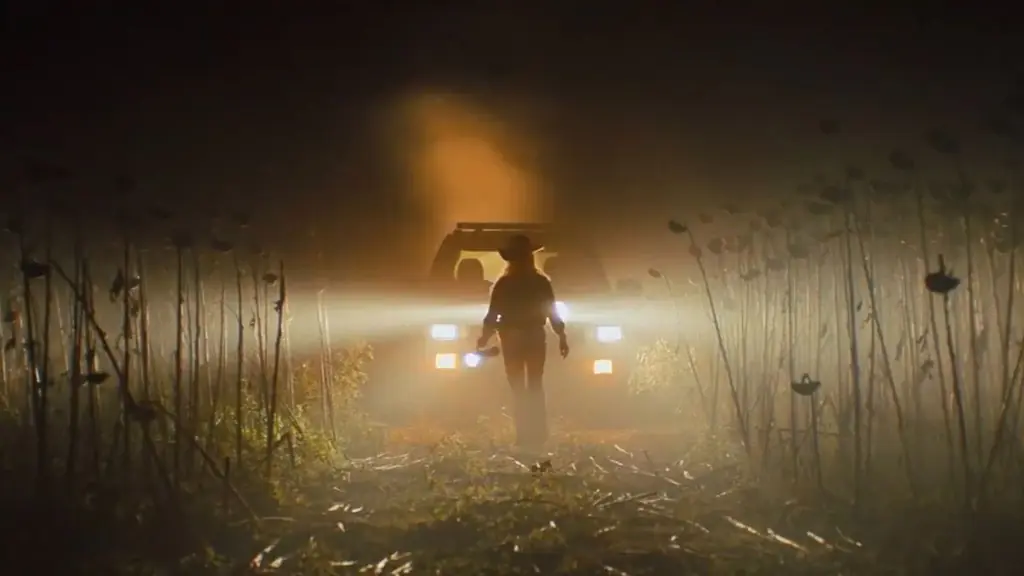
Ultimately, Texas Chainsaw Massacre (2022) is a stark reminder that some franchises are best left in the past. Despite a few fleeting moments of brutal gore, the film is plagued by illogical plot devices, underdeveloped characters, and a criminally wasted legacy return. It's a sequel that fails to understand what made the original terrifying, instead delivering a messy, uninspired, and ultimately "sawed off dog shit" experience. Save your time and revisit the 1974 classic; this modern iteration offers little more than regret.
What Worked
- A few genuinely bloody and chaotic massacre scenes.
- The bus massacre offers some visceral carnage.
- Brief moments where Leatherface delivers on the gore.
What Didn't Work
- Illogical "silent chainsaw" mechanics.
- Unrealistic character survival undermines tension.
- Sally Hardesty's return is anticlimactic and pointless.
- Undeveloped and awkward school shooting subplot.
- Overall poor writing and lack of compelling characters.