Introduction
When Batman swooped into theaters in 1989, it wasn't just another superhero flick; it was a seismic shift. Directed by Tim Burton, this iteration of the Caped Crusader introduced mainstream audiences to a darker, more Gothic vision of Gotham City, a stark departure from the campy "pow, thwap" era. This was a Batman forged in the shadows, a bold cinematic statement that redefined expectations for comic book adaptations.
The Lead Dynamic & The Action
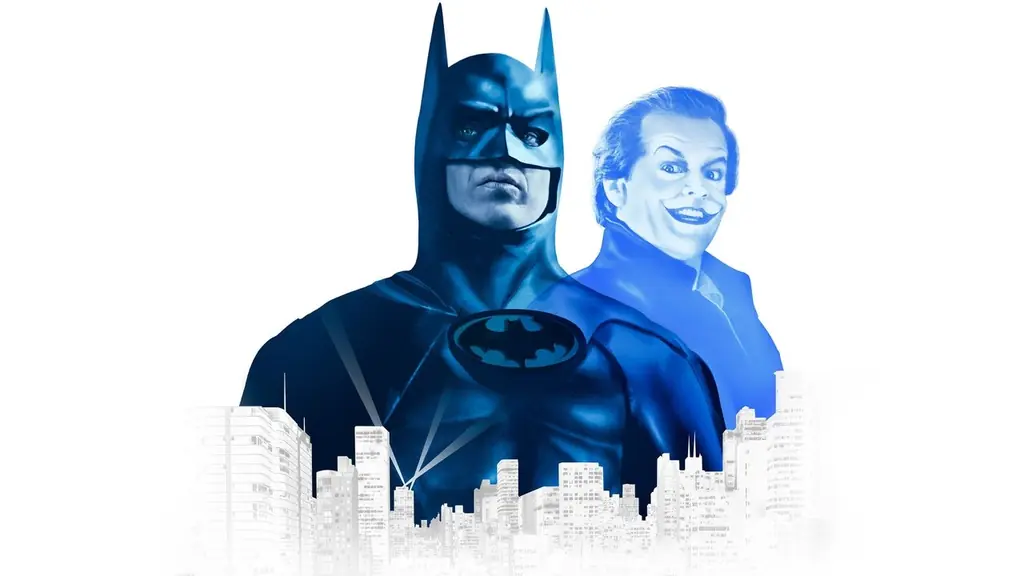
Casting Michael Keaton as Batman initially raised eyebrows, but his performance quickly silenced doubters. Keaton's strength lies in his understated menace; he doesn't need a "throat infection" voice to command presence. Instead, he embodies a quiet, imposing figure, a man of few words who lets his actions speak volumes. While later iterations, like [[Christian Bale]]'s "Ninja Batman," might offer more stealth, Keaton's portrayal effectively captures the character's brooding intensity.
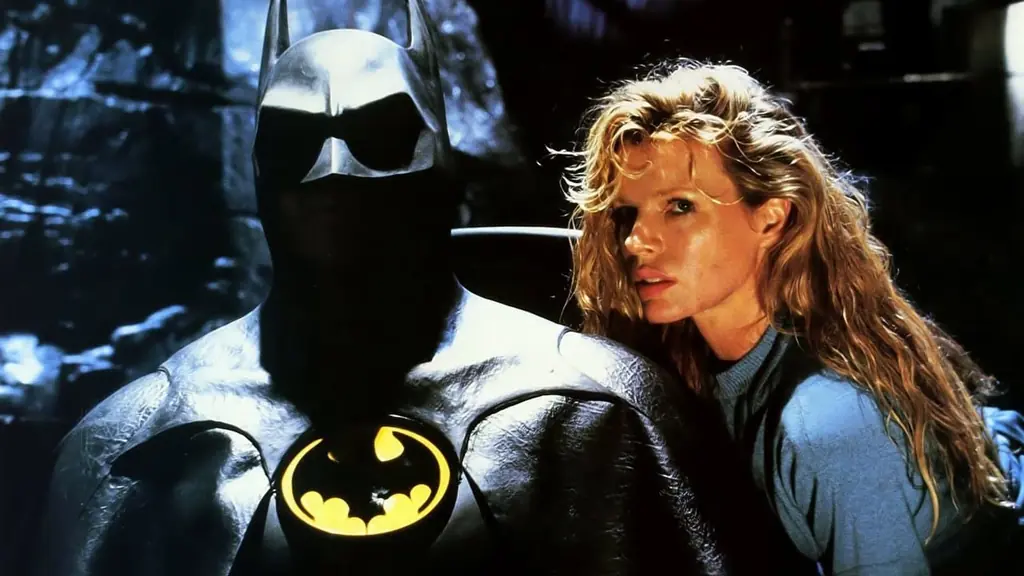
Kim Basinger steps in as Vicki Vale, the intrepid love interest, complete with a very 80s "Padawan Obi-Wan Kenobi braid." Her journey to uncover Batman's identity leads to a curious plot point: the revelation that Bruce Wayne's parents were murdered in an alley. It's presented as a deep, dark secret, which begs the question—wouldn't the tragic demise of one of Gotham's most prominent families be common knowledge? It's a minor narrative quirk in an otherwise compelling story.
The action sequences are a highlight, particularly when Jack Nicholson's Joker is unleashed. From the chilling moment he fries a henchman with an electric ring to his crew's chaotic defacing of priceless art, the film delivers a visceral punch that was groundbreaking for its time.
Cameos, Nostalgia & Narrative Stakes
One area where the film stumbles is its portrayal of Commissioner Gordon. Played by Pat Hingle, this version of Gordon feels largely inconsequential. He rarely collaborates with Batman, and frankly, if he were entirely absent from the film, the narrative would likely remain unchanged. It's a missed opportunity to develop a crucial ally.
However, the film's undeniable strength, its beating heart, is Jack Nicholson's Joker. So dominant is his presence that one could argue the movie should have been titled "Joker," serving as an origin story for the Clown Prince of Crime. Nicholson's performance is a masterclass in chaotic glee, from his maniacal laugh to his unhinged villainy. He was, in many ways, born to play this role, delivering a performance that feels less like acting and more like pure, unadulterated Jack Nicholson.
It's a testament to the character's enduring appeal that different interpretations resonate with different audiences. While this Joker captivated viewers in 1989, the landscape of comic book cinema has evolved. For some, later portrayals, like [[Heath Ledger]]'s, might eclipse Nicholson's, potentially diminishing the 1989 film's overall "gravity." Yet, the beauty lies in the variety; like comic books themselves, these films offer diverse takes, allowing audiences to "pick their poison."
Tone, Direction & Creative Freedom
Tim Burton's direction was a "balls-y move," steering Batman into a genuinely dark and edgy tone. This wasn't just a superficial aesthetic; it permeated the film's atmosphere, creating a Gotham that felt genuinely dangerous and corrupt. The creative freedom afforded to the filmmakers allowed for moments of shocking villainy, like the aforementioned electric ring incident, which pushed the boundaries of what a superhero movie could be.
The Final Verdict
Batman remains a kick-ass action movie, anchored by an iconic villain performance. It holds a special place in the hearts of many who experienced its groundbreaking release. While fans accustomed to the more grounded, stealth-focused approach of the Nolan films might find it a different beast, those open to its Gothic charm and Jack Nicholson's unforgettable turn will find a foundational superhero film that dared to go dark.
What Worked
- Jack Nicholson's iconic and scene-stealing performance as the Joker.
- A bold, dark, and Gothic aesthetic that redefined Batman for mainstream audiences.
- Michael Keaton's understated yet powerful portrayal of Batman.
- Engaging action sequences, particularly those involving the Joker.
- A foundational film that paved the way for darker superhero adaptations.
What Didn't Work
- Commissioner Gordon's character is underdeveloped and largely inconsequential.
- Some minor plot holes, like the common knowledge of Bruce Wayne's parents' murder.
- May not appeal to fans exclusively accustomed to the Nolan Batman films.
- Batman's stealth tactics are less emphasized compared to later iterations.