Introduction
After Tim Burton stepped away from the director's chair, the reins of the Bat-franchise were handed to Joel Schumacher for Batman Forever. While Schumacher has proven his mettle with films like Lost Boys and Time to Kill, this entry immediately signals a drastic departure. From the opening credits, the shift is palpable: the music lacks the epic gravitas of its predecessors, and the entire aesthetic screams "different franchise." The dark, mature tone that defined Burton's vision is completely dismantled, replaced by a brightly lit, often cheesy spectacle that feels less like a gritty Gotham and more like a Saturday morning cartoon.
The Lead Dynamic & The Action
Val Kilmer steps into the cowl as Batman and Bruce Wayne, and surprisingly, his portrayal of the billionaire playboy is quite believable. He embodies the sophisticated, brooding heir with ease. However, as Batman, the character is saddled with "cheesy lines" that undermine any sense of the Dark Knight's gravitas. The iconic Batmobile, now adorned with "blue neon lights," sacrifices stealth for flash, making it anything but inconspicuous. This design choice perfectly encapsulates the film's overall aesthetic: loud, flashy, and ultimately, a far cry from the grounded hero audiences had come to expect.
Cameos, Nostalgia & Narrative Stakes
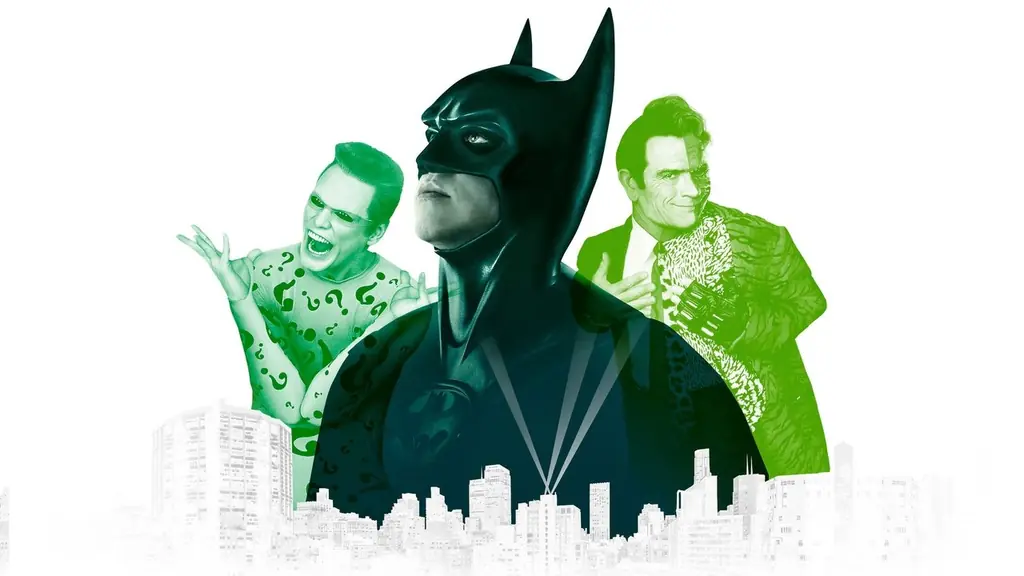
The film's villains, Tommy Lee Jones as Two-Face and Jim Carrey as the Riddler, were a major point of contention. Marketing heavily pushed Jim Carrey's Riddler as the primary antagonist, a "bait and switch" that left many feeling misled. The core issue, however, lies in their portrayal: both villains are reduced to "Joker-like" caricatures, all manic energy and little substance. While Jim Carrey's eccentric Riddler might vaguely align with a "crazy animated version" of the character, Tommy Lee Jones's Two-Face is a complete misfire, lacking the tragic depth expected of Harvey Dent. The introduction of Robin, played by Chris O'Donnell, also feels forced and illogical, with the narrative struggling to integrate him meaningfully. Similarly, Nicole Kidman's character, a psychiatrist who becomes Bruce Wayne's love interest, feels shoehorned in, leading to awkward romantic declarations that contradict Batman's established history.
Tone, Direction & Creative Freedom
Batman Forever makes a conscious pivot towards a more kid-friendly audience, yet it still sprinkles in a few mature jokes, creating an inconsistent tone. The costume design, famously featuring "bat nipples" on the suits, is often cited as a prime example of the film's absurdities, though it's merely one of many issues. The Riddler's outfit, resembling "pajamas" rather than a formidable supervillain costume, further highlights this tonal confusion. Perhaps the film's greatest missed opportunity lies in a crucial storyline that was cut: Bruce Wayne grappling with the repressed memories of his parents' death, feeling responsible for their demise. This segment, described as "the most interesting thing" that could have been in the movie, was inexplicably removed, robbing the film of much-needed emotional depth and a chance to meaningfully connect Bruce's past with Robin's present grief.
The Final Verdict
Ultimately, Batman Forever is a "bizarre cartoon that doesn't make any sense." It marks "the beginning of the end" for this iteration of the franchise, delivering a campy, often nonsensical experience. The riddles posed by the Riddler are "totally easy to solve," further diminishing any intellectual challenge. While some might find it a "good time if you're drunk," for most, it's a perplexing misstep in the Caped Crusader's cinematic journey.
What Worked
- [[person:5576|Val Kilmer]] delivers a convincing portrayal of Bruce Wayne.
- [[person:206|Jim Carrey]] brings an energetic, albeit Joker-esque, take on the Riddler.
- A bold, if ultimately misguided, attempt to redefine the franchise's tone.
- Contains some mature jokes despite its overall kid-friendly shift.
What Didn't Work
- Villains Two-Face and Riddler are reduced to one-dimensional, Joker-like caricatures.
- The film abandons the dark, mature tone of its predecessors for a campy, inconsistent aesthetic.
- Robin's introduction and integration into the story feel forced and illogical.
- The love interest storyline with [[person:2227|Nicole Kidman]] is weak and contradicts established character history.
- Cheesy dialogue, questionable costume choices (e.g., "bat nipples," Riddler's "pajamas"), and easy-to-solve riddles.
- Crucial character development for Bruce Wayne was cut, removing significant emotional depth.