Introduction
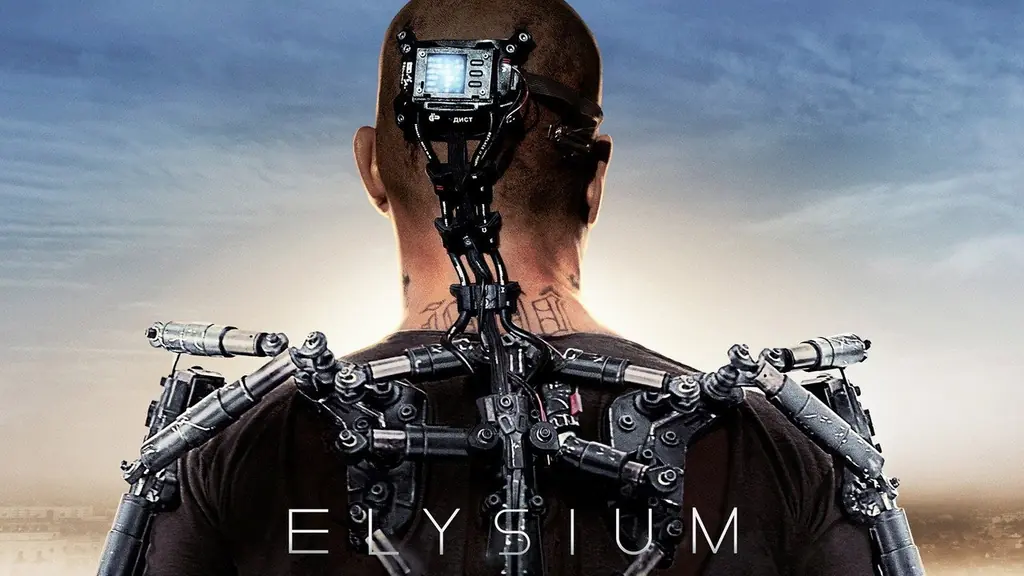
From the mind of Neill Blomkamp, the visionary behind "District 9," comes Elysium, a film that immediately grabs attention with its high-concept premise: Matt Damon as a cyborg infiltrating a luxurious space station. It's a setup that screams "sci-fi action movie," and in many ways, it delivers. The film paints a stark picture of future Earth—overpopulated, polluted, and, frankly, a mess. In stark contrast, the ultra-rich have escaped to Elysium, a pristine orbital habitat often likened to the Citadel from "Mass Effect" or a Halo ring. Up there, it's a veritable Garden of Eden in space, complete with instant medical care that can rebuild a person from scratch. Down on Earth, it's a struggle for survival, setting the stage for Damon's character to breach the ultimate divide.
What truly distinguishes Blomkamp's work, and Elysium is no exception, is his knack for weaving contemporary social issues into his futuristic narratives. This isn't just a spectacle; it's an exaggerated reflection of our own world, making the engrossing setting feel incredibly real and immersive. The film pulls you into its world, making you feel the weight of its social dynamics from the opening frame.
The Lead Dynamic & The Action
While the initial pitch might suggest a space-faring adventure, much of Elysium surprisingly unfolds on a gritty, dystopian Earth. Yet, this grounded approach doesn't detract from the experience. Matt Damon anchors the film with a compelling performance, proving once again that he's a formidable action star, channeling the intensity audiences have come to expect from his "Jason Bourne" days. He's a "badass" who brings a necessary gravitas to the role, even as his character undergoes significant cybernetic enhancements.
The film is undeniably an action movie, packed with visceral sequences that keep the energy high. While the narrative delves into deeper themes, the action is never an afterthought, providing the necessary thrills to propel the story forward. It's a testament to Blomkamp's direction that he can balance thought-provoking social commentary with explosive, well-executed set pieces.
Cameos, Nostalgia & Narrative Stakes
Jodie Foster takes on the role of a formidable, no-nonsense administrator on Elysium. Her performance is solid, embodying the cold authority of the station's elite. However, the film's true standout, the undeniable scene-stealer, is Sharlto Copley as the deranged mercenary, Kruger. Copley, known for his transformative role in "District 9," delivers a performance that is nothing short of captivating.
Kruger is a character that feels like "the Terminator who had a few wires loose in his head"—menacing, awesome, and utterly cold. He's a "sick son of a [gun]" who makes every scene he's in uncomfortable and unforgettable. Copley's portrayal showcases an incredible range, moving from the mild-mannered character in "District 9" to the "howling mad Murdoch" in "The A-Team," and now to this "menacing psycho." His performance is so powerful that it elevates the entire film, proving to be the "greatest" element in a pool of otherwise strong components. It's a masterclass in villainy that demands attention.
Tone, Direction & Creative Freedom
Neill Blomkamp uses Elysium as a platform for potent social commentary, exploring themes of class disparity, healthcare inequality, and the future of capitalism. While some might find the message "a little preachy" at times, it's clear that Blomkamp is "pouring some passion into his movie." In an era where genuine directorial vision can feel rare, seeing a filmmaker so committed to their thematic concerns is refreshing.
The initial world-building is rapid-fire, delivering a significant amount of information in a short span. This can feel "a bit overloading at times," but it never truly derails the film. Instead, it quickly establishes a believable, albeit bleak, future that serves as a compelling backdrop for the action and drama.

The Final Verdict
Elysium stands as a "great sci-fi" film that successfully blends a compelling narrative with impactful social messages. It boasts a strong hero in Matt Damon, an even stronger, unforgettable villain in Sharlto Copley, and a world that feels both fantastical and frighteningly plausible. Despite minor pacing issues in its exposition and a message that occasionally leans into preachiness, the film's strengths far outweigh its weaknesses. For those seeking a "really good Sci-Fi with a lot of really good human elements," Elysium is an "awesome-tacular" experience that delivers on its ambitious premise.
What Worked
- Engrossing world-building with relevant social commentary
- Sharlto Copley's electrifying and menacing performance as the villain
- Matt Damon delivers a strong, compelling lead performance
- Visceral and well-executed action sequences
- Neill Blomkamp's passionate direction and thematic commitment
What Didn't Work
- Social message can feel a bit preachy at times
- Initial world-building can be information-heavy and overwhelming
- Jodie Foster's character, while well-acted, feels less unique or essential