Introduction
When a film promises a "true story" of cops going rogue against a notorious gangster, expectations often lean towards gritty realism or a sprawling crime epic. Gangster Squad, directed by Ruben Fleischer, arrives with the premise of a small, dedicated unit of officers in 1940s Los Angeles deciding to ditch the rulebook to take down the ruthless Mickey Cohen, played with menacing glee by Sean Penn. The setup sounds like a classic mob tale, a spiritual successor to films like The Untouchables, but from the opening frames, it's clear this isn't your typical historical drama. Instead, audiences are treated to a visually distinct, high-octane ride that prioritizes style and spectacle over historical accuracy or deep narrative complexity.
The Lead Dynamic & The Action
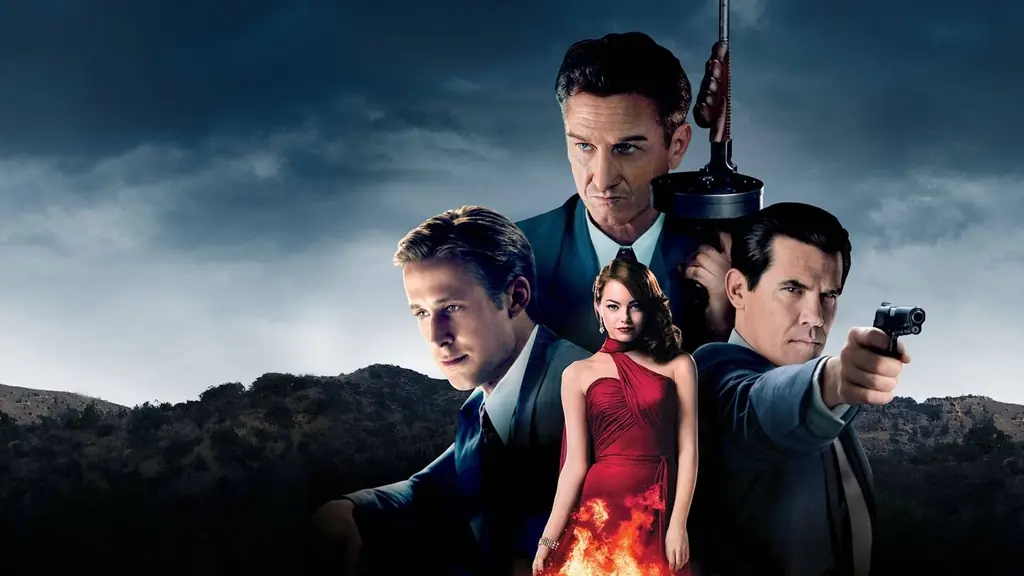
The film quickly establishes its core conflict: a mob of good guys forming to take down organized crime. Josh Brolin and Ryan Gosling lead the charge, bringing their signature charisma to the screen. Sean Penn as Mickey Cohen is a force of nature, embodying pure villainy with a performance that's "gone full douchebag," as one might say. He's a man who obeys no rules, willing to kill anyone and their families to get what he wants, making him a truly formidable antagonist. The supporting cast is equally strong, featuring talents like Anthony Mackie, Giovanni Ribisi, and the standout Robert Patrick, whose character with his single-action army revolver instantly earns audience loyalty. Emma Stone also adds a touch of glamour and intrigue, caught between the worlds of Cohen and Gosling's character.
Where Gangster Squad truly shines is in its action. The film embraces a highly stylized aesthetic, reminiscent of a "Zack Snyder movie" with its slow-motion shootouts, flying shell casings, and an abundance of Tommy guns. It's pure, unadulterated visual flair designed for maximum impact. While some mob movies aim for gritty realism, this one leans into its comic book sensibilities, delivering explosive set pieces that are undeniably fun to watch. The shootouts are frequent, loud, and visually arresting, making it clear that entertainment is the primary goal.

Cameos, Nostalgia & Narrative Stakes
Despite its "based on a true story" tag, Gangster Squad doesn't get bogged down in historical minutiae. The narrative is refreshingly straightforward, offering few, if any, curveballs. What you see in the trailer is largely what you get: a clear-cut battle between good and evil. This simplicity means the film doesn't aim for deep narrative stakes or complex character arcs. There's a brief, almost perfunctory moment where a character questions the morality of their vigilante actions, but it's quickly brushed aside, leaving the audience to focus on the action rather than any profound ethical dilemmas. The film understands its lane and sticks to it, delivering a satisfying, if predictable, journey.
Tone, Direction & Creative Freedom
Ruben Fleischer's direction is characterized by a commitment to pure entertainment. The tone is light, despite the violent subject matter, never taking itself too seriously. It's not trying to be Boardwalk Empire in movie form; instead, it's a popcorn flick through and through. The stylistic choices, particularly the exaggerated action sequences, suggest a director given the freedom to prioritize visual spectacle. This creative freedom results in a film that is consistently engaging, even if it sacrifices some substance for style. It's a movie that knows exactly what it wants to be: a good time, "no alcohol required."
The Final Verdict
Gangster Squad is the cinematic equivalent of a peanut butter and jelly sandwich: simple, satisfying, and exactly what you expect. It's not aiming for awards or deep philosophical discussions; it's designed to be a blast from start to finish. With its charismatic cast, over-the-top action, and a villain you love to hate, it delivers on its promise of pure, unadulterated fun. If you're in the mood for a stylish, action-packed romp through 1940s Los Angeles that doesn't demand too much thought, then this is definitely worth a watch. It's a good time, plain and simple.
What Worked
- Stylized, over-the-top action sequences are visually engaging.
- Strong, charismatic performances from the ensemble cast, especially Sean Penn as the villain.
- Robert Patrick delivers a standout, memorable character.
- Pure entertainment value; a fun, straightforward watch.
- Emma Stone and Ryan Gosling's chemistry adds a nice touch.
What Didn't Work
- The plot is very straightforward with few surprises or curveballs.
- Lacks deeper substance or exploration of moral dilemmas.
- Not a historically accurate portrayal despite being "based on a true story."
- Some may find the stylistic violence excessive or distracting.