Introduction
Disney, ever on the hunt for its next blockbuster franchise, took a significant gamble with John Carter. Based on Edgar Rice Burroughs' classic "A Princess of Mars," this ambitious sci-fi epic aimed to capture the magic of swashbuckling adventure on a grand, alien scale. Audiences were promised a sweeping tale of a Civil War veteran transported to a mysterious planet, but the journey to Mars proved to be a rocky one, leaving many initially skeptical about its potential.
The Lead Dynamic & The Action
The film introduces us to Taylor Kitsch as John Carter, a weary Confederate soldier from Virginia, who, after a chance encounter with a mystical medallion, finds himself inexplicably whisked away to Mars. Here, the rules of physics are delightfully skewed – or at least, they're supposed to be. Carter's Earth-bound mass allows him to leap incredible distances, a genuinely cool visual that promises thrilling action. However, the film occasionally fumbles this concept, with Carter falling at an Earth-like rate, raising questions about the consistency of its own world-building.
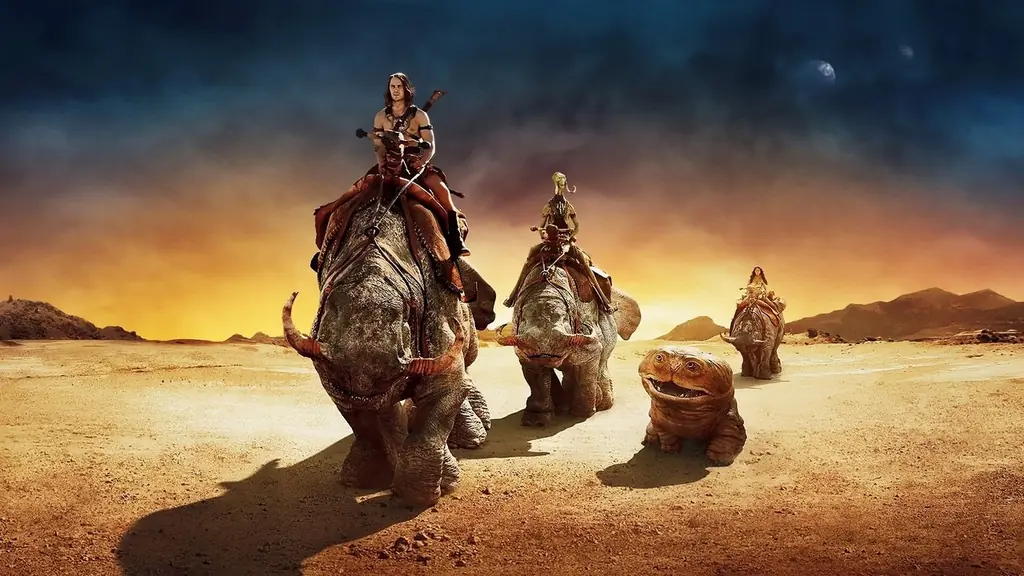
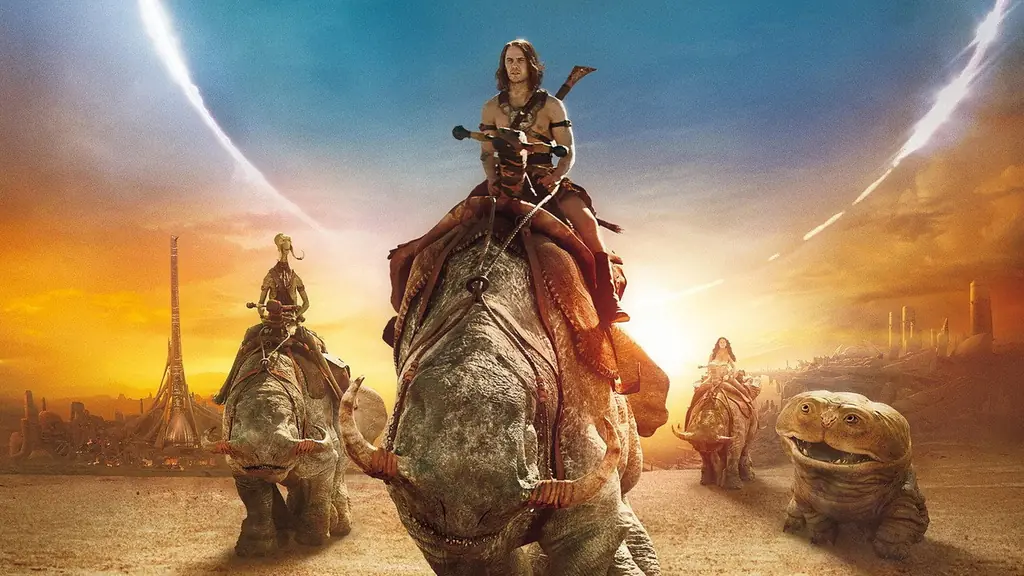
Mars itself is a visually striking, desolate desert planet, populated by fascinating creatures. We meet towering, four-armed humanoid aliens reminiscent of Mortal Kombat's Goro, alongside human-like inhabitants with advanced technology and impressive airships that wouldn't look out of place in a Final Fantasy game. The action sequences, when they hit, can be surprisingly brutal. One standout moment sees Carter dispatching a particularly annoying foe by swiftly lopping off his head – a jarringly violent scene that makes one question the film's intended audience, especially after earlier suggestions that it's primarily "for kids."
Cameos, Nostalgia & Narrative Stakes
The narrative introduces a compelling cast, including the formidable Dominic West leading the bad guys and Lynn Collins as the "hot chick" princess. Yet, despite these elements, the film often feels like a pastiche of other sci-fi and fantasy epics. Comparisons to "Waterworld in space" or a blend of "Stargate" and 80s fantasy films like "Krull" are apt, highlighting its struggle to forge a truly distinct identity.
The pacing, particularly in the initial acts, can feel choppy and slow, making it difficult to fully invest in Carter's plight. While the film eventually finds its rhythm, it often feels like it's trying to do too much, balancing grand spectacle with a convoluted plot. The stakes, despite the constant threat of war and planetary destruction, sometimes feel distant, leaving the audience to wonder if the film truly knows what kind of story it wants to tell.
Tone, Direction & Creative Freedom
Directed by Andrew Stanton, John Carter attempts to blend epic adventure with moments of levity and genuine peril. However, the tonal shifts can be jarring. One moment, it feels like a grand, family-friendly adventure, and the next, a character is graphically decapitated. This inconsistency makes it hard to pinpoint the film's target demographic, leaving adults feeling it's too simplistic and children potentially overwhelmed by its darker moments.
The film also suffers from a peculiar structural choice: it seems to end not once, but multiple times. This creates a sense of narrative fatigue, as if the story is constantly trying to wrap up only to find another reason to continue. The final conclusion, clearly designed to set up a sequel, feels less like a satisfying resolution and more like a hopeful plea to the audience.
The Final Verdict
Ultimately, John Carter is a film that had all the ingredients for a memorable space opera but never quite coalesced into something truly special. While it boasts impressive visuals and some genuinely entertaining action sequences, its inconsistent tone, choppy pacing, and convoluted narrative prevent it from achieving greatness. It's an "okay" watch, with moments of enjoyment, but it's unlikely to linger in the memory for long. For those seeking a nostalgic, if flawed, journey to a distant planet, there are certainly worse ways to spend an evening, but don't expect to be talking about it for years to come.
What Worked
- Visually striking Martian landscape and creature design.
- Some genuinely cool action sequences, like the head-lopping moment.
- Intriguing premise of a Civil War soldier on another planet.
- Strong supporting cast, including [[person:17287|Dominic West]].
What Didn't Work
- Choppy editing and slow pacing in early acts.
- Inconsistent portrayal of Martian gravity.
- Narrative feels disjointed with multiple false endings.
- Struggles to balance kid-friendly adventure with adult violence.