Introduction
When Tom Hanks returned to the director's chair for Larry Crowne, audiences might have anticipated a straightforward romantic comedy, especially with Julia Roberts co-starring. However, this film quickly distinguishes itself from typical genre fare. It's not the laugh-out-loud comedy or the swooning romance many expected; instead, it carves out its own niche as a surprisingly heartfelt journey of self-discovery, particularly for those navigating life's unexpected turns.
The Lead Dynamic & The Action
At its core, Larry Crowne is a character study of its titular hero, played with an almost absurd degree of niceness by Tom Hanks. Larry is the kind of perpetually smiling, optimistic individual who makes you question your own cynicism. His world is upended when he's downsized from his retail job, prompting a return to college for the first time in his 40s. This pivotal moment sets him on a path of profound personal evolution.
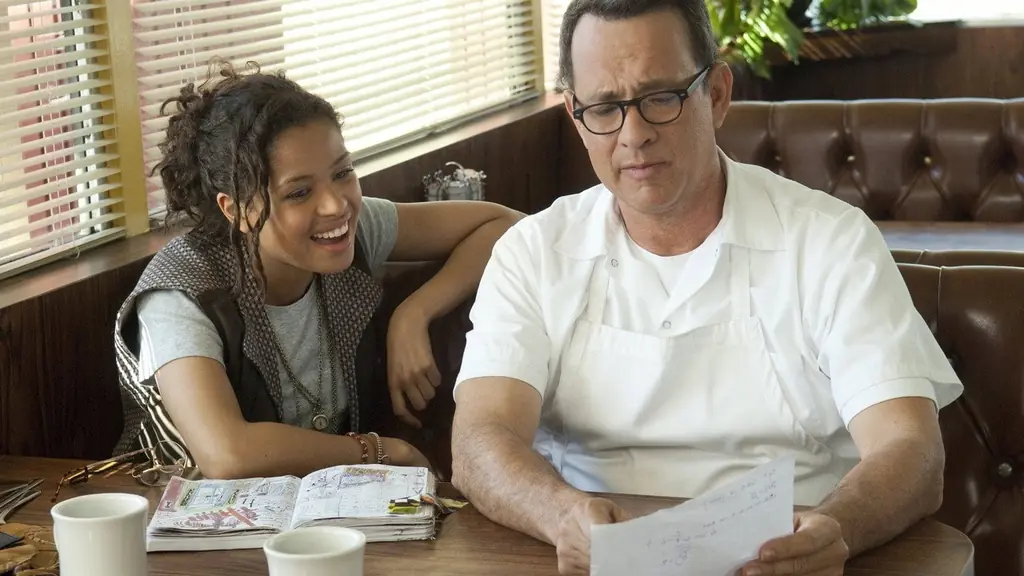
Early in his academic journey, Larry encounters a free-spirited young woman who acts as a catalyst for his transformation. She's a vibrant contrast to his initially "tofu-like" personality, encouraging him to embrace life and new experiences. While there's no romantic entanglement with her, her influence is crucial in shaping Larry's newfound openness. He even joins her moped-riding gang, a delightful visual that underscores his willingness to step outside his comfort zone.
His primary academic focus leads him to two classes: one taught by Julia Roberts and another by George Takei. It's in Julia Roberts' class that the film's central, albeit understated, romantic dynamic slowly simmers. Initially, her character feels like a "drag," a stark contrast to Larry's infectious optimism. Her misery is palpable, and understandably so, given her marriage to a truly unlikeable, unemployed writer played by Bryan Cranston. The film wisely prioritizes Larry's personal growth, with the romantic attraction to Julia Roberts only becoming overtly apparent in the film's latter half, reinforcing that this isn't a conventional rom-com.

Cameos, Nostalgia & Narrative Stakes
Larry Crowne excels in portraying the quiet dignity of a man rebuilding his life. The narrative stakes aren't about saving the world or grand gestures, but about personal reinvention and finding purpose after a significant setback. The film features a solid supporting cast, including Cedric the Entertainer and Pam Grier, who add texture to Larry's new world. However, the focus remains squarely on Larry's journey and how he subtly influences those around him, including his initially downtrodden professor.
His transformation isn't just internal; it's visible. Larry starts the film in drab khakis and polos, but by the end, he's sporting a sharp, confident new look that inspires viewers to consider their own wardrobes. This visual evolution mirrors his internal growth, making the journey feel complete and satisfying.
Tone, Direction & Creative Freedom
Tom Hanks' direction, co-writing with Nia Vardalos, crafts a tone that is genuinely feel-good without being saccharine. The film has its funny moments, but it's not a laugh-a-minute comedy. Instead, it's best described as a "Garden State for 40-something year olds"—a movie about finding oneself and embracing new possibilities. It's the kind of film that leaves you feeling uplifted, inspiring a desire for self-improvement without preaching.
The pacing allows for this evolution to feel natural, rather than rushed. It's clear that the filmmakers were given the freedom to tell a story that prioritizes character development and emotional resonance over strict genre conventions. This creative liberty results in a film that surprises and delights precisely because it defies easy categorization.
The Final Verdict
Larry Crowne is a pleasant surprise, a warm and engaging film that transcends its initial romantic comedy facade. It's a testament to the enduring appeal of Tom Hanks and a genuinely feel-good experience that champions self-discovery and second chances. While it won't have you rolling in the aisles or swooning uncontrollably, it offers a quiet, uplifting narrative perfect for anyone looking for a dose of optimism and a reminder that it's never too late to start anew.
What Worked
- Tom Hanks' endearing portrayal of an optimistic, evolving character
- Uplifting and genuinely feel-good narrative about self-discovery
- Relatable themes of midlife crisis and second chances
- Subtle, character-driven story over traditional rom-com tropes
- Larry's stylish transformation is inspiring
What Didn't Work
- Not a traditional comedy, may disappoint those seeking constant laughs
- Romantic storyline with Julia Roberts is slow-burn and understated
- Julia Roberts' character is initially quite miserable and a "drag"
- Bryan Cranston's character is one-dimensionally unlikeable
- Not an instant classic, but a solid, enjoyable watch