Introduction
From the moment the chilling whisper of "Mama" echoed in early trailers, audiences braced themselves for a new kind of terror. Mama, directed by Andy Muschietti, promised a dark fairy tale, a supernatural horror steeped in the primal fear of the unknown and the unsettling innocence of feral children. The premise alone was enough to pique interest: two young girls, lost in the woods, seemingly raised by an unseen entity, only to be discovered years later and brought back into civilization. But what happens when their spectral guardian follows them home? This setup, starring the formidable Jessica Chastain and Nikolaj Coster-Waldau, hinted at a horror experience that aimed to transcend mere jump scares, offering a deeper, more psychological dread.
The Lead Dynamic & The Action
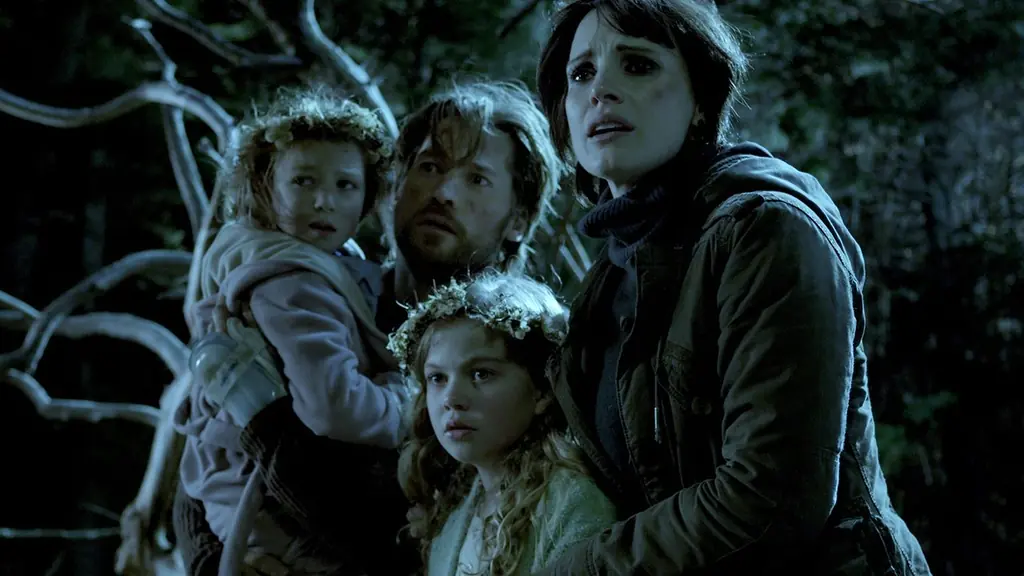
The true stars of Mama are undoubtedly the two young girls, Megan Charpentier and Isabelle Nélisse, who deliver performances that are genuinely unsettling. These aren't just "creepy kids"; they are primal, animalistic beings, embodying a disturbing "Gollum-like" physicality. Their movements—scurrying on all fours, perching in dark corners, or simply staring with vacant intensity—are the film's most effective source of horror. The sheer visual of them perched atop a refrigerator, observing silently, is enough to send shivers down the spine. The film cleverly explores an intriguing social aspect: what happens to children raised outside human society, fed only cherries by a spectral presence? Their animalistic behavior and struggle to adapt to a normal life provide a fascinating, albeit disturbing, layer to the narrative.
Initially, the character of Annabel, portrayed by Jessica Chastain, presents a challenge. For a significant portion of the film, she comes across as a "selfish dick bag," a reluctant caretaker more interested in her garage band lifestyle than nurturing two traumatized children. This deliberate character choice makes it difficult to connect with her, leaving audiences wishing for Mama to "throw her in the garbage disposal." However, the film commits to her journey, charting her gradual transformation from an unwilling guardian to a genuinely caring figure. This arc, while initially frustrating, ultimately pays off, allowing for a deeper emotional investment as the story progresses.
Cameos, Nostalgia & Narrative Stakes
Mama is a mixed bag, a film that attempts to inject fresh ideas into a well-worn genre while simultaneously leaning into its conventions. It's ultimately a haunted house movie, a premise seen "a hundred times before." Yet, the film deserves credit for trying to "throw some new stuff into the mix." The narrative stakes are initially high, driven by the mystery of Mama and the girls' disturbing past. The film excels when it embraces the "fear of the unknown," allowing the audience's imagination to conjure horrors far worse than anything that could be shown on screen. The subtle hints, the fleeting shadows, and the unsettling sounds are where Mama truly shines.
However, the film eventually succumbs to a common horror pitfall: revealing too much. Once Mama is shown in her "CGI glory," much of the initial creepiness dissipates. The terror of the unseen gives way to a visual that, while technically impressive, loses its power to genuinely scare. This shift from psychological dread to overt monster horror diminishes the narrative's impact, making it feel like "all right, I've seen this before." The ending, too, feels somewhat anticlimactic. Despite the build-up, it concludes with a sense of "eh," rather than the "ooh wow" it clearly aimed for, leaving a feeling of "no big deal" rather than lasting dread.
Tone, Direction & Creative Freedom
Andy Muschietti navigates the film's tone with a commendable balance. While it is undeniably a horror film, it avoids becoming a "complete jump scare fest." The scares are present but often executed with a twist, making them feel less like cheap thrills and more like earned moments of terror. The direction allows for moments of genuine originality, particularly in the portrayal of the children and the initial mystery surrounding Mama. The film attempts to carve out its own identity within the haunted house subgenre, pushing boundaries just enough to feel distinct.
Despite its moments of unoriginality and reliance on familiar tropes, Mama manages to maintain an engaging pace. It's a film that, for all its flaws, tries to be more than just another ghost story. It explores themes of motherhood, attachment, and the wildness of nature versus nurture, all wrapped in a supernatural package. This creative ambition, even when not entirely successful, is what gives Mama its unique flavor and prevents it from being just another forgettable horror flick.
The Final Verdict
So, was Mama enjoyable? Absolutely. Did it have genuinely creepy parts? Without a doubt, especially concerning the feral children. The movie possesses a degree of originality, particularly in its initial premise and the unsettling performances of its young cast. However, it's also riddled with unoriginality, falling back on haunted house horror movie cliches that have been seen countless times. While it attempts to go in a "new enough direction," it ultimately remains tethered to the familiar. Mama is a good time, a film that delivers enough thrills and intriguing concepts to warrant a watch, especially for horror enthusiasts. Just manage expectations; it's an enjoyable ride, but perhaps not one worth full price on a prime weekend night.
What Worked
- Unsettlingly creepy feral children with unique physicality.
- Intriguing social commentary on upbringing and wildness.
- Well-executed jump scares that avoid excess and feel earned.
- Effective build-up of the unknown before the ghost's full reveal.
- Jessica Chastain's compelling character growth arc.
What Didn't Work
- Relies heavily on familiar haunted house cliches.
- CGI reveal of Mama diminishes the fear and creepiness.
- Initially unlikable protagonist makes early connection difficult.
- Disappointing and anticlimactic ending.
- Not enough originality to be truly groundbreaking.