Introduction
Forget everything you thought you knew about baseball movies. Moneyball isn't just another sports flick; it's a compelling true story where the diamond meets data, turning the traditional game on its head. Audiences might have anticipated a straightforward sports drama, but what they got was a surprisingly engaging look at innovation, resistance, and the sheer power of probability. While it starts a touch slow, this film quickly proves itself a genuine surprise.
The Lead Dynamic & The Action
At the heart of this revolution is Brad Pitt as Billy Beane, the down-on-his-luck general manager of the Oakland A's, a team perpetually outspent and outmaneuvered. Facing a shoestring budget, Beane finds an unlikely ally in Jonah Hill's Peter Brand, a Stanford graduate with a radical, statistics-driven approach to player recruitment. Their dynamic is the engine of the film, with Hill delivering a performance that truly showcases his dramatic range, proving why he passed on other blockbusters. The film brilliantly illustrates their "counting cards" strategy, as Beane himself declares they're "going to turn the odds in our favor." It's a practical application of math that even the most numbers-averse viewer can appreciate, making the complex world of sabermetrics surprisingly thrilling.

Cameos, Nostalgia & Narrative Stakes
The narrative stakes are high, as Beane and Brand face an uphill battle against decades of baseball tradition. The film effectively portrays the skepticism and outright hostility from seasoned scouts and advisors who believe the game is about "Real Men, Real Sports," not algorithms. This clash between old-school intuition and new-age analytics provides much of the film's dramatic tension. While there are no distracting cameos, the focus remains squarely on the underdog struggle of the Oakland A's, with supporting performances from Philip Seymour Hoffman and Robin Wright adding depth to the human element behind the numbers. The story is inspiring, showcasing how a small team can challenge the giants by simply playing smarter.
Tone, Direction & Creative Freedom
Bennett Miller's direction masterfully balances the intellectual rigor of the statistical approach with the emotional core of an underdog story. The tone is earnest and grounded, making the seemingly dry subject matter accessible and exciting. Despite its initial deliberate pacing, the film never feels like a studio-mandated product; instead, it feels like a passion project given the freedom to explore its unique premise. The performances, particularly from Pitt and Hill, elevate the material, making the audience root for their unconventional methods.
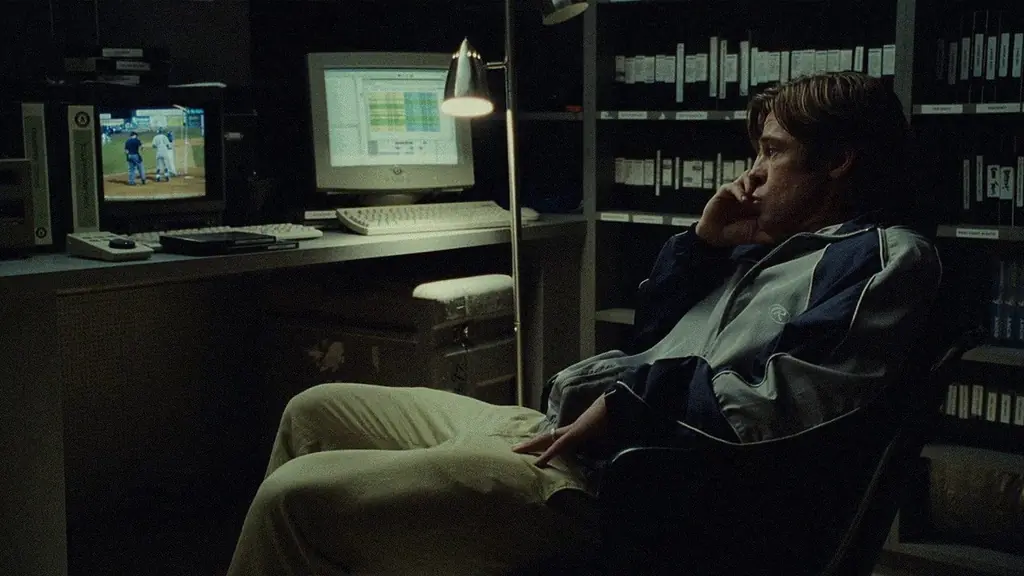
The Final Verdict
Moneyball is a genuinely good movie and one of the year's biggest surprises. It's an inspiring true story that proves that sometimes, the most exciting plays happen off the field, in the spreadsheets and strategic minds. While its two-hour-plus runtime might feel a bit long, and the initial setup is a little slow, the payoff is absolutely worth it. This is a film that sticks with you, demonstrating the power of innovation and perseverance against overwhelming odds.
What Worked
- A genuinely inspiring true underdog story
- Excellent performances from Brad Pitt and Jonah Hill
- Makes complex statistical analysis engaging and thrilling
- Smartly written and directed, challenging traditional sports narratives
- A surprising and rewarding cinematic experience
What Didn't Work
- Pacing is a bit slow in the first half-hour
- The runtime feels a little long at over two hours
- Might not appeal to viewers uninterested in baseball or statistics