Introduction
The buzz around Terra Nova was undeniable, with whispers of an astronomical budget—reportedly $20 million—fueling anticipation for a groundbreaking sci-fi spectacle. Set in a bleak 2150, humanity faces a grim future of smog, overpopulation, and wasteland. The solution? A daring leap 65 million years into the past, to an alternate timeline where mankind can start anew. This ambitious premise, designed to sidestep pesky paradoxes, sets the stage for what should be an epic journey.
The Lead Dynamic & The Action
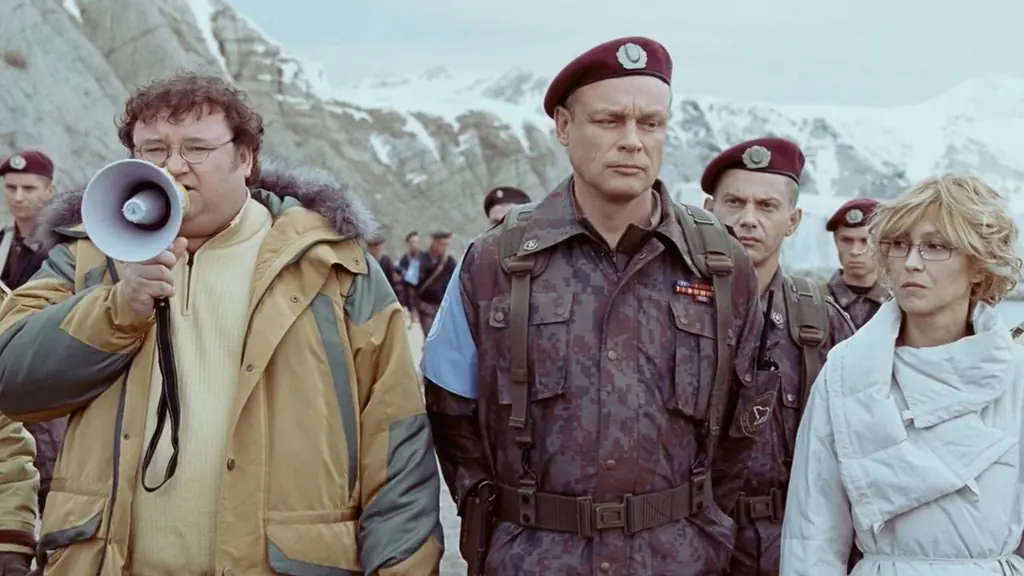
From the outset, Terra Nova presents a mixed bag. The initial glimpses of the dystopian future are remarkably impressive, crafting a legitimate, cinematic vision of a world gone wrong. However, the character dynamics quickly fall into familiar territory. The protagonist, portrayed by Andrey Feskov, feels somewhat generic, a dutiful figure whose family drama, particularly with his angsty son, feels like a well-worn trope. More compelling is the colony's leader, brought to life by Konstantin Lavronenko. He embodies a familiar archetype—likable yet shrouded in secrets—making him an intriguing, if not entirely trustworthy, presence.
Then there are the dinosaurs. The first appearance of brachiosaurs evokes a nostalgic thrill, reminiscent of the awe-inspiring reveal in "Jurassic Park." But this initial wonder quickly fades. Subsequent dinosaur encounters reveal CGI that simply doesn't measure up. The creatures often appear cartoonish, lacking the detail and realism expected from such a high-budget production, especially when compared to the benchmark set by "Jurassic Park" decades prior. For a film heavily reliant on prehistoric beasts, this visual misstep is a significant drawback.
Cameos, Nostalgia & Narrative Stakes
The narrative attempts to build intrigue with elements like the mysterious "Sixers"—a breakaway faction from the main colony—and enigmatic chalk drawings hinting at ancient mathematics. These threads promise deeper lore and potential twists, yet the eventual explanations often fall flat, leaving viewers with a sense of "it's not as cool as it could have been." The alternate timeline device, while a clever way to avoid logical inconsistencies, feels more like a convenient plot contrivance than a truly innovative narrative choice. The film struggles to balance its grand concepts with satisfying payoffs, often introducing compelling mysteries only to resolve them with underwhelming answers.
Tone, Direction & Creative Freedom
Aleksandr Melnik's direction navigates a complex world, but the film's overall tone struggles to find its footing. Despite its intriguing concept and impressive initial visuals, Terra Nova ultimately lacks a crucial element: a compelling hook. For a production of this scale, especially one facing stiff competition, a strong, undeniable reason to return is essential. The film is enjoyable enough, but it fails to deliver that "must-see" moment that truly captivates and demands continued engagement. This absence of a powerful draw, coupled with the high production cost, raises concerns about its long-term viability, especially given the network's (Fox, as mentioned in the transcript) reputation for cancelling ambitious, expensive projects that don't immediately soar.
The Final Verdict
Terra Nova is a film with a fantastic premise and moments of visual splendor, particularly in its depiction of a future gone awry. However, its potential is hampered by inconsistent CGI, generic character arcs, and a narrative that introduces intriguing mysteries only to resolve them unsatisfyingly. While there's enjoyment to be found, it never quite transcends into a truly captivating experience. It's a film that's "all right" but struggles to stand out in a crowded landscape, leaving audiences entertained but not enthralled.
What Worked
- Intriguing concept of escaping a dystopian future.
- Initially impressive visuals for the future setting.
- [[person:68517|Konstantin Lavronenko]] delivers a compelling, mysterious performance.
- The "Sixers" and ancient chalk drawings offer initial narrative intrigue.
What Didn't Work
- Disappointing and cartoonish CGI dinosaurs.
- Generic and cliché character development, especially for the protagonist's family.
- Lack of a strong, compelling "hook" to ensure continued engagement.
- Mysteries introduced often lead to underwhelming resolutions.
- High production cost raises concerns about its sustainability given its impact.