Introduction
The promise of a fully connected, transparent world often sounds like a utopian dream. The Circle, a 2017 thriller, dives headfirst into this concept, imagining a near-future where a tech giant merges the omnipresence of Google with the social reach of Facebook. It’s a world that feels eerily close, perhaps just a couple of years away, where every interaction is monitored for the sake of data and societal improvement. The film posits a fascinating "what if": what if secrets vanished, and humanity could reach its true potential? But, as the narrative quickly reminds us, at what cost does such transparency come? This is a film that asks crucial questions for our technological age, even if its execution struggles to provide satisfying answers.
The Lead Dynamic & The Action
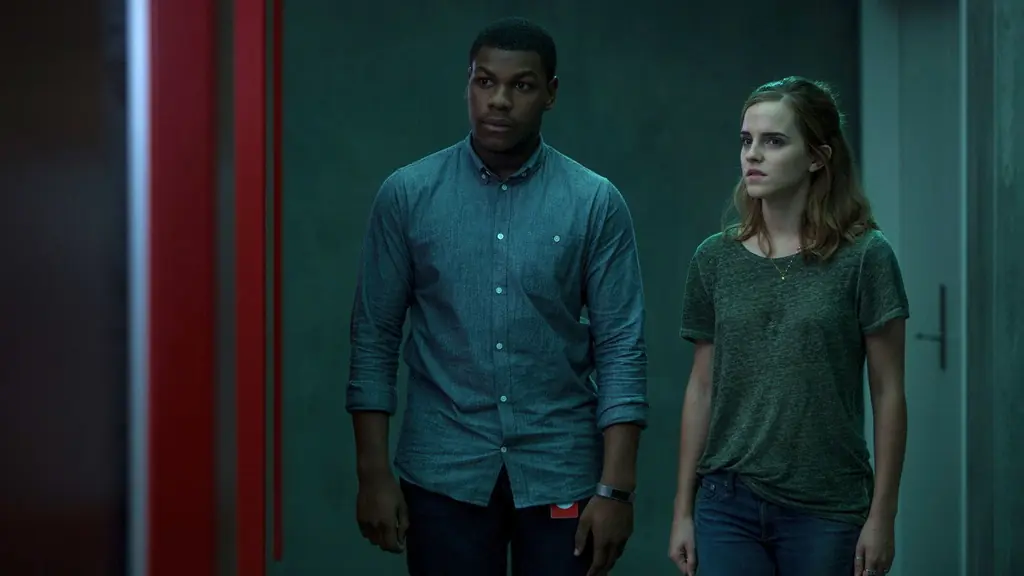
At its core, The Circle is meant to be Emma Watson's vehicle. As Mae Holland, she navigates the gleaming, utopian campus of the titular company after escaping a dead-end job. While Watson delivers a perfectly serviceable performance, it rarely elevates beyond that. She’s competent, but the role doesn't quite allow her to deliver the kind of standout, transformative work that truly grabs an audience.
The real spark, however, comes from Tom Hanks. Despite appearing in only a handful of scenes, Hanks as Eamon Bailey, one of the company's founders, is utterly captivating. He’s charming, electric, and exudes a charisma that makes you wish he had more screen time. His presence is so magnetic that if a benevolent, all-seeing AI overlord were to take human form, you'd want it to be him. Unfortunately, John Boyega's character, Ty, is largely underutilized, leaving little for the actor to sink his teeth into, a perplexing choice given his talent.

Cameos, Nostalgia & Narrative Stakes
The film's pacing is one of its most significant stumbling blocks. It attempts to cover too much ground in too little time, rushing its characters through pivotal developments. Emma Watson's ascent within The Circle feels unnaturally swift; she becomes a company favorite almost instantly, making the narrative feel less organic and more like a checklist of plot points. This rapid progression prevents the audience from truly investing in the stakes or understanding the gradual erosion of privacy.
The late Bill Paxton also makes an appearance, a poignant reminder of his talent, though his role is brief. The film struggles to convincingly establish its antagonists, particularly Tom Hanks's character. While he's portrayed as charismatic and genuinely wanting to "make the world a better place," the movie fails to fully sell his darker, more manipulative side. The narrative tries to paint him and Patton Oswalt's character as villains, but the audience is never truly brought on board with this shift, leaving their motivations feeling underdeveloped and unconvincing.
Tone, Direction & Creative Freedom
James Ponsoldt directs a film with a compelling concept, but the overall tone often feels disjointed. The movie raises profound questions about surveillance, data, and the loss of individuality, yet it doesn't fully commit to exploring these themes with the depth they deserve. It feels like a film that could have benefited from a longer runtime, allowing its ideas to breathe and its characters to evolve more naturally. Instead, the narrative feels compressed, leading to a "should have, would have, could have" sensation upon reflection. The potential for a truly impactful social commentary is present, but the film ultimately pulls its punches, resulting in a less memorable experience.
The Final Verdict
The Circle is a film built on a genuinely intriguing and alarmingly relevant premise. It asks important questions about the future of technology and privacy that resonate deeply in our current world. However, despite its strong conceptual foundation and a standout performance from Tom Hanks, the movie struggles with its execution. Its choppy pacing, underdeveloped character arcs, and a failure to fully commit to its darker implications leave it feeling forgettable. While it might spark a conversation about the perils of unchecked technological advancement, it ultimately doesn't sink its claws in, leaving audiences with a sense of missed opportunity rather than a lasting impression.
What Worked
- Intriguing and timely concept about technology and privacy.
- A charismatic and captivating performance from [[person:31|Tom Hanks]].
- Raises important social and ethical questions about surveillance.
- The premise feels eerily relevant to today's technological landscape.
What Didn't Work
- Choppy pacing and rushed narrative development.
- Fails to fully explore its compelling premise with sufficient depth.
- [[person:10990|Emma Watson]]'s performance is serviceable but not standout.
- Struggles to convincingly establish the antagonist's motivations.
- Ultimately forgettable and lacks lasting emotional impact.