Introduction
For many, The Empire Strikes Back isn't just the best Star Wars film; it's one of the best movies ever made, period. This isn't merely a sequel; it's a monumental leap forward, taking the foundational adventure of its predecessor and amplifying every element. The Empire, reeling from the destruction of the Death Star, is now pursuing the Rebels with a vengeance, setting a tone of heightened stakes and relentless pursuit that permeates every frame.
From the outset, the film establishes a far more menacing presence for Darth Vader. No longer content with mere threats, he's now ruthlessly executing lieutenants who fail him, choking them with the Force without a second thought. The film even offers a chilling glimpse beneath the mask, revealing Vader's scarred, hairless head in his hyperbaric chamber – a stark visual reminder that his imposing suit isn't a fashion statement, but a necessity for a truly damaged individual. This revelation instantly deepens the character, making him not just a villain, but a tragic figure.
The narrative quickly transports audiences to the ice planet Hoth, where the Rebels have established a seemingly impenetrable base. Yet, the Empire, with its colossal AT-AT walkers, soon descends, threatening to obliterate their shield generator. While one might question why the Empire didn't simply drop a ship directly onto the generator, the ensuing Battle of Hoth provides some of the saga's most iconic imagery. More critically, the opening crawl makes it clear: Vader isn't just hunting Rebels; he's personally pursuing Luke Skywalker with an almost obsessive fury.
The Lead Dynamic & The Action
One of the film's masterstrokes is its decision to split the core group, allowing for distinct, yet equally compelling, narrative threads. Luke Skywalker embarks on a spiritual journey to the Dagobah system to train with the enigmatic Jedi Master Yoda, while Harrison Ford's Han Solo, Carrie Fisher's Leia, Chewbacca, and the droids C-3PO and R2-D2 find themselves on the run from the Empire.
Luke's training offers some truly memorable moments, none more so than his desperate escape from the Wampa cave. Hanging upside down, his lightsaber just out of reach, he taps into the Force in a way audiences hadn't seen before, telekinetically pulling his weapon to his hand. It's a pivotal scene, marking Luke's true emergence as a Force-sensitive warrior. His subsequent interactions with Yoda, initially a mischievous and annoying figure, are a test of patience that Luke, predictably, fails repeatedly, highlighting his immaturity and impulsiveness.
Meanwhile, Han, Leia, and Chewbacca seek refuge in Cloud City, a breathtaking metropolis run by Han's old acquaintance, Lando Calrissian. The introduction of Lando, another smooth-talking smuggler, adds a fantastic dynamic, though his eventual betrayal under Vader's immense pressure is a gut-wrenching turn. The film masterfully portrays the impossible choice Lando faces, hinting at the dire consequences Vader threatened if he didn't comply. Vader's true motive for wanting Han Solo is chillingly revealed: to torture him, knowing it will lure Luke into a trap.
The emotional core of this storyline culminates in one of cinema's most iconic exchanges. As Han is about to be frozen in carbonite, a frantic Chewbacca is restrained. Leia, heartbroken, confesses, "I love you." Han's legendary, unscripted reply, "I know," perfectly encapsulates his roguish charm and their burgeoning romance. The scene's power is amplified by the chilling image of Vader's face emerging from the carbonite smoke, a perfect portrayal of pure villainy.

Cameos, Nostalgia & Narrative Stakes
While The Empire Strikes Back is rich with new characters and developments, it also deftly weaves in elements that deepen the existing lore. The bounty hunter Boba Fett plays a crucial role, tracking the Millennium Falcon and leading Vader directly to Han Solo. The carbon-freezing sequence, initially a test for Luke, is brutally applied to Han, showcasing Vader's cold disregard for life and his singular focus on his true target.
However, not all additions or changes have been universally embraced. The reviewer specifically takes issue with certain alterations made in the DVD special editions. The decision to replace the original actor for the Emperor with Ian McDiarmid and, more significantly, to change the dialogue to accommodate the prequel trilogy, is seen as a misstep. This revisionist approach, which implies Vader was unaware of Luke's identity until the Emperor informed him, fundamentally undermines Vader's relentless pursuit of Luke throughout the film, creating a narrative inconsistency that detracts from the original's tight storytelling.
Tone, Direction & Creative Freedom
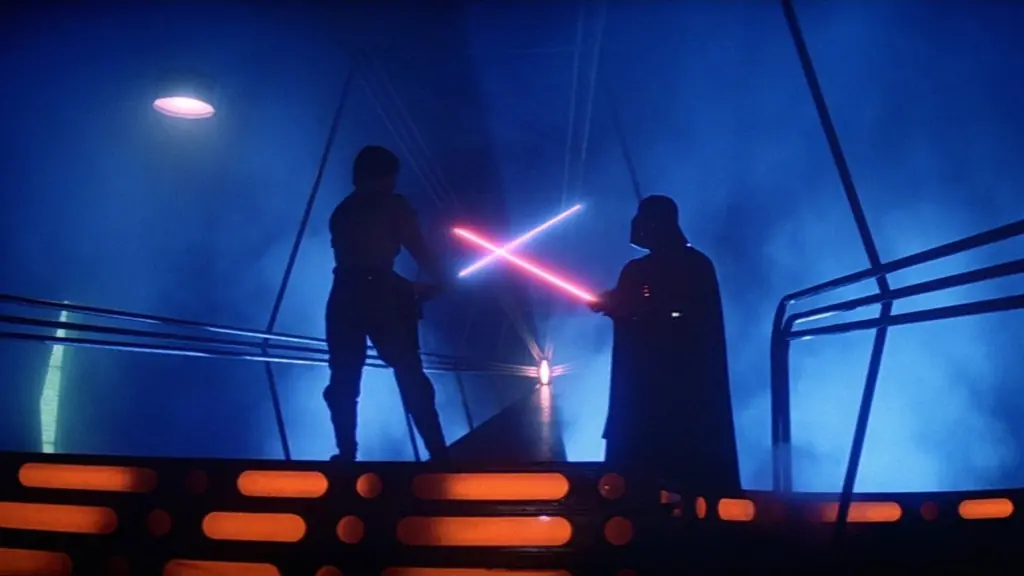
Irvin Kershner's direction imbues The Empire Strikes Back with a darker, more mature tone than its predecessor. The lightsaber duel between Luke and Vader is a masterclass in tension and character development. Luke, still green and impulsive, makes the mistake of striking out in anger, while Vader effortlessly parries his attacks, demonstrating his overwhelming power. The fight culminates in Luke's devastating loss of a hand, a brutal consequence of his impetuousness and a stark reminder of his failures throughout the film.
This film is a journey of trials and tribulations for Luke. He fails Yoda's tests, Han is frozen, Boba Fett escapes, and he loses a limb. Just when things couldn't get worse, Vader delivers the bombshell: "I am your father." The iconic line, perfectly underscored by the Imperial March, is a moment that redefined cinematic twists. Luke's subsequent, desperate act of throwing himself down a chasm, attempting to end his own life rather than join Vader, is perhaps his smartest, most defiant moment in the entire saga up to that point.
The film's ending is legendary for its audacity. It concludes not with a triumphant victory, but with a profound cliffhanger. The heroes are scattered, defeated, and left staring out into the vastness of space, their future uncertain. This bold choice left audiences stunned, hungry for more, and cemented The Empire Strikes Back's reputation as a masterclass in narrative tension and a truly unforgettable cinematic experience.
The Final Verdict
The Empire Strikes Back is an "awesome-tacular" achievement, a film that gives you just enough to satisfy while leaving you desperately craving more. It's a masterclass in storytelling, deepening characters, raising stakes, and delivering an emotional punch that resonates decades later. Often hailed as the greatest coming-of-age story ever told, it's a film that demands to be seen, not just for its place in cinematic history, but for its sheer, undeniable brilliance. Watch it, and prepare to have your mind blown.
What Worked
- Elevated stakes and profound character development for all leads
- Darth Vader's terrifyingly enhanced villainy and tragic backstory reveal
- Iconic action sequences, from the Battle of Hoth to Luke's Force awakening
- The legendary "I know" moment between Han and Leia
- The shocking "I am your father" twist and daring cliffhanger ending
What Didn't Work
- Specific DVD/Special Edition changes to the Emperor's actor and dialogue create plot holes
- Minor quibble about the AT-AT strategy on Hoth
- Luke's initial whining and failures can be frustrating, though integral to his arc