Introduction
The promise of a heartwarming mother-son road trip often conjures images of laughter, discovery, and genuine connection. The Guilt Trip, starring screen legends Barbra Streisand and Seth Rogen, certainly aimed for that sweet spot, positioning itself as a modern take on the classic "Planes, Trains & Automobiles" formula. The setup is simple: an inventor son takes his overbearing mother on a cross-country journey, ostensibly to pitch his eco-friendly cleaning product. Audiences might anticipate a familiar arc of initial friction, a significant falling out, and an eventual, tear-jerking reconciliation. Yet, what unfolds on screen is a journey far less charming and significantly more grating than advertised. Despite the inherent appeal of a mother-son bonding story, this particular cinematic road trip quickly veers off course, delivering an experience that manages to be both profoundly annoying and surprisingly boring, a truly unfortunate combination for any comedy.
The Lead Dynamic & The Action
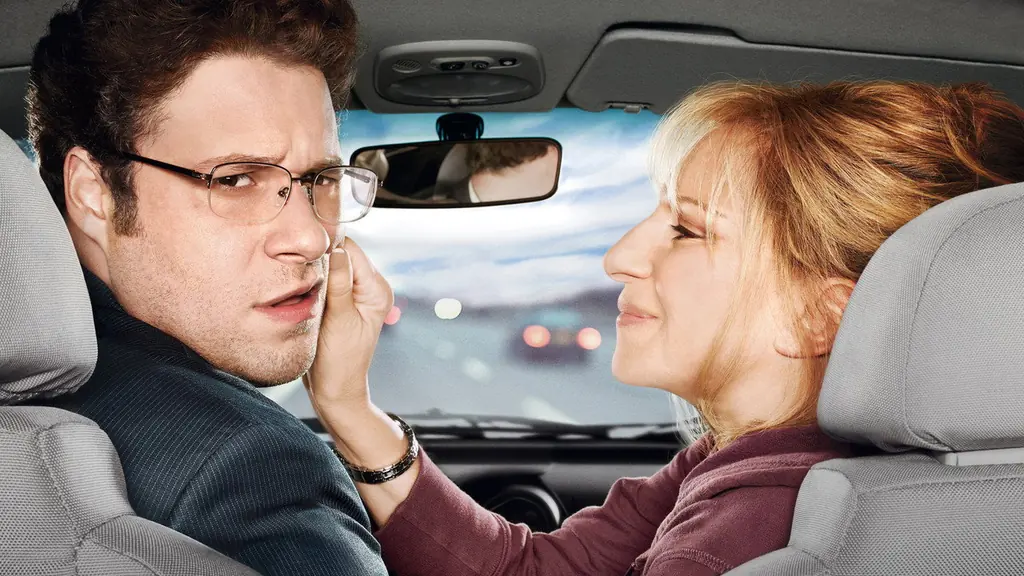
At the heart of any road trip comedy is the dynamic between its leads, and here, The Guilt Trip struggles immensely to find its footing. Barbra Streisand is undeniably well-cast as the perpetually nagging, cheek-pinching, yet ultimately well-meaning mother. She embodies the role with a certain authenticity, making her character someone you want to like, even as her overbearing antics occasionally grate. She does her job well, portraying the kind of mom who means no harm but can drive a person to distraction.
The primary issue, however, arises with Seth Rogen's portrayal of her son, Andy. Rather than a nuanced performance, he delivers what feels like "Seth Rogen doing Seth Rogen." His character is largely a sarcastic, often outright rude, figure who treats his mother with a consistent, almost baffling, disdain. While some films can pull off an abrasive lead, particularly when paired with a more endearing counterpart – think Barbra Streisand's character – here it feels unearned and frankly, just annoying. The film attempts to justify his stress with his struggling invention, but his actions often contradict the script's insistence on his intelligence, falling into the tired "smart but idiot" trope. He's presented as a genius inventor with a master's degree, yet his on-screen behavior suggests a complete lack of common sense or social grace. This constant friction, rather than building comedic tension or leading to genuine character growth, simply becomes tiresome. The dynamic never evolves beyond a son being a "sarcastic dick" to his mother, leaving viewers to wonder why these two are even together, let alone why they're meant to bond. It lacks the heart and eventual understanding seen in classic odd-couple pairings, instead settling for persistent irritation.

Cameos, Nostalgia & Narrative Stakes
The narrative stakes in The Guilt Trip are as predictable as the sunrise. From the outset, it's clear this is a bonding journey, complete with the inevitable arguments and eventual understanding. The film offers little in the way of original plotting, leaning heavily on the well-worn road trip clichés. There are no surprising detours or genuinely fresh comedic beats to elevate it beyond its uninspired premise. The entire setup feels like a paint-by-numbers exercise, where every plot point and character beat can be seen coming from miles away. This baffling amount of unoriginality is a significant detractor, as the film fails to carve out its own identity within a genre that thrives on unexpected turns and unique character interactions.
The pacing often drags, making the journey feel less like an adventure and more like "solitary confinement" with occasional, fleeting moments of mild enjoyment. Even a standout scene, like the steakhouse sequence, which offers a brief respite of genuine entertainment, isn't enough to redeem the surrounding ninety minutes of tedium. It's akin to being given a couple of pieces of bread while locked away – a small comfort, but ultimately insufficient to alleviate the overall misery. The film's inability to sustain engagement means that even when it tries to hit emotional notes, they feel unearned and hollow, lost in a sea of predictable banter and uninspired situations.
Tone, Direction & Creative Freedom
Under the direction of Anne Fletcher, the film struggles to maintain a consistent or engaging tone. Instead, it masterfully achieves the unfortunate feat of being both boring and annoying simultaneously. This isn't a film that builds to a satisfying emotional crescendo or delivers consistent laughs; it's a film that leaves the audience feeling exasperated. The unoriginality permeates every aspect, from the character dynamics to the plot beats, suggesting a lack of creative freedom or perhaps, a missed opportunity to inject genuine wit and heart into a familiar setup. The characters, who annoy each other and themselves, ultimately succeed in annoying the audience as well.
The direction fails to elevate the material, instead allowing the film to wallow in its own predictability. There's a sense that the filmmakers were content to rely on the star power of Barbra Streisand and Seth Rogen rather than crafting a truly compelling story or dynamic. The result is a cinematic experience that feels less like a joyous ride and more like an obligation, a bland and frustrating journey that never quite justifies its existence.
The Final Verdict
For those seeking a heartwarming or even genuinely funny mother-son bonding experience, The Guilt Trip is a journey best left untaken. Despite the promising pairing of Barbra Streisand and Seth Rogen, the film quickly devolves into a monotonous and irritating exercise in cinematic clichés. It’s a film that manages to annoy and bore in equal measure, offering little in the way of redemption or genuine emotional payoff. The fleeting moments of mild enjoyment, like the steakhouse scene, are far too sparse to justify enduring the overwhelming sense of unoriginality and the grating character dynamics. Save yourself the "guilt trip" and opt for a more engaging road trip comedy; this one is truly a dog.
What Worked
- [[person:10400|Barbra Streisand]] is well-cast as the overbearing mother.
- The steakhouse scene provides a brief moment of genuine entertainment.
- The initial premise of a mother-son bonding road trip holds potential.
What Didn't Work
- Manages to be both boring and annoying simultaneously.
- Highly unoriginal and predictable, relying on tired road trip clichés.
- [[person:19274|Seth Rogen]]'s character is a one-note, sarcastic "dick" who is difficult to root for.
- The "smart but idiot" trope for the main character feels lazy and unconvincing.
- Lacks genuine emotional depth or satisfying character development.