Introduction
When The Lone Ranger galloped onto screens, anticipation was high for a grand, sweeping Western adventure. With a runtime clocking in at a hefty two and a half hours, a length often reserved for epic sagas, the question loomed: could this film justify its expansive scope? Unfortunately, for many, the answer was a resounding "no." What promised a thrilling ride often felt like a meandering journey, leaving audiences checking their watches rather than clinging to the edge of their seats.
The Lead Dynamic & The Action
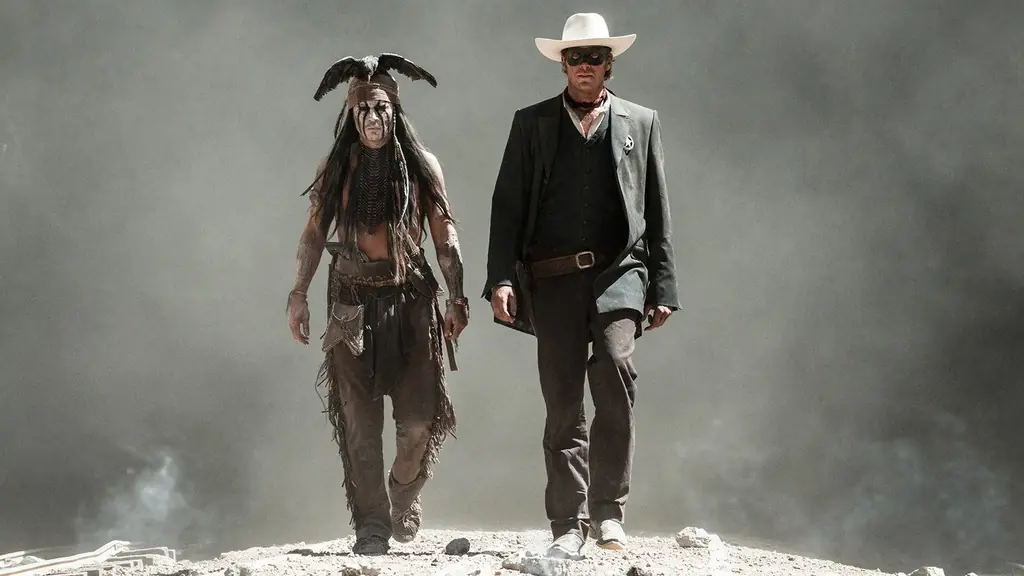
At the heart of any buddy Western is the chemistry between its leads, and here, The Lone Ranger struggles significantly. Armie Hammer portrays the titular Lone Ranger, introduced as a lawyer rather than a hardened gunslinger. His character's staunch pacifism—a belief that "guns are bad" and justice should prevail through trials—becomes increasingly unbelievable as the narrative unfolds. Watching him attempt to reason with armed outlaws in a shootout, badge held high, strains credulity and pulls the audience out of the experience. It's a character choice that feels less principled and more baffling.
Then there's Johnny Depp as Tonto, a performance that, for many, feels like a direct transplant of Captain Jack Sparrow into the Old West. While Johnny Depp is undeniably a talented actor, his Tonto, complete with peculiar grammar and mannerisms, often veers into self-parody. The lack of genuine connection between Armie Hammer's Lone Ranger and Johnny Depp's Tonto is palpable, leaving their dynamic feeling forced and unconvincing. A particularly jarring moment sees the Lone Ranger abandon a neck-deep-in-dirt Tonto, only returning when Tonto proves narratively useful. This act of callousness undermines any heroic pretense, making the Lone Ranger appear less a hero and more a hypocrite.
Despite these character missteps, the film does offer moments of "cartoony cool" action. When the iconic "Lone Ranger" theme song kicks in, the proceedings briefly transform into an enjoyable, over-the-top spectacle. These sequences, though fleeting, provide a much-needed jolt of fun amidst the narrative's struggles.

Cameos, Nostalgia & Narrative Stakes
While the lead dynamic falters, some supporting performances manage to shine. William Fichtner, in particular, delivers a deliciously villainous turn. He clearly relishes the role, bringing a palpable energy that makes his character a highlight. His performance is engaging, even if the villain himself isn't groundbreakingly original.
Interestingly, Tonto's personal storyline, when given focus, offers some of the film's most compelling moments. These glimpses into his past and motivations are genuinely investing, providing a welcome depth that the main plot often lacks. However, these moments are often shoehorned into a sprawling narrative that struggles with focus.
The film also employs a framing device, with an elderly Tonto recounting the story to a young boy. While reminiscent of beloved classics like "The Princess Bride," this narrative choice ultimately adds little to the overall story. Instead, it feels like an unnecessary addition that further bloats the already excessive runtime, serving as another element that could have been trimmed to create a more streamlined and impactful experience.
Tone, Direction & Creative Freedom
Under the direction of Gore Verbinski, The Lone Ranger attempts a blend of gritty Western and fantastical adventure, often leaning into a "cartoony" aesthetic. While this approach occasionally works, particularly during the aforementioned theme-song-fueled action, it frequently contributes to the film's tonal inconsistencies. The ambition to create a grand, sprawling epic is evident, but the execution often feels messy, as if the filmmakers were given too much freedom without a clear, concise vision for the final product. The result is a film that feels overstuffed and undercooked, struggling to balance its various elements into a cohesive whole.
The Final Verdict
Ultimately, The Lone Ranger is a film that, despite its massive budget and star power, struggles to leave a lasting impression. Its excessive length, coupled with a problematic lead dynamic and a meandering plot, makes it a forgettable experience. While William Fichtner's villainy and Tonto's backstory offer brief respites, the film's core issues prevent it from ever truly soaring. It's a Western that rides off into the sunset, only to be quickly forgotten once the credits roll.
What Worked
- [[person:886|William Fichtner]] delivers a fun, engaging villain performance.
- Tonto's backstory offers genuinely interesting moments.
- The iconic "Lone Ranger" theme song elevates the cartoony action sequences.
- Some action set pieces are visually dynamic and entertaining.
What Didn't Work
- Excessively long runtime that feels unjustified.
- Lackluster chemistry between the two lead actors.
- [[person:85|Johnny Depp]]'s Tonto feels too much like Captain Jack Sparrow.
- The Lone Ranger's pacifist stance is inconsistent and unbelievable.
- The framing device adds nothing and could have been cut.