Introduction
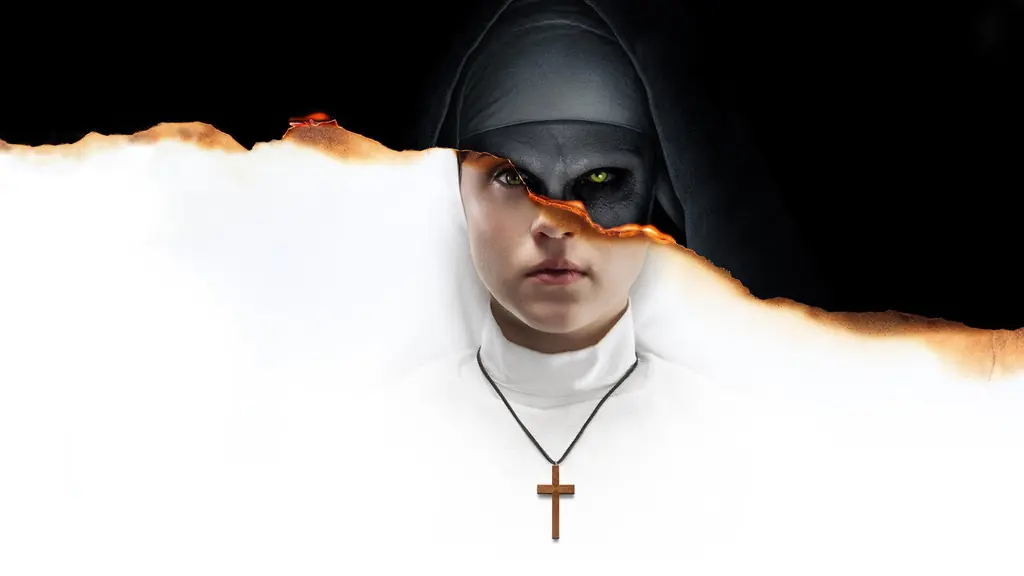
The Conjuring universe has carved out a formidable niche in modern horror, delivering scares that often feel earned and stories that resonate. So, when the origin story of its most iconic, terrifying demon – the titular Nun – was announced, anticipation was understandably high. The Nun promised to plunge audiences into the dark, gothic heart of 1950s Romania, where a secluded convent holds a sinister secret. A priest, Father Burke (Demián Bichir), and a novitiate, Sister Irene (Taissa Farmiga), are dispatched by the Vatican to investigate a mysterious death, setting the stage for what should have been a chilling descent into unholy terror. Unfortunately, what unfolds is less a terrifying revelation and more a predictable, often sleepy, exercise in horror tropes.
The Lead Dynamic & The Action
From the outset, the film struggles to forge compelling connections with its characters. While Taissa Farmiga is undeniably well-cast as a younger counterpart to her real-life sister, Vera Farmiga, her Sister Irene, alongside Demián Bichir's Father Burke, remains largely bland. Their dynamic lacks the spark needed to anchor a narrative steeped in supernatural dread, leaving audiences with little emotional investment. The one true standout, for better or worse, is the local French-Canadian guide, Frenchie (Jonas Bloquet). Initially presented as a cartoonish, Pepe Le Pew-esque figure, Frenchie’s roguish, quasi-comedic presence eventually becomes the film’s most memorable, if unintentionally humorous, element. He’s a "Brendan Fraser light" from The Mummy era, committing to the cheesy dialogue with a conviction that almost saves his scenes from the surrounding seriousness.
Action, in The Nun, primarily translates to a relentless barrage of jump scares. The film’s trailer was remarkably honest, showcasing its heavy reliance on these cheap thrills. Audiences are treated to the classic "someone taps you on the shoulder, you turn, and the scare comes from behind" maneuver, or the equally tired "dark figure down the hallway" trope. These scares are telegraphed a mile away, making them less terrifying and more an exercise in clocking the inevitable. The film prioritizes quantity over quality, delivering a "jump scare fest" that quickly loses its impact, leaving viewers more bored than frightened. The predictability is so high that one can literally "clock the jump-scare at three to one," highlighting the film's inability to surprise or genuinely unsettle its audience.
Cameos, Nostalgia & Narrative Stakes
The narrative of The Nun often takes baffling leaps in logic, challenging the audience’s suspension of disbelief at every turn. Characters make decisions that defy common sense, such as lighting a lighter in a sealed coffin, seemingly oblivious to the concept of burning oxygen – a detail that, even in the 1950s setting, feels like a stretch in credulity. The plot itself feels like a "Frankenstein's monster" of horror, an amalgamation of elements clumsily stitched together from various other, often superior, films. The reviewer noted that everything attempted here has been "done in another movie and it was done better," underscoring a profound lack of originality.
This uninspired approach extends to the film’s visual effects and set pieces. Over-the-top CGI, particularly a scene involving a crack in the ground from which something emerges, draws an immediate and unfavorable comparison to Hellboy. Instead of building genuine suspense or crafting unique scares, The Nun leans heavily on familiar imagery and predictable outcomes, diluting any potential narrative stakes. The attempt to provide an an origin story for such an iconic demon ultimately feels forced and unnecessary, failing to add depth or terror to the Conjuring universe and instead making it feel like a hollow cash-grab.
Tone, Direction & Creative Freedom
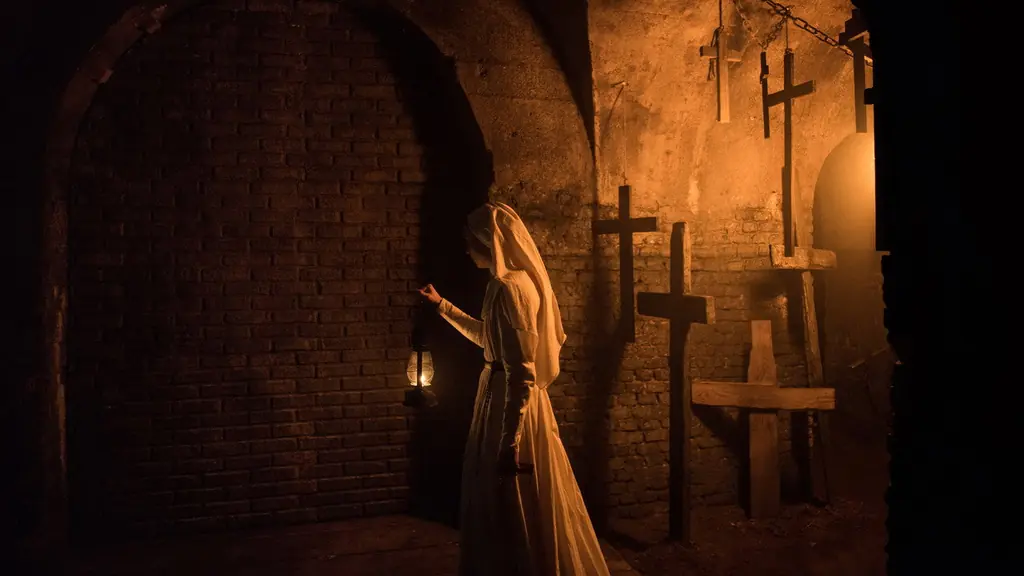
Corin Hardy’s direction struggles to maintain a consistent tone, often veering into unintentional comedy. Scenes intended to be serious and dramatic frequently elicit laughter from the audience due to their hokey execution and dialogue that feels penned by an "eight-year-old." This tonal inconsistency undermines any genuine attempts at horror, turning moments of dread into moments of amusement. The film recycles classic horror imagery – crosses turning upside down, shadowy figures lurking in hallways – but without any fresh perspective or genuine tension.
Unlike The Conjuring, which achieved its scares through simplicity and atmosphere, The Nun goes "way over the top" with its CGI and convoluted plot, losing sight of what makes effective horror. The result is a film that feels less like a carefully crafted prequel and more like a checklist of horror clichés, leaving audiences with a sense of déjà vu rather than genuine fear. The overall impression is one of a missed opportunity, a film that had the potential to be truly terrifying but instead settled for being merely boring and forgettable.
The Final Verdict
Ultimately, The Nun fails to deliver on the promise of its terrifying antagonist. What should have been a chilling deep dive into the origins of pure evil instead devolves into a predictable, uninspired horror outing. Despite a few appreciated plot attempts and the unintentional charm of Frenchie, the film is largely a "crap tat" prequel that struggles to justify its existence. It’s a movie that leaves little lasting impression, with one reviewer admitting they "already forgot I saw The Nun" shortly after viewing. For those seeking genuine scares and compelling storytelling, this particular chapter in the Conjuring universe is best left unopened. There are countless other horror films that offer a far more engaging and memorable experience.
What Worked
- [[person:527313|Taissa Farmiga]] is well-cast as a younger [[person:21657|Vera Farmiga]].
- The character "Frenchie" ([[person:566080|Jonas Bloquet]]) provides some unintentional, cartoony charm.
- The film's trailer was honest about its reliance on jump scares.
- A few plot points were appreciated, though ultimately insufficient to redeem the film.
What Didn't Work
- Over-reliance on predictable and ineffective jump scares.
- Bland, uninteresting characters with illogical decision-making.
- The plot feels like a "Frankenstein" of elements from better horror films.
- Cheesy attempts at serious drama often elicit laughter.
- Over-the-top CGI and unoriginal visual effects, including a *Hellboy* rip-off.